
The most stable, ultra-portable autonomous boat on the market.
WAM-V Technology
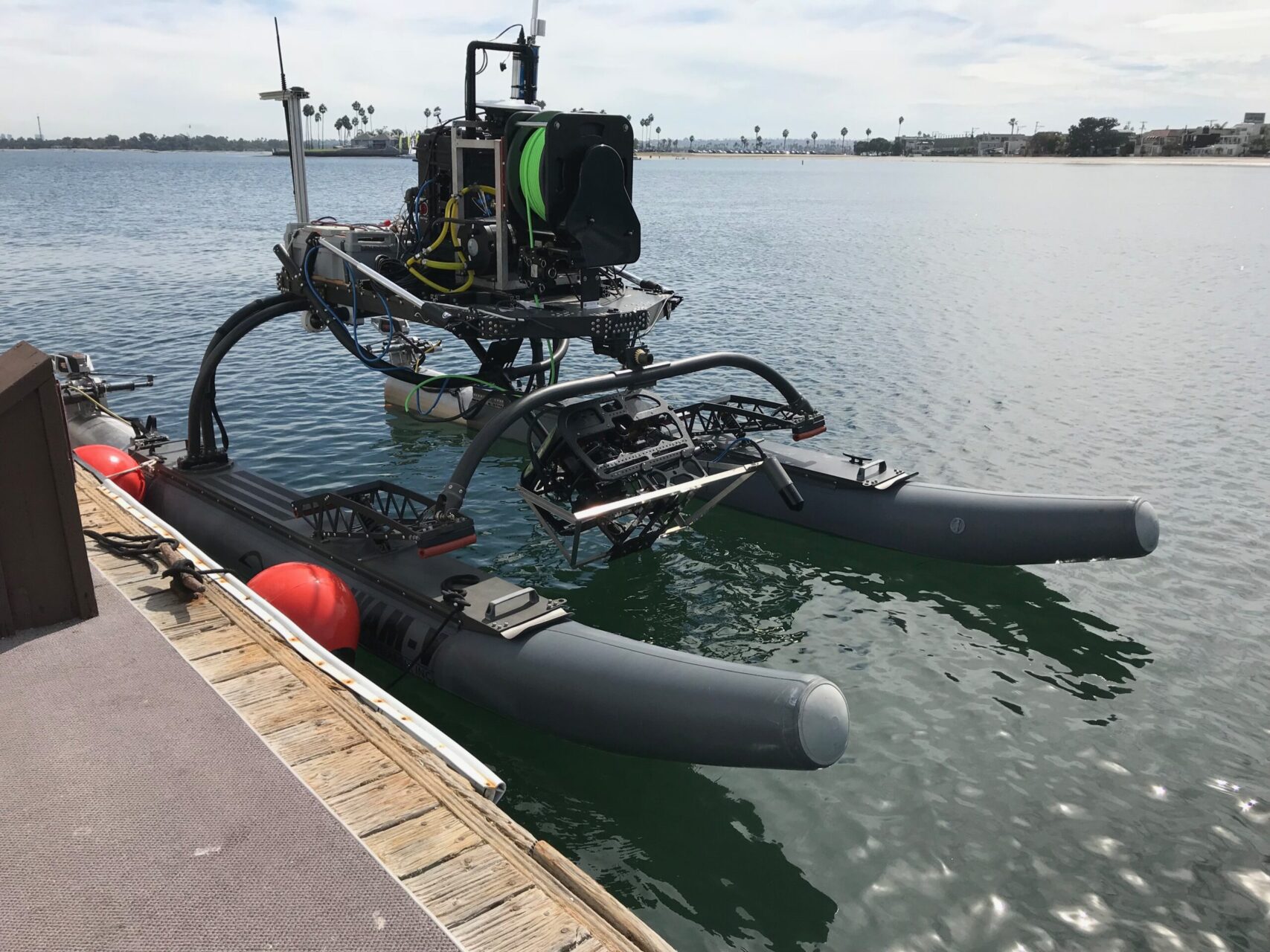
The Wave Adaptive Modular Vessel (WAM-V) is an innovative class of watercraft (both autonomous and manned) using unique suspension technology to radically improve seagoing capabilities. The articulating system uses springs, shocks and ball joints to minimize structural loading. The result is an ULTRA-LIGHT, MODULAR vessel that can perform in sea conditions where an ordinary boat of similar size could no longer operate. The incredibly SHALLOW DRAFT and arches contribute to the GANTRY CRANE functionality.
Wave Adaptive Suspension
Unlike conventional boats, the WAM-V’s flexible structure adapts and conforms to the surface of the water resulting in an exceptionally SMOOTH and LEVEL platform. Inflatable pontoons help absorb motion and force. Two engine pods are hinged to the hulls which keep the propellers in the water at all times, further improving vehicle stability and controllability. The 2:1 length-to-beam ratio, along with the articulating suspension systems, makes the WAM-V an exceptionally MANEUVERABLE and STABLE vessel.
Scalable
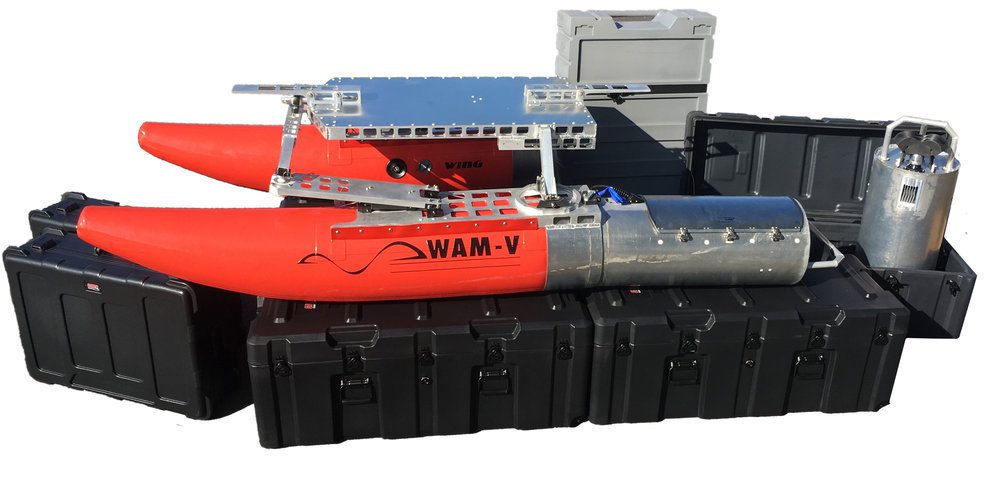
The WAM-V design works on many scales and can be designed and built to match specific applications. Marine Advanced Robotics, Inc. has designed, tested, manufactured and delivered WAM-V USVs in lengths of 8′, 12’, 14’, 16’, and 33’ along with a 50’ POF (proof of feasibility) and the 100′ prototype Proteus.
Read More:
Deployment of a SeaBotix vLBV ROV from a WAM-V Unmanned Surface Vehicle
Congratulations to University of Newcastle Maritime RobotX Team
University of Newcastle Maritime RobotX Challenge Team


Related products
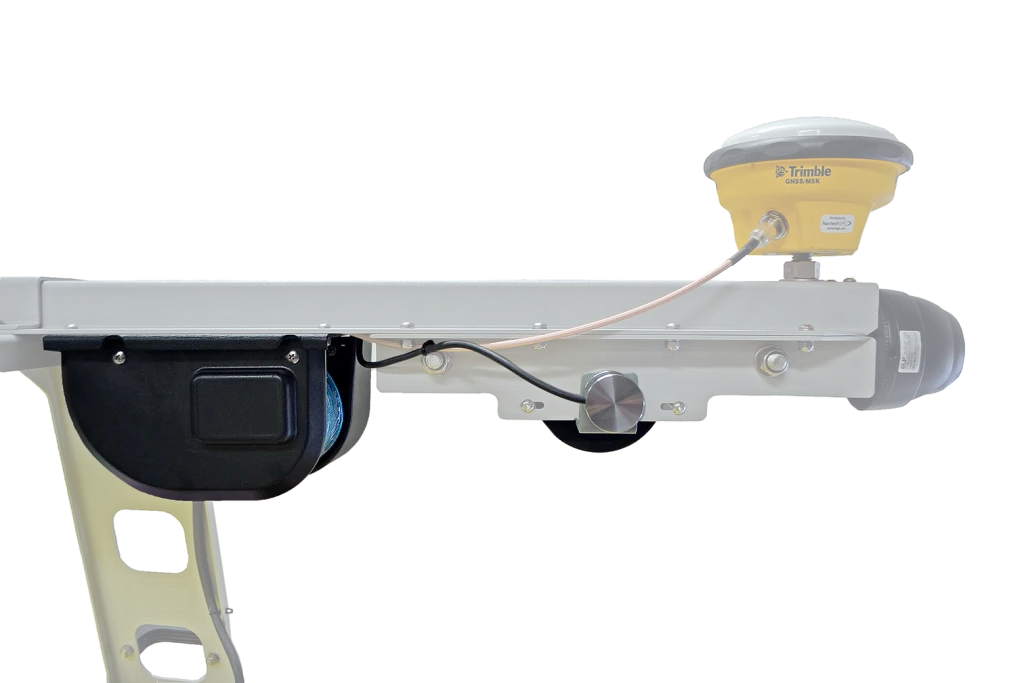
The SmartCast™ was designed to automatically deploy a sound velocity profiler to user-selected depths. The winch can be mounted onto the front of the USV and uses an IP69k encoder...
Read more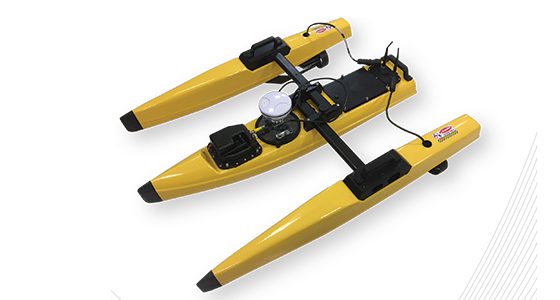
Teledyne OceanScience Z-Boat 1250
BlueZone Group is pleased to announce the launch of the newest Teledyne Oceanscience Z-Boat in their family of Remotely Operated Surface Vehicles, the Z-Boat 1250.
Read more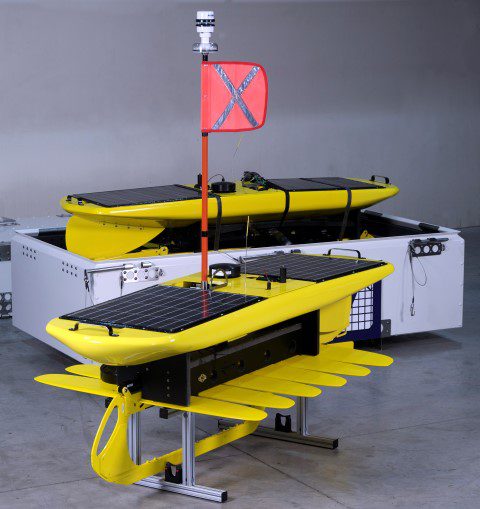
By continuously harvesting energy from the environment, Wave Gliders are able to travel long distances, hold station, and monitor vast areas without ever needing to refuel. A unique two-part architecture...
Read more