BlueZone partners with over 50
world-leading original equipment
manufacturers and systems providers

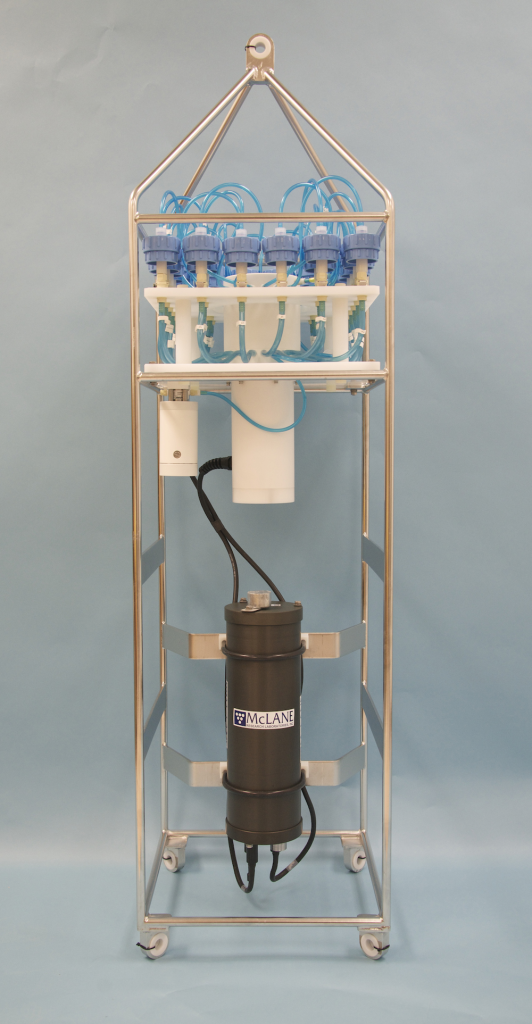
McLane Sediment Trap

McLane Sediment Trap

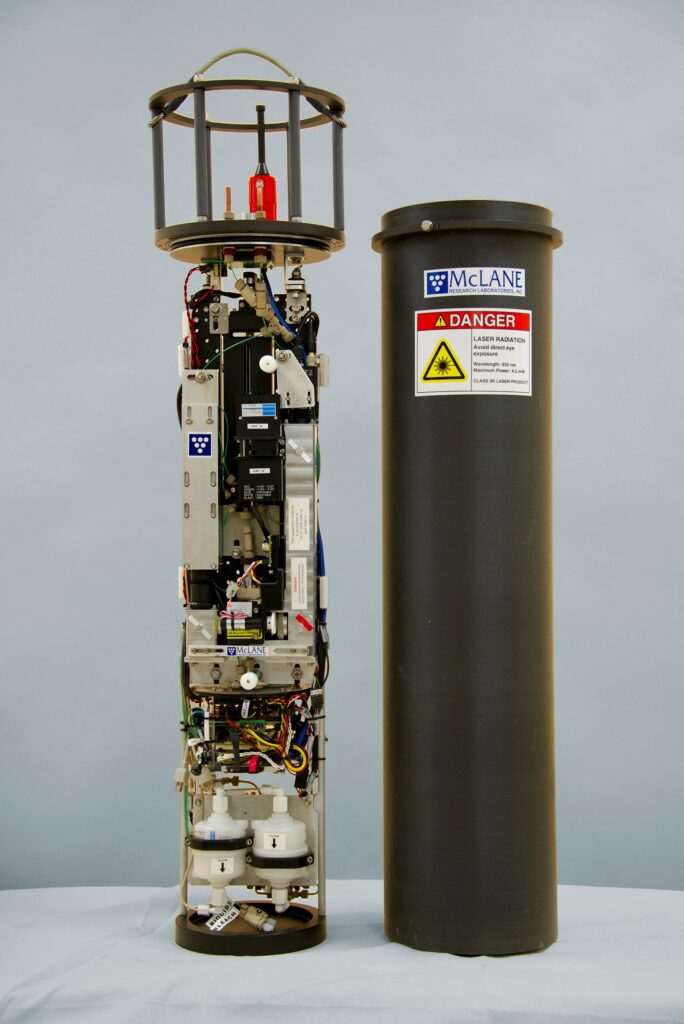
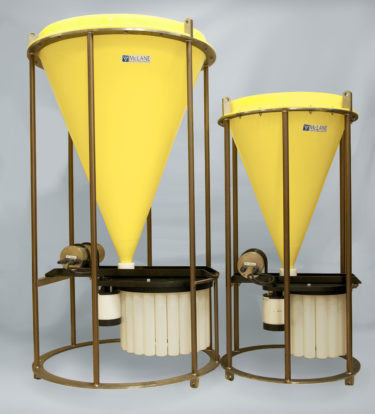
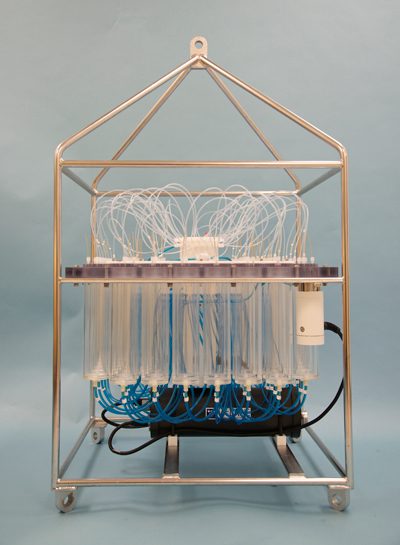
The Parflux Sediment Trap collects the export flux of settling particles in oceans and lakes. The wide collection funnel features a hexagonal grid top. The Sediment Trap stores samples in individual sample bottles. Sampling is pre-programmed or adaptively triggered from an on-shore device.

• Maximum depth: 7,000m (10,000m deep model available).
• Number of samples: 13 or 21 of 250mL or 500mL.
• Models: Standard models collect 13 or 21 samples, the Mk8-13 model is half the size of standard models and collects 13 samples of 250mL or 500mL.
• Options: Wet Sample Divider (WSD-10) to split wet samples, Ethernet communication, tilt sensor, and pressure sensor.

Key Features

Up to 25-hour mission duration

Speeds up to 4.2 knots

Increased module payload capacity

Search and recovery

Hydrography

Deep sea mineral exploration

Marine & Fisheries research

Mark 78 Sediment Trap Datasheet

Download(1 MB)

Mark 8 Sediment Trap Datasheet

Download(1 MB)

WSD 10 Datasheet

Download(1 MB)

Product Enquiry

    Product Enquiry


    Related Articles

    From Delivery to Deployment: Building Australia’s Autonomous MCM Capability

    Following the successful delivery of the first REMUS 300 systems earlier this year, BlueZone Group is continuing to build Australia’s autonomous Mine Countermeasure capability, bringing together advanced platforms, sensors, software...

    Read More

    Making Waves in the Littoral Zone: BlueZone Group at Land Forces 2026

    While much of Land Forces 2026 focused on drones, land systems and emerging battlefield technologies, BlueZone Group brought something different to the exhibition floor: a comprehensive showcase of capability designed...

    Read More

    High-Resolution Seabed Intelligence with Kraken Robotics KATFISH

    See More. Survey Faster. Operate Safer.   Across defence, offshore energy and marine research, the ability to survey large areas of seabed while retaining the resolution required to identify small...

    Read More