
McLane Remote Access Sampler
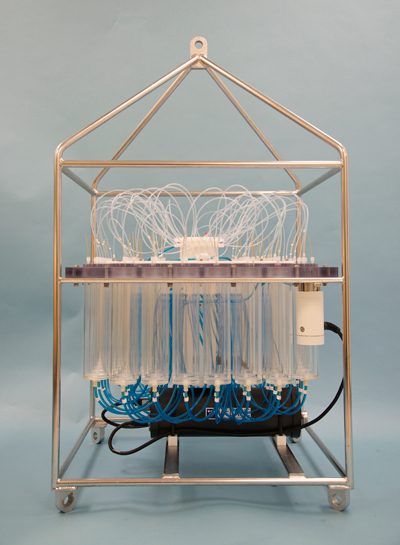
The Remote Access Sampler (RAS) collects individual 100mL or 500mL water samples in clear or opaque sample bags. Samples are suited for conducting biological, dissolved major and minor nutrient studies, and dissolved trace metal analyses. User-defined settings control sample collection time, and volume of collected samples. User defined biofouling acid flush is available.
• Maximum depth: 5,500m.
• Number of samples: 48.
• Models: RAS-500 collects up to 48 individual samples of 500mL each, RAS-100 collects up to 48 individual samples of 100mL each.
• Options: 47mm filter holder on each sample (25mm filter holder for each RAS-100 sample), heavy duty frame for energetic deployment environments.

Related products
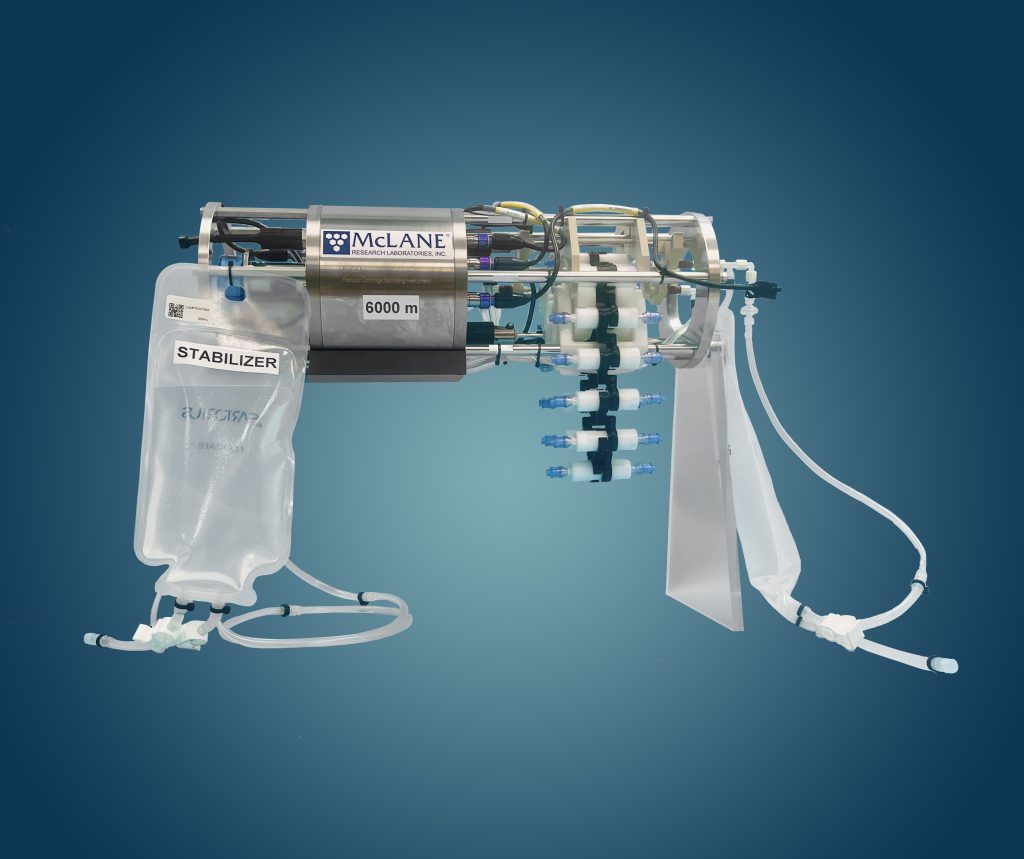
McLane RoCSI – Robotic Cartridge Sampling Instrument
The McLane RoCSI (Robotic Cartridge Sampling Instrument) is a cutting-edge biomolecular sampler designed for in situ collection and preservation of particulate samples, including genetic material and environmental DNA (eDNA).
Read more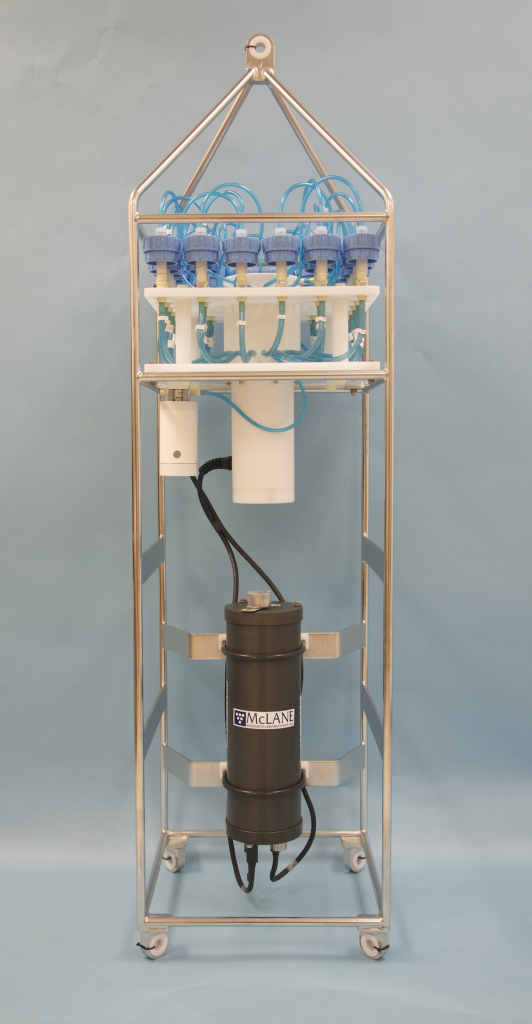
McLane Particle and Phytoplankton Sampler (PPS)
The Phytoplankton Sampler (PPS) collects filtered individual in situ particulate water samples onto 47mm filter media.
Read more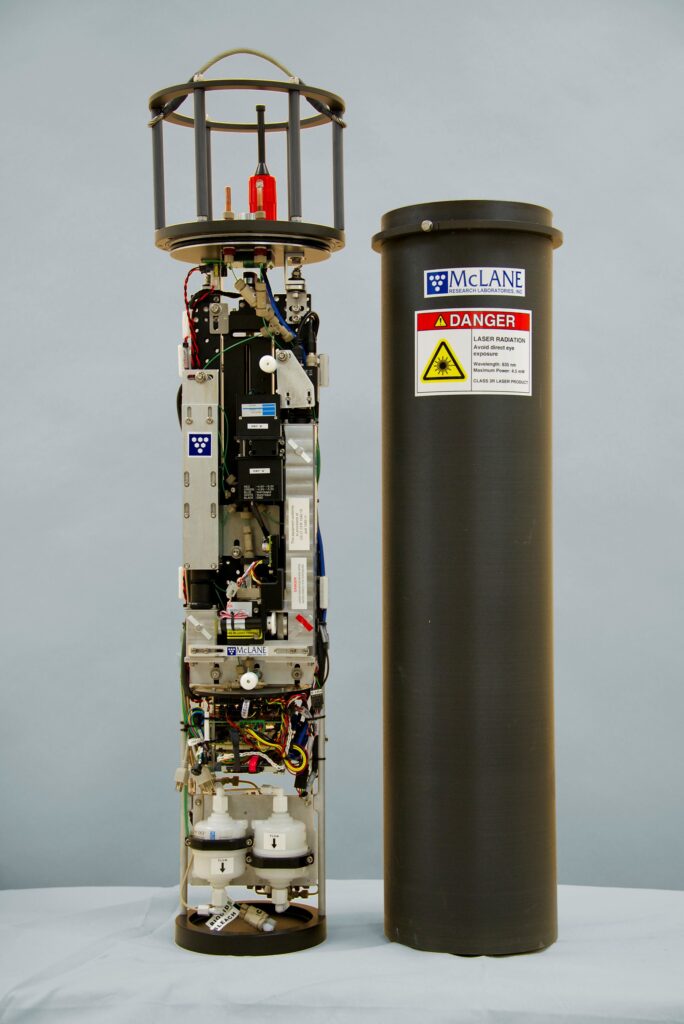
The Imaging FlowCytobot (IFCB) uses a combination of flow cytometric and video technology to capture high resolution (up to 1 μm) images and optical data of suspended particles in-flow, from...
Read more