
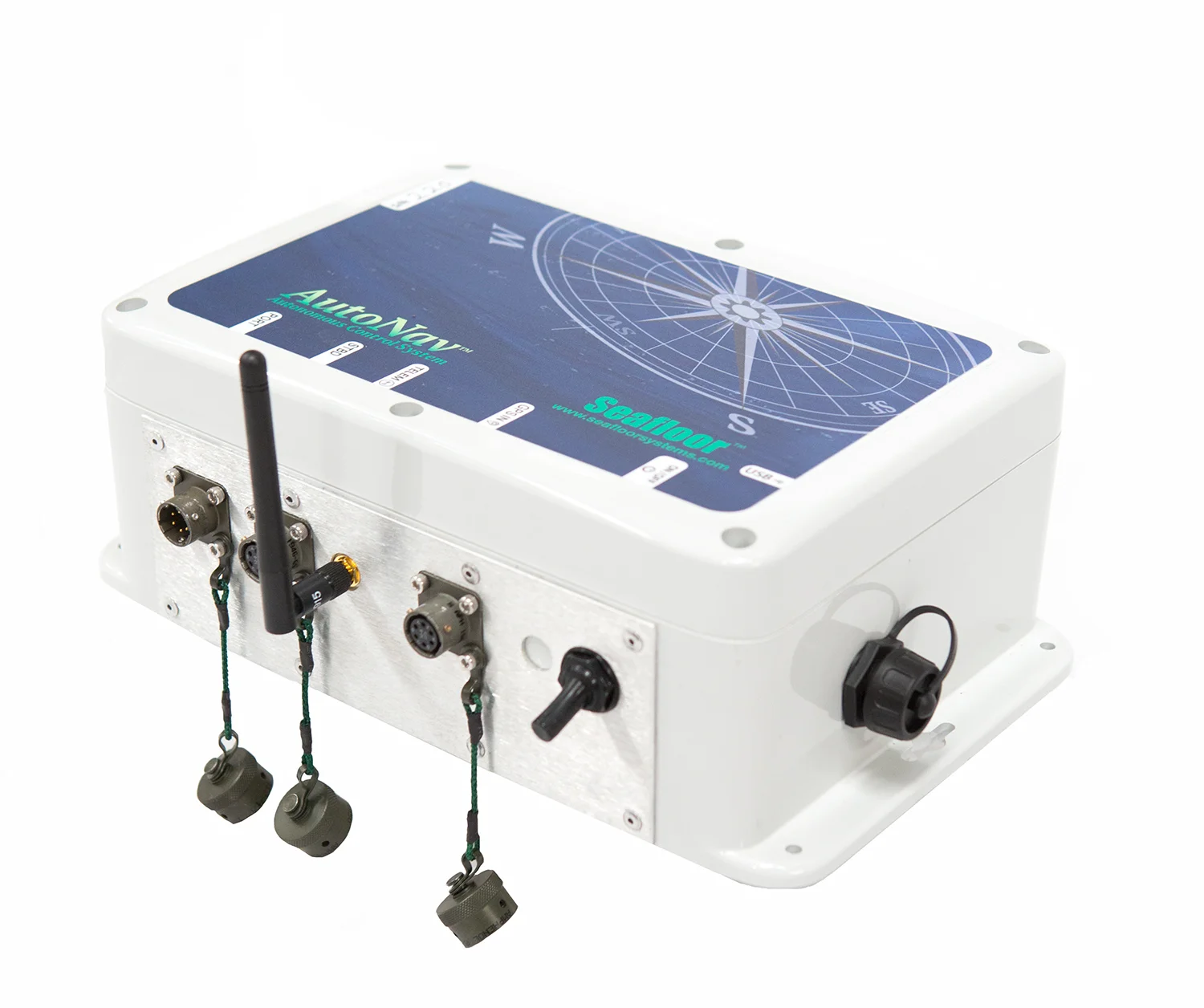
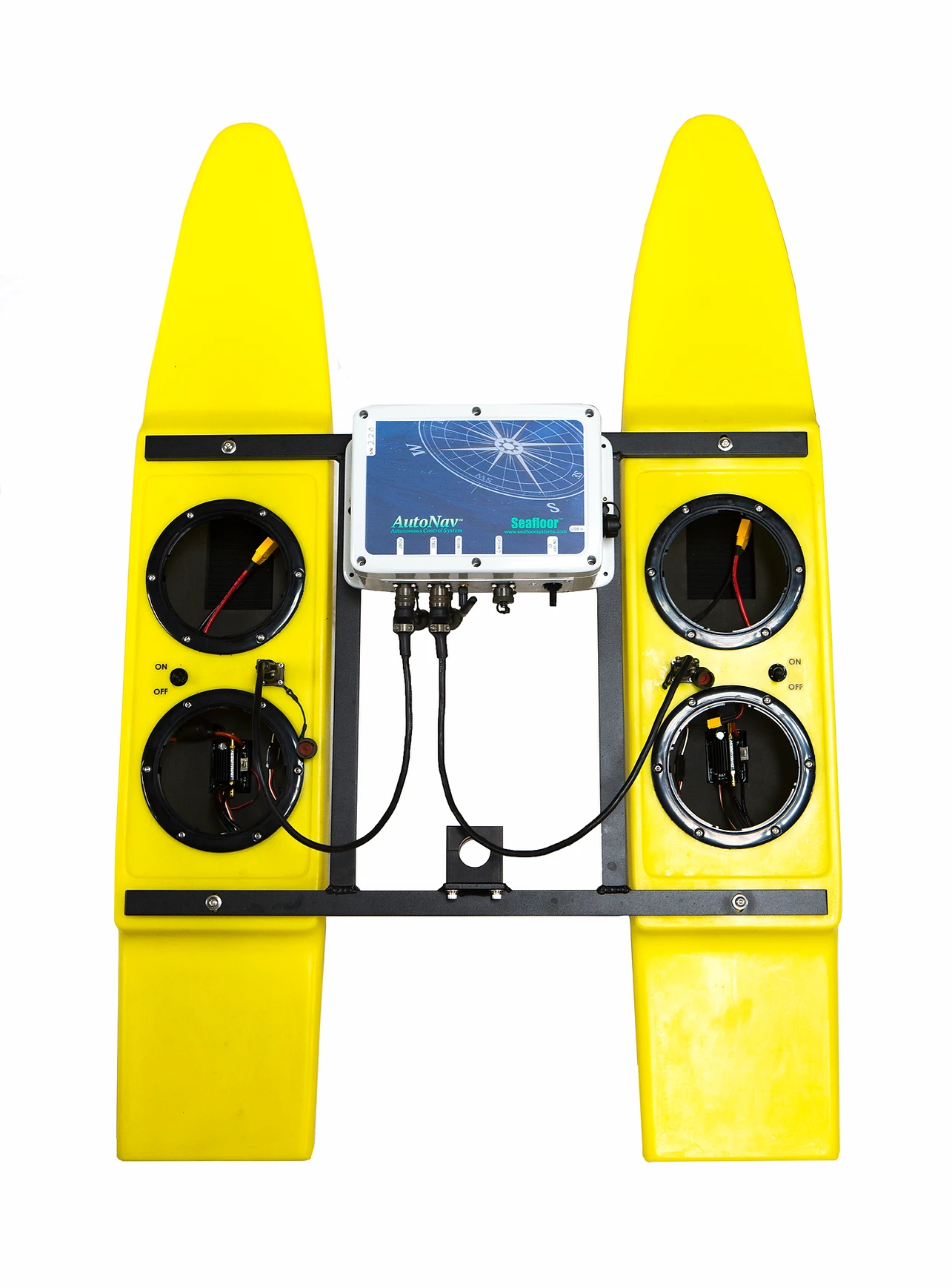
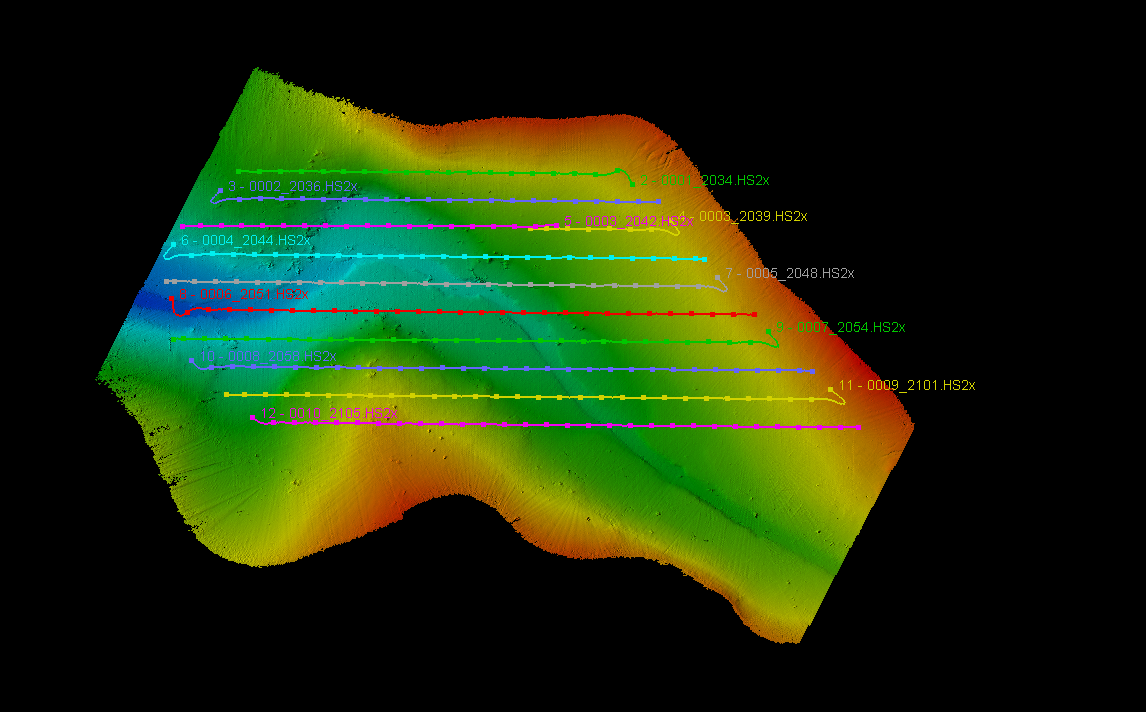
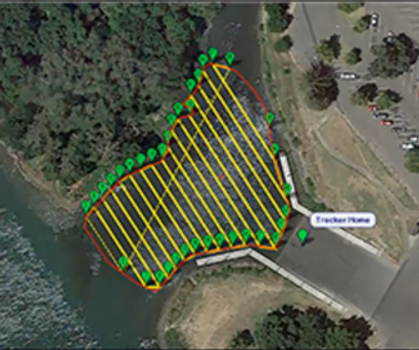
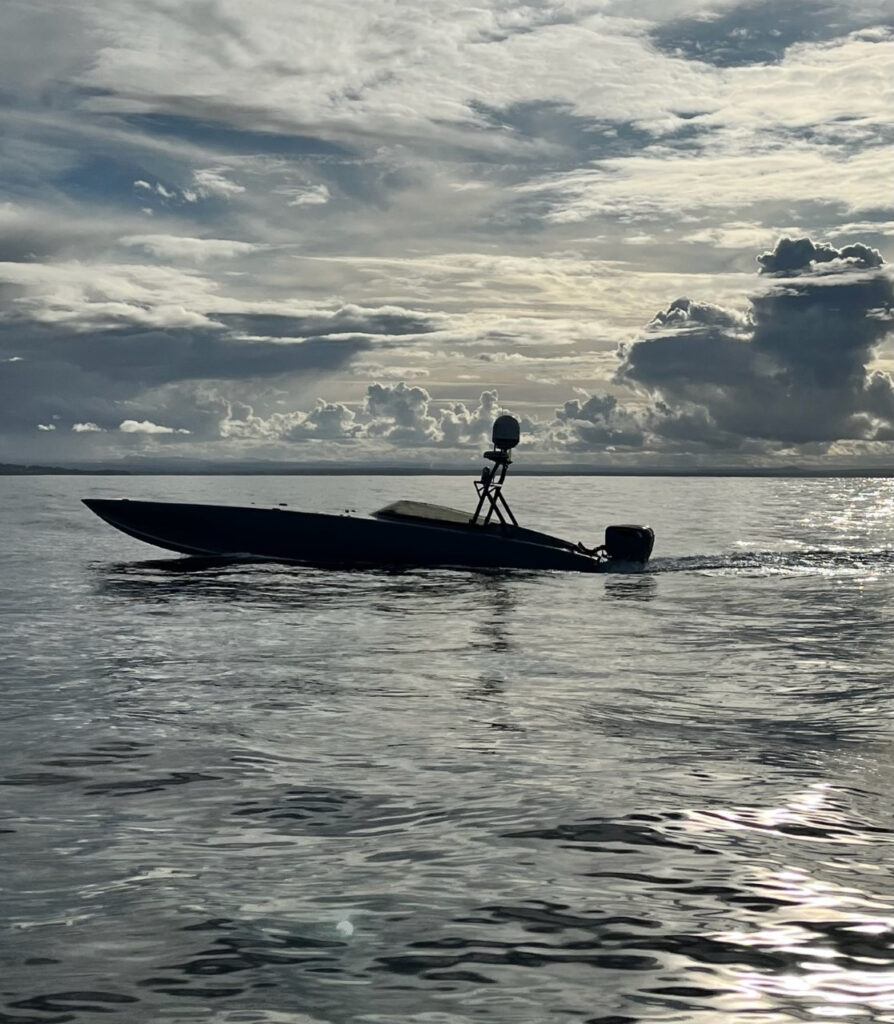
The AutoNav™ autonomous control system lets users pre-program unmanned vessels to follow track lines when performing surveys. This increases data acquisition consistency and efficiency. With stable firmware and a redundant IMU system, the AutoNav brings reliable semi-autonomous capabilities to our USV fleet.
Specifications:
Read More:
For more information on the AutoNav™, contact the team at BlueZone.
Up to 25-hour mission duration
Speeds up to 4.2 knots
Increased module payload capacity
Search and recovery
Hydrography
Deep sea mineral exploration
Marine & Fisheries research
The Devil Ray T38 is a medium USV system based on a high-performance dual sponson platform that has multiple world records for manned speed and stability.
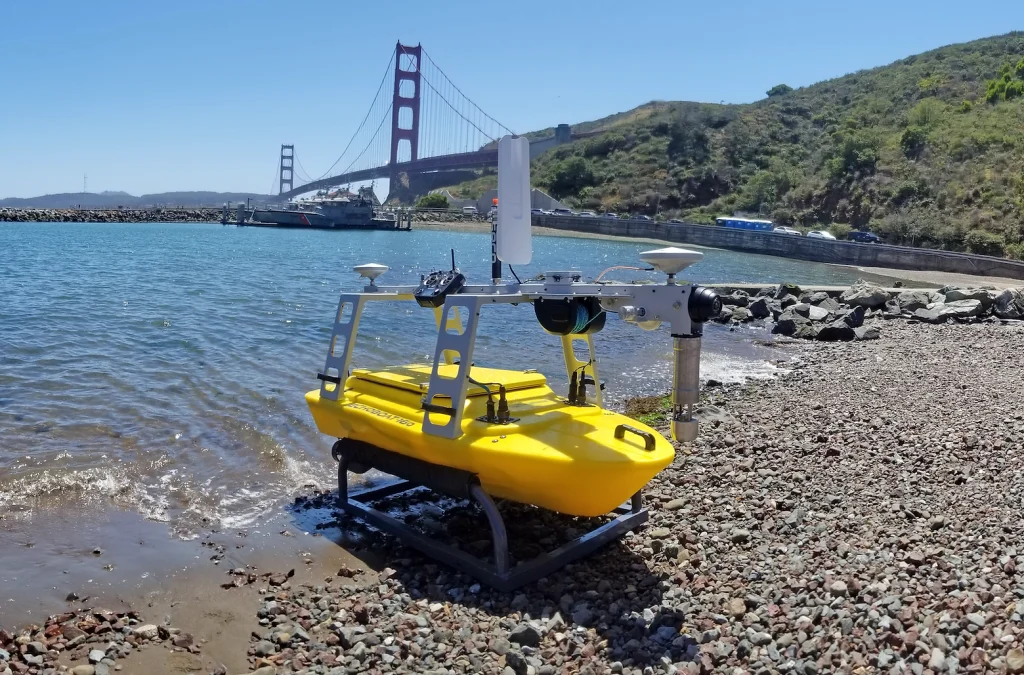
Read moreThe SmartCast™ was designed to automatically deploy a sound velocity profiler to user-selected depths. The winch can be mounted onto the front of the USV and uses an IP69k encoder...
Read moreBy continuously harvesting energy from the environment, Wave Gliders are able to travel long distances, hold station, and monitor vast areas without ever needing to refuel. A unique two-part architecture...
Read moreEmergency Location When It Matters: RJE International’s ULB 362PL for ROV Operations Offshore
When subsea assets disappear from view, certainty comes from sound—and few technologies are as critical to offshore energy operations as dependable acoustic location beacons. As offshore energy operations continue...
Read MoreInnovation on Display: Four Key Product Launches from Oceanology International 2026
A clear glimpse into the future of subsea operations, with new platforms that promise more autonomy, greater precision, and faster results offshore. Oceanology International 2026 marked a significant moment for...
Read MoreDriving Fuel Efficiency and Fleet Readiness with Greensea IQ EverClean
Save 20% in fuel costs per year while maintaining hull condition close to the standard achieved immediately post dry-dock. In a global operating environment where fuel prices and supply chains...
Read More