WG04 Rapid Access Drybox

Flexibility and Easy Access for Wave Glider Prototyping

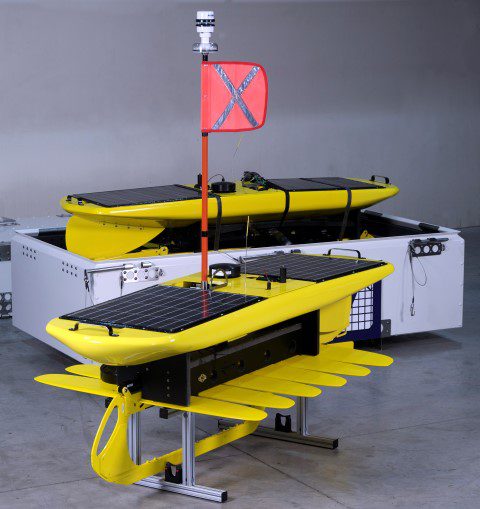
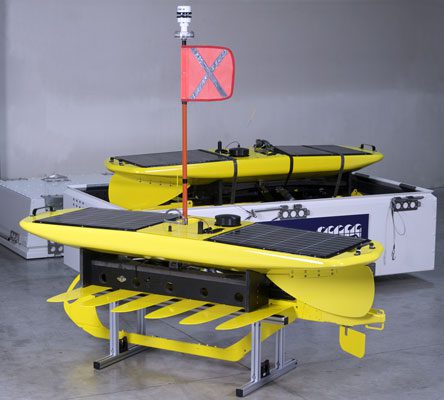
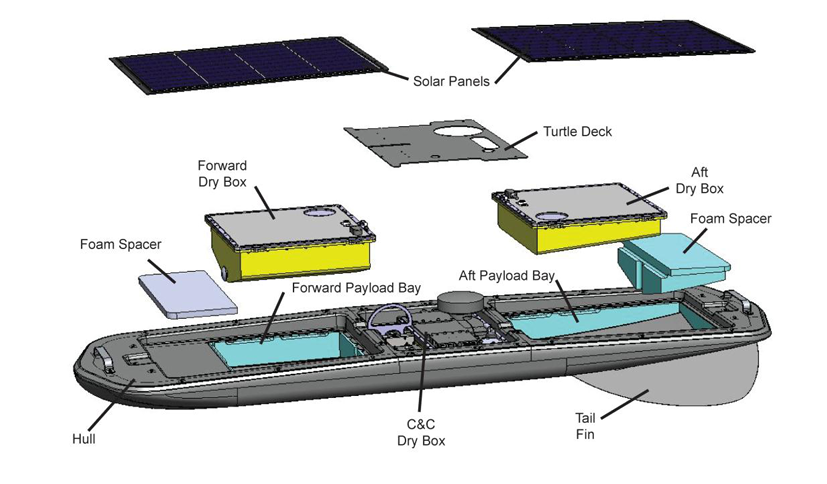
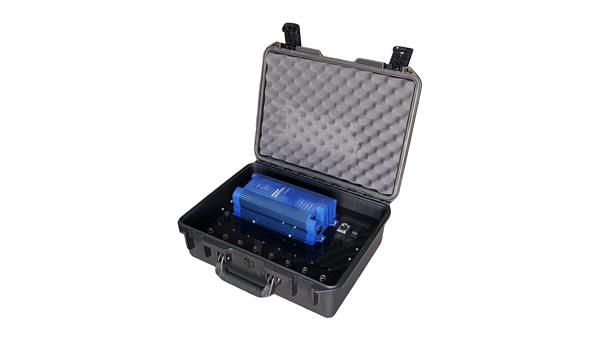
The WG04 Rapid Access Drybox (RAD) provides a flexible and easy to use method for prototyping of payloads for the Liquid Robotics Wave Glider.

The RAD provides rapid access to equipment and components that is useful when prototyping new Wave Glider payloads. During a prototyping phase it is often necessary to change equipment components and complete tests with different configurations so that the ease of access provided by the RAD can save time during the engineering development phase. The RAD features quick-acting spring claw toggle latches for closing and a single circular O-ring that is easy to seat and seal. Not tools are required for access.


SV2 and SV3 Wave Gliders

The WG04 RAD is tested and in-service with SV2 Wave Gliders operated by the Royal Australian Navy.


For more information on the WG04 Rapid Access Drybox, contact the team at BlueZone.

Key Features

Up to 25-hour mission duration

Speeds up to 4.2 knots

Increased module payload capacity

Search and recovery

Hydrography

Deep sea mineral exploration

Marine & Fisheries research

Product Enquiry

    Product Enquiry


    Related Articles

    Autonomous Advantage: Bayonet 250 in the Littoral Battlespace

    The surf zone remains one of the most dangerous and least understood environments in military operations, concealing mines, unexploded ordnance, and obstacles that threaten both personnel and mission success. Traditionally,...

    Read More

    From Contact Detection to Diver Deployment: Enhancing Police Search Operations with SeeByte

    Survey smarter. Investigate faster. Recover with confidence.   When police dive teams are called to investigate a submerged vehicle, recover critical evidence, or conduct a search and recovery operation, every...

    Read More

    AQUAscat® 1000R: Advancing Sediment Research with High-Resolution Acoustic Profiling

    What if a single instrument could reveal both sediment concentration and particle size throughout the water column in real time?   Understanding how sediment moves through rivers, estuaries, coastal environments,...

    Read More