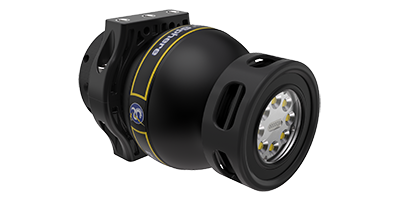
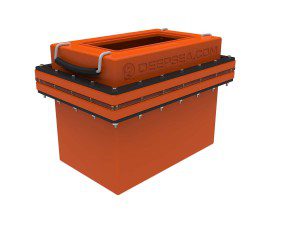
The High-Current SeaBattery takes the already versatile SeaBattery to the next level by allowing users to draw up to 100 amps. The power module is a pressure-compensated submersible battery pack designed to perform at any depth, even the high pressure, low temperature environment of deep ocean trenches. Routine deployments to 6,000 meters as part of sea floor instruments and towed camera sleds have proven the SeaBattery power module to be both reliable and robust in the most demanding of subsea applications.
Up to 25-hour mission duration
Speeds up to 4.2 knots
Increased module payload capacity
Search and recovery
Hydrography
Deep sea mineral exploration
Marine & Fisheries research
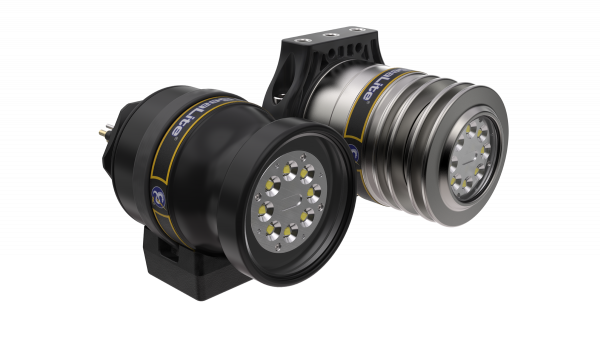
OceanTools compact L3 subsea narrow beam spot lamps are designed for smaller ROV systems.
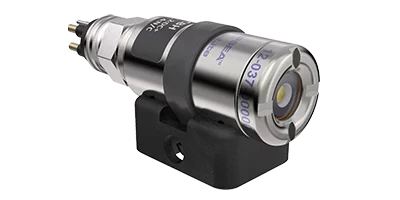
Read moreThe LED Multi SeaCam has LED lights integrated into the housing. This self-lit camera is ideal for applications that require light within a limited space. Features include a sapphire port,...
Read moreDeepSea's Apex® SeaCam® is capable of 4K UHD and operates in multiple HD formats. Proprietary corrector optics provide superior imaging performance with a low-distortion 70° HFOV. A faceplate illumination of 0.56...
Read moreAutonomous Advantage: Bayonet 250 in the Littoral Battlespace
The surf zone remains one of the most dangerous and least understood environments in military operations, concealing mines, unexploded ordnance, and obstacles that threaten both personnel and mission success. Traditionally,...
Read MoreFrom Contact Detection to Diver Deployment: Enhancing Police Search Operations with SeeByte
Survey smarter. Investigate faster. Recover with confidence. When police dive teams are called to investigate a submerged vehicle, recover critical evidence, or conduct a search and recovery operation, every...
Read MoreAQUAscat® 1000R: Advancing Sediment Research with High-Resolution Acoustic Profiling
What if a single instrument could reveal both sediment concentration and particle size throughout the water column in real time? Understanding how sediment moves through rivers, estuaries, coastal environments,...
Read More