L7 Subsea Light

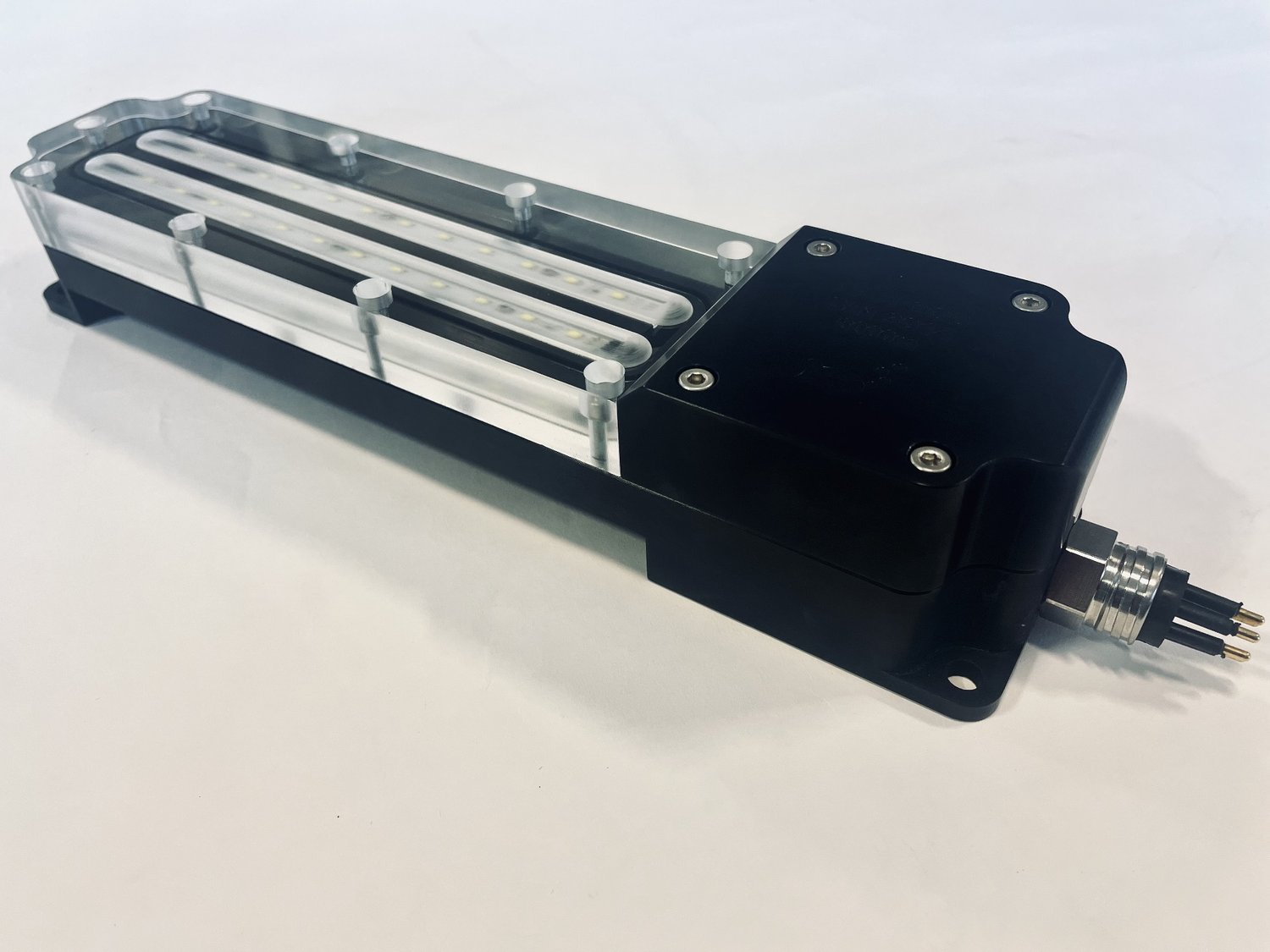
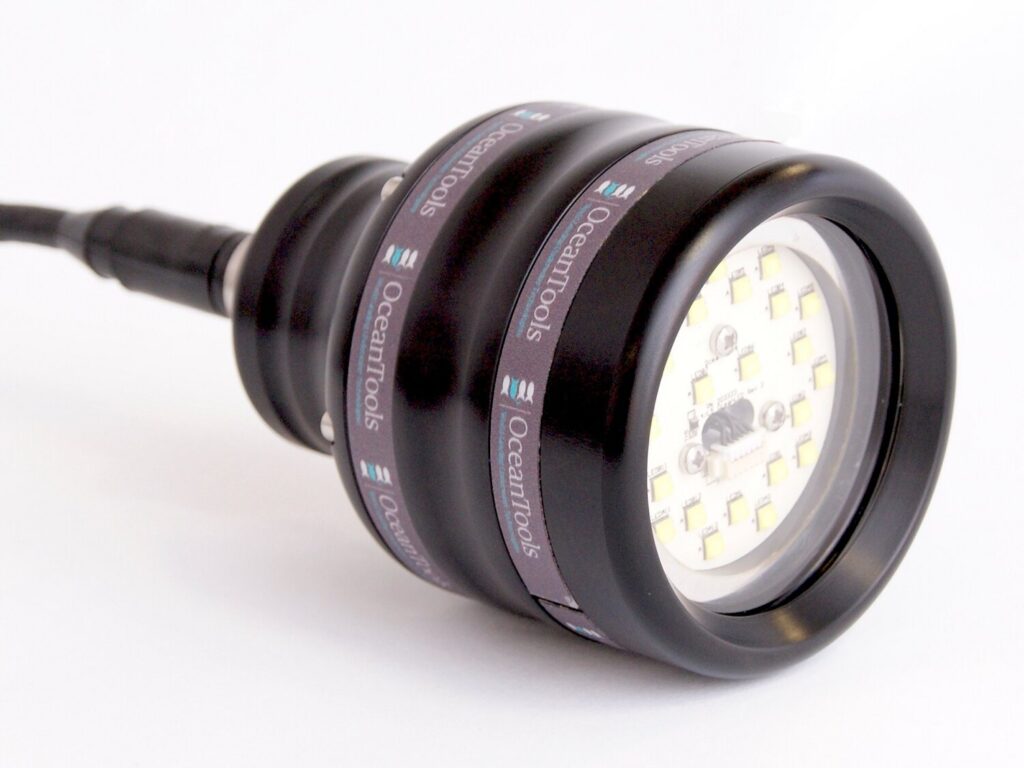
High intensity subsea LED flood lamp

OceanTools L7 high intensity subsea flood lamp utilises the very latest in LED technology and optics to give unrivalled performance and generate a market leading efficiency of more than 220 lumens per Watt, resulting in an output of up to 12,000 lumens. The field serviceable lamps are powered by 24VDC and support a range serial or analogue control options.

L7 flood lamps are part of an ever-expanding range of subsea lamps designed by OceanTools based on client requirements. The aluminium housing with acrylic window is depth rated to 6000m


Key Features:

  • Flicker-free RS232, RS485 or analogue control options

  • Up to 12,000 lumen output

  • 6000m depth rating


L7 Subsea Light Datasheet

OceanTools Light Selection Matrix


For more information about OceanTools L7 Subsea Light, Contact the team at BlueZone.

Key Features

Up to 25-hour mission duration

Speeds up to 4.2 knots

Increased module payload capacity

Search and recovery

Hydrography

Deep sea mineral exploration

Marine & Fisheries research

Product Enquiry

    Product Enquiry


    Related Articles

    Autonomous Advantage: Bayonet 250 in the Littoral Battlespace

    The surf zone remains one of the most dangerous and least understood environments in military operations, concealing mines, unexploded ordnance, and obstacles that threaten both personnel and mission success. Traditionally,...

    Read More

    From Contact Detection to Diver Deployment: Enhancing Police Search Operations with SeeByte

    Survey smarter. Investigate faster. Recover with confidence.   When police dive teams are called to investigate a submerged vehicle, recover critical evidence, or conduct a search and recovery operation, every...

    Read More

    AQUAscat® 1000R: Advancing Sediment Research with High-Resolution Acoustic Profiling

    What if a single instrument could reveal both sediment concentration and particle size throughout the water column in real time?   Understanding how sediment moves through rivers, estuaries, coastal environments,...

    Read More