
The Solid Choice
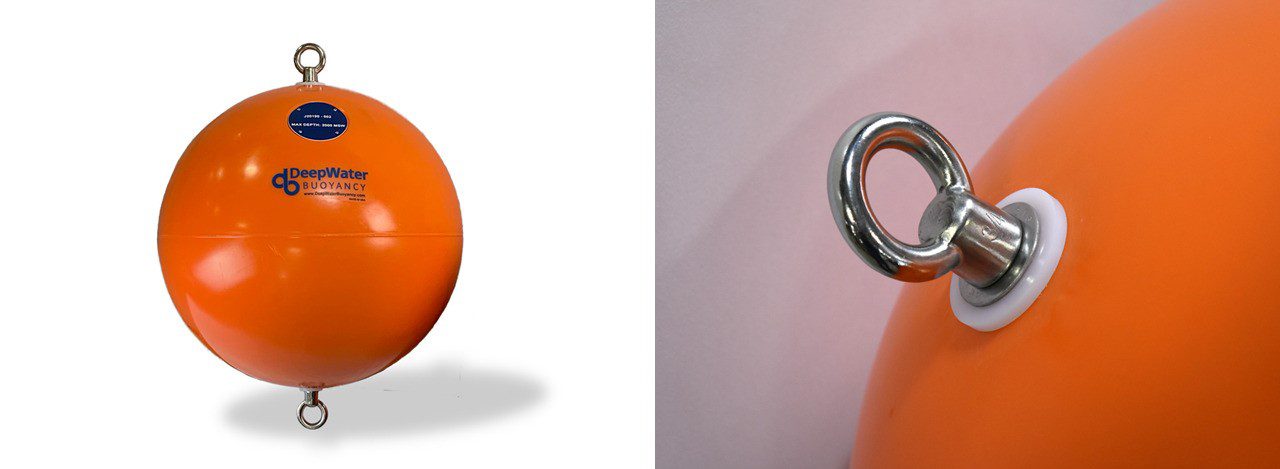
An excellent alternative to glass sphere flotation, DeepWater Buoyancy’s Hardball® Floats provide subsea buoyancy for a wide variety of oceanographic applications. Made for the demands of subsea moorings, as well as the rigors of handling on the decks of vessels, HardBall® Floats are built of strong solid materials for years of reliable service.
No need for a protective covering. No need to handle carefully. No need for regular inspection and maintenance. No danger of implosions at depth. Just rugged, versatile subsea buoyancy – The Solid Choice.
HardBall® Float – The buoyant core of the float is made of only the highest strength, epoxy-based DeepTec® solid syntactic foam.
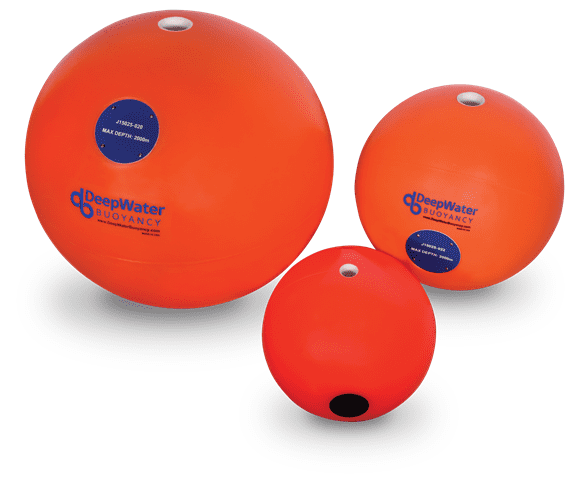
Available in a wide range of sizes and depth ratings the HardBall® Float lives up to its name. The buoyant core of the float is made of only the highest strength, epoxy-based DeepTec® solid syntactic foam – no macrospheres or other high-risk fillers are used. Thick-walled, high-density polyethylene exterior for maximum impact and abrasion resistance. This durable shell also provides resistance to biofouling.
Features and benefits of HardBall® Floats are:
- Buoyancy in a simple spherical package
- Available for numerous depths and diameters that provide varying uplift
- Always solid foam – no fillers
- No hard hat required!
- Comes with a standard through hole for mounting
- Can be provided with eye nut mounting hardware
- Can be mounted in line with mooring

Related products
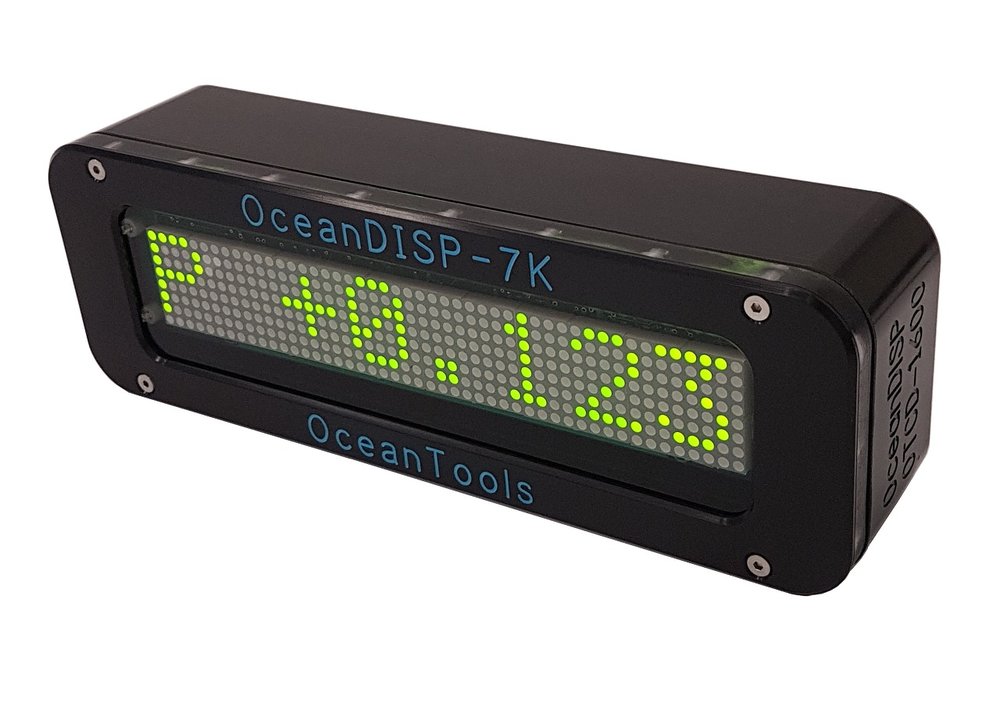
The OceanTools OceanDISP-7K is a versatile, light-activated deep ocean display unit capable of interfacing to the serial outputs of a wide range of subsea devices.
Read more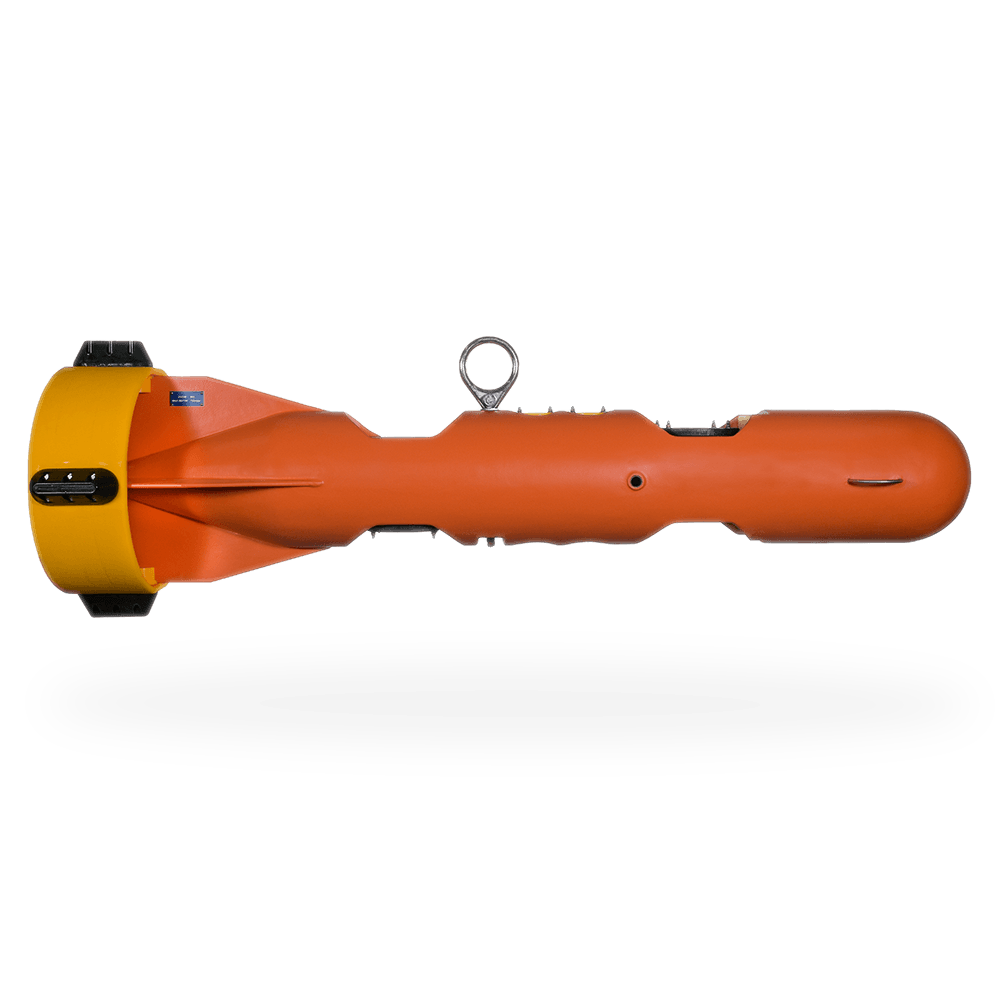
Deepwater Buoyancy StableMoor® Mooring Buoys
Specifically engineered for high current applications, the StableMoor® is designed to reduce drag and increase mooring stability in extreme flow regimes. By decreasing frontal area (compared to our standard spherical...
Read more
Our super-bright LED provides unparalleled visibility in even the worst conditions and our solid state surface sensor's reliability is a significant improvement over mechanical methods.
Read more