
Pop-Up Buoy Recovery System
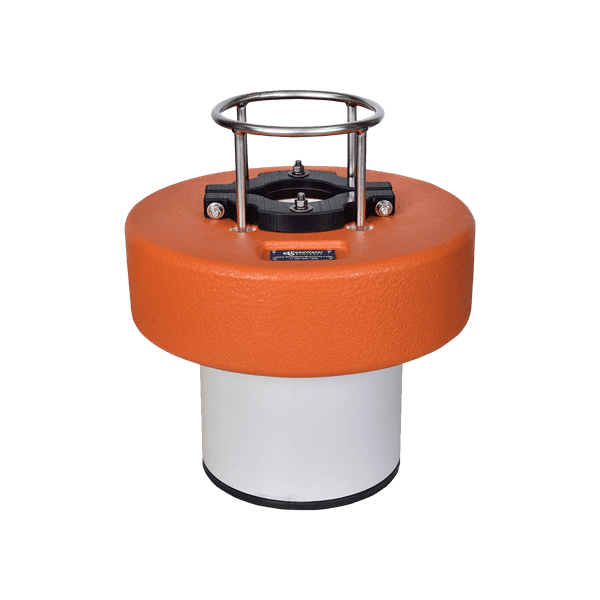
DeepWater Buoyancy’s Pop-Up Buoy Recovery System (PUB) allows for direct retrieval of seabed packages, such as anchors, anchor lines, and bottom-mounted frames and instruments. Easily mounted to any framework, the assembly sits on the seafloor until the acoustic release is activated. Once the release completes its disconnection, the buoy sub-assembly lifts free from the canister sub-assembly and rises to the surface. A synthetic line connects the buoy directly to the framework of the seabed item and allows for retrieval.
The buoy sub-assembly is configured with a syntactic flotation collar, an electro-polished 316 stainless steel frame, and 75 meters of 1/4″ synthetic line. (Other line lengths are available upon request.) The recovery buoy is made from high-strength DeepTec® solid syntactic foam that is rated to 500 meters of depth. The foam is finished with an abrasion-resistant, polyurethane elastomer coating.
The canister subassembly is made from PVC and 316SS plate. It has a rugged design and has attachment features to permit various mounting configurations, including easy mounting to our BTM-AL50 tripod bottom mounts. The standard recovery system is designed to work with both the legacy Teledyne Benthos 875 shallow water release, as well as the new R500 series release.
 |
| The standard recovery system is designed to work with both the legacy Teledyne Benthos 875 shallow water release, as well as the new R500 series release. |
Related products
Mooring Systems Subsurface Floats
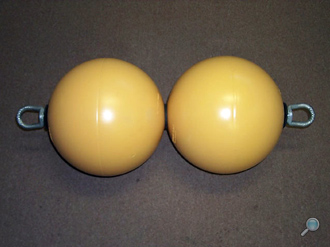
Mooring Systems, Inc. utilises plastic commercial fishing floats and steel floatation spheres for use in a variety of instrument mooring applications.
Read more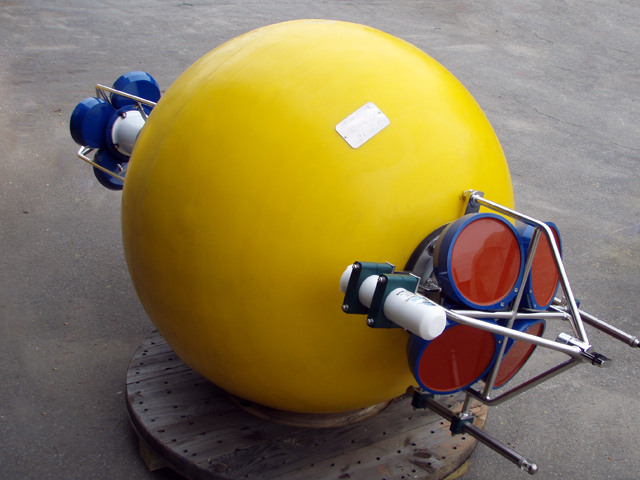
Mooring Systems, Inc. manufactures spherical shaped subsurface buoyancy for ADCP buoy applications with integral stainless steel instrument mounting frames, or with single strength members for use as primary or back-up...
Read more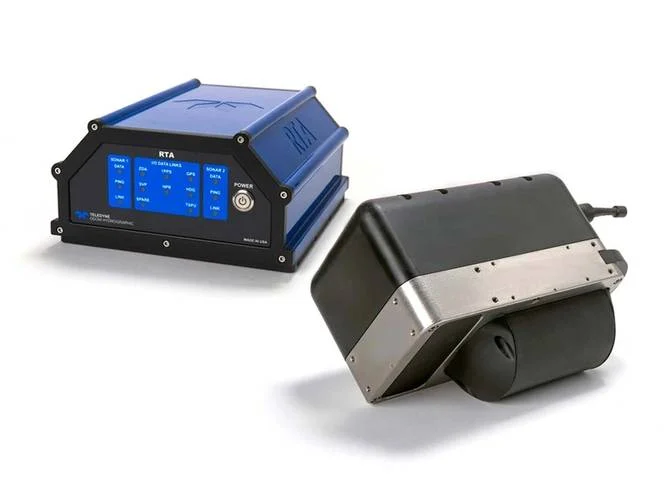
Operating frequency from 170 to 220 kHz, 120 degree swath coverage, Up to 512 beams, Phase and amplitude bottom detection, Up to 240m water depth sounding, Titanium and Acetal construction.
Read more