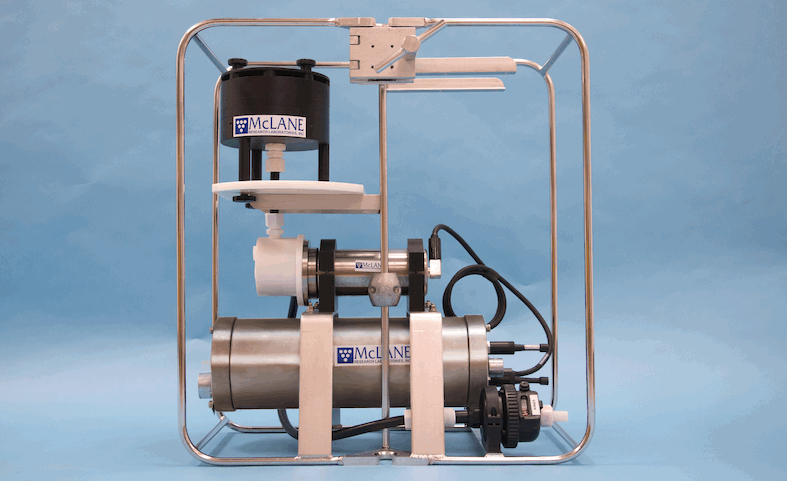
McLane RoCSI – Robotic Cartridge Sampling Instrument

Advanced Biomolecular Sampling for Ocean Science

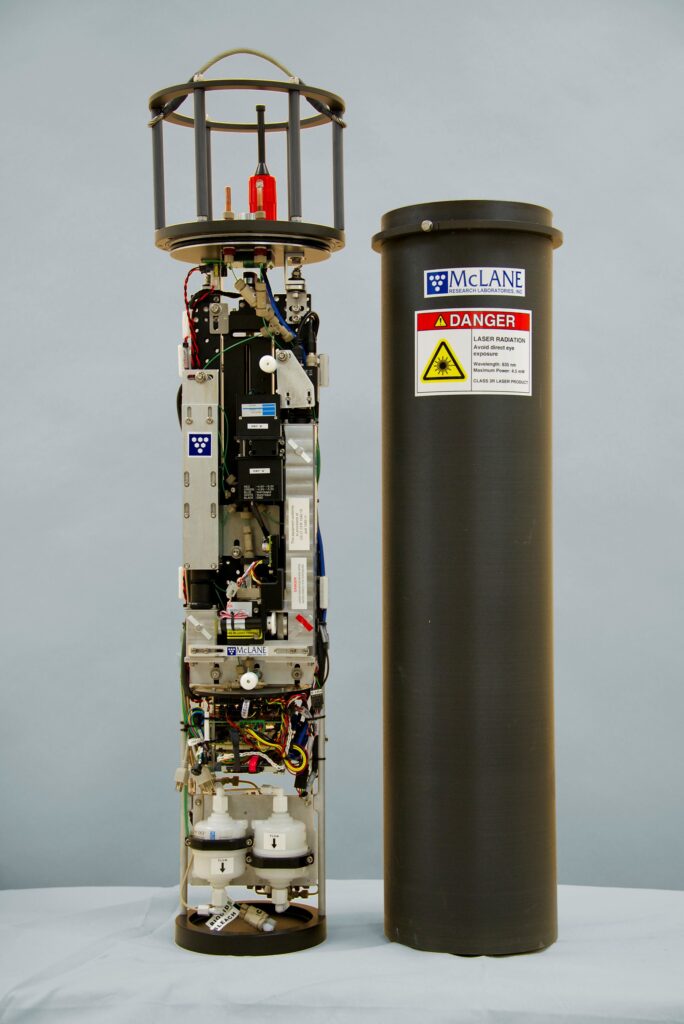
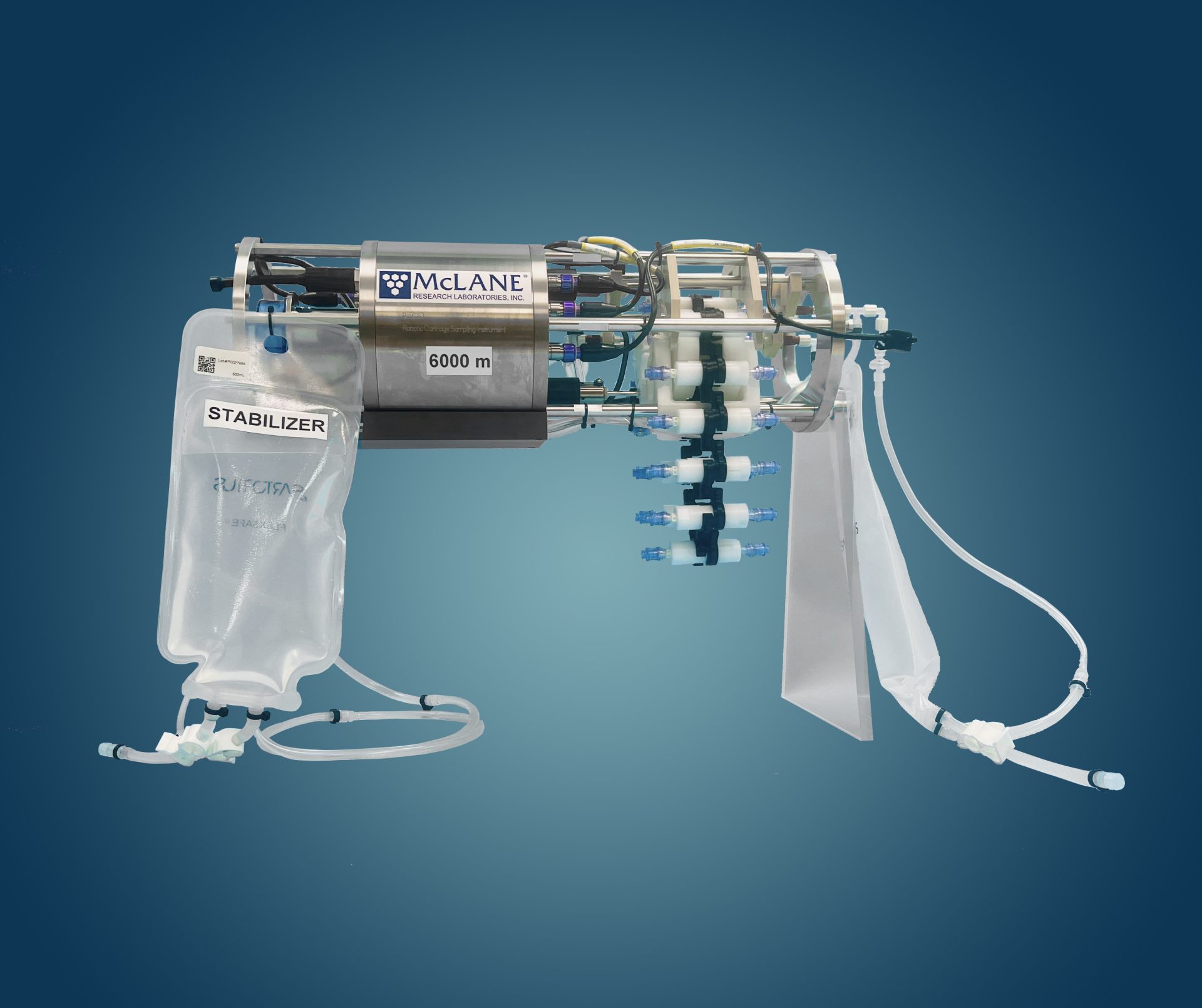
The McLane RoCSI (Robotic Cartridge Sampling Instrument) is a cutting-edge biomolecular sampler designed for in situ collection and preservation of particulate samples, including genetic material and environmental DNA (eDNA). RoCSI utilises a continuous chain of Sterivex™ filter cartridges (0.22 μm or 0.45 μm) to enable high sample throughout, with up to 48 samples per deployment. Its advanced design allows for programmable, supervised sampling—controlling both pressure and flow rate—to ensure precise and repeatable results. The instrument’s automated cleaning system mitigates contamination risks, maintaining sample integrity even in challenging conditions.


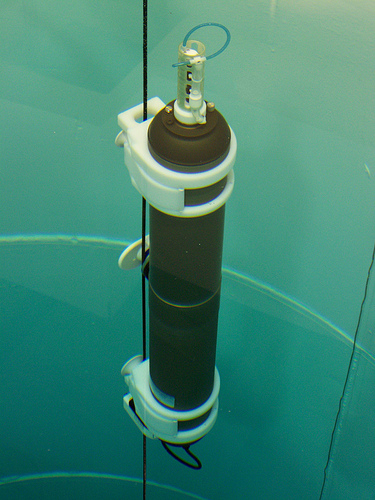
Engineered for versatility and reliability, RoCSI’s compact form factor and robust construction make it suitable for seamless integration with a wide range of deployment platforms, including autonomous underwater vehicles (AUVs), remotely operated vehicles (ROVs), mooring systems, buoys, bottom landers, and shipboard setups. Whether installed on deep-sea moorings or mobile research vehicles, RoCSI delivers consistent performance at depths up to 6,000 meters, supporting applications in genetic research, environmental monitoring, and biosecurity. Its modular configuration options, including moored and vehicle-integrated models, ensure adaptability to diverse scientific missions and operational requirements.


Key Features

  • High Sample Capacity: Collect up to 48 samples per deployment using a continuous cartridge chain.
  • Deepwater Rated: Operates at depths up to 6,000 meters.
  • Flexible Integration: Compact design suitable for AUVs, ROVs, moorings, buoys, and more.
  • Precise Sampling: Programmable, supervised sampling (pressure and flow rate) ensures consistent results.
  • Contamination Mitigation: Automated cleaning of the intake fluid path.
  • Sample Preservation: In situ stabilization and optional preservative injection.
  • Biosecurity Monitoring: Ideal for collecting genetic material, eDNA, fine particulates, and biosecurity samples.


Models & Configurations

Standard RoCSI

  • Dimensions: 53 cm (L) × 17 cm (W) × 18 cm (H) (20.86 in × 6.7 in × 7.08 in)
  • Weight: 15.5 kg (34 lbs) in air; 10 kg (22 lbs) in seawater
  • Depth Rating: 6,000m
  • Power: 12 VDC / 2 A nominal; 25 VDC max
  • Electronics Housing: Titanium
  • Pump: Peristaltic
  • Bulkhead Connectors: Subconn Micro-Circular Series, CRE Marine W-Series
  • Communications: USB to Windows® interface or RS-232 (adaptive sampling)

Moored RoCSI

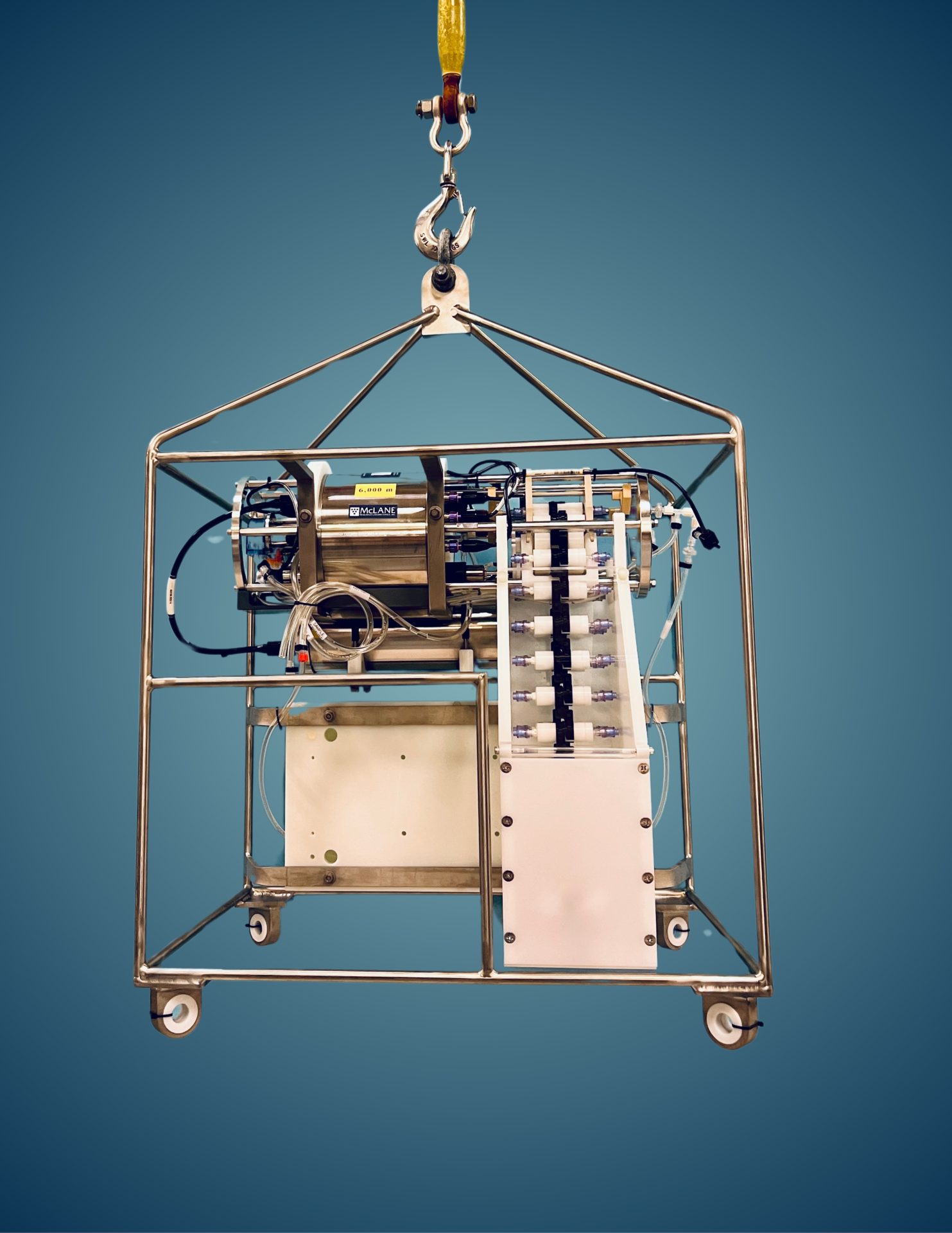
  • Dimensions: 91.44 cm (H) × 49.53 cm (W) × 64.77 cm (L) (36 in × 19.5 in × 25.5 in)
  • Weight: ~45 kg (100 lbs) in air
  • Frame: 316 stainless steel (titanium option available)
  • Battery: Four non-rechargeable lithium batteries in titanium housing
  • Sample Chain Hopper: Secure containment for up to 48 cartridges
  • Reagent Storage: Integrated for sample preservation


Applications

  • Genetic material and eDNA collection
  • Fine particulates and sampling for biosecurity and environmental monitoring
  • Research projects requiring deepwater or long-duration deployments


Contact BlueZone Group for more information on McLane Robotic Cartridge Sampling Instruments  


Read More 

McLane-RoCSI-Datasheet

McLane.Datasheet-Moored.RoCSI_

Key Features

Up to 25-hour mission duration

Speeds up to 4.2 knots

Increased module payload capacity

Search and recovery

Hydrography

Deep sea mineral exploration

Marine & Fisheries research

Product Enquiry

    Product Enquiry


    Related Articles

    DeepSea Power & Light SeaVent®: Protecting Subsea Systems in Extreme Environments

    Compact, Reliable Pressure Protection for Critical Systems Subsea and sealed electronic systems operate in some of the most demanding environments on Earth, where pressure differentials, thermal cycling, and depth‑induced stresses...

    Read More

    SeaPower. Powered by Kraken, supported by BlueZone Group

    BlueZone Group strengthens in‑country sustainment through Kraken SeaPower battery servicing training in Germany   As Australia’s maritime autonomous and uncrewed capability accelerates, so does the need for trusted, in‑country sustainment....

    Read More

    Mission Autonomy in Mine Countermeasures: Coordinating the Uncrewed Fleet

    In an era of contested seas and reduced tolerance for risk, mission level autonomy has become the backbone of effective defence operations. The rapid evolution of maritime mine warfare has...

    Read More