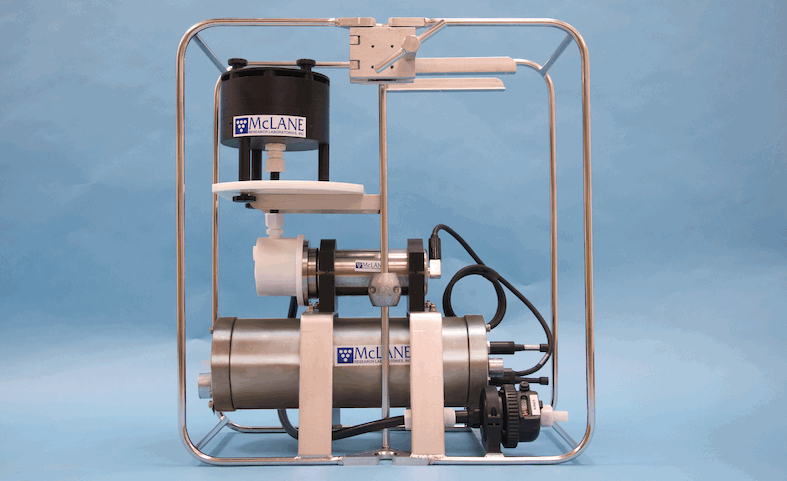
McLane RoCSI – Robotic Cartridge Sampling Instrument

Advanced Biomolecular Sampling for Ocean Science

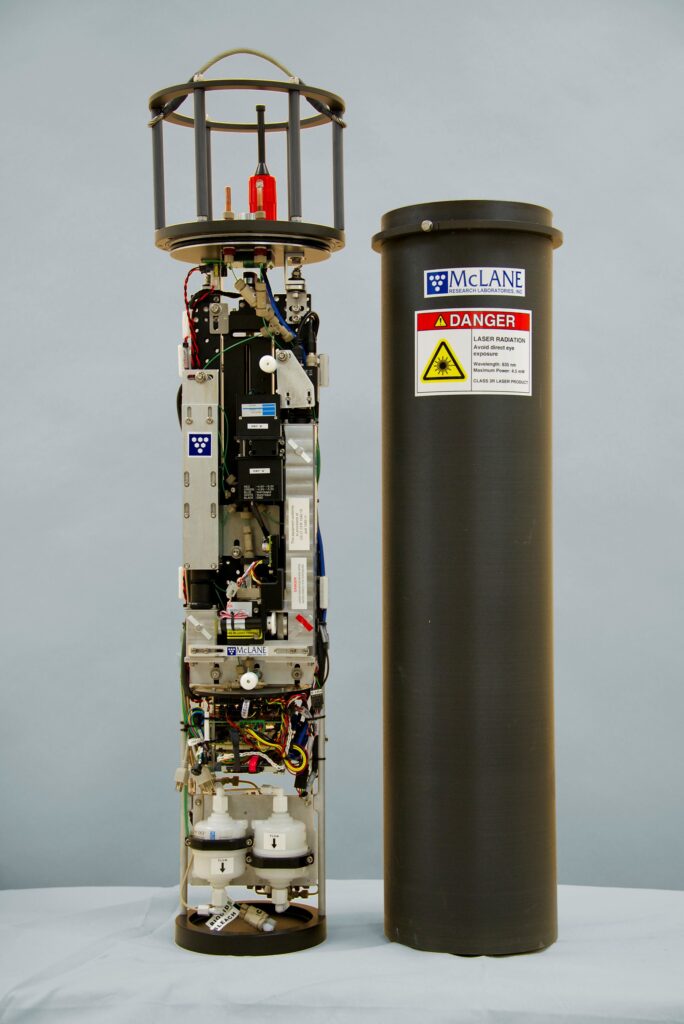
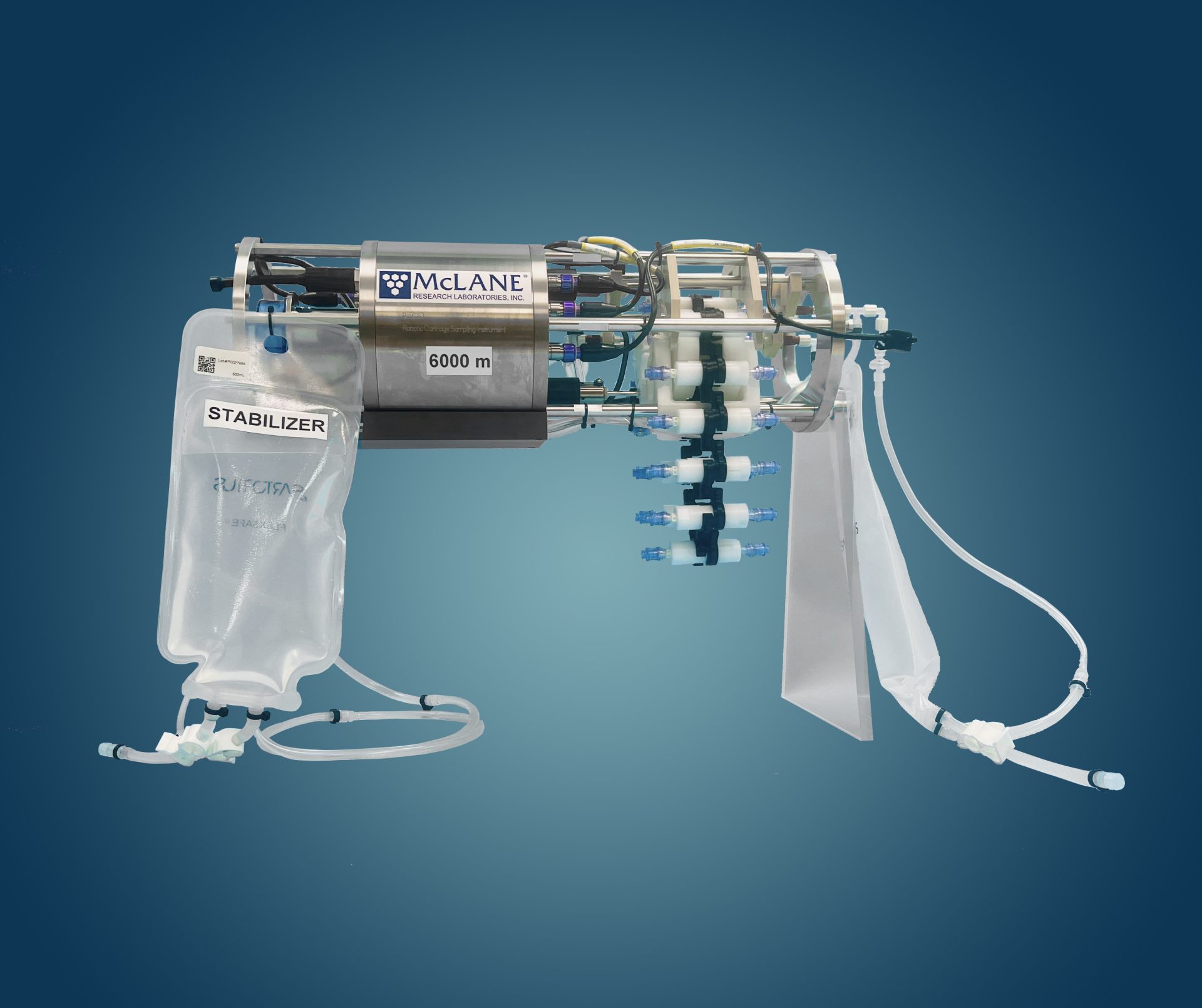
The McLane RoCSI (Robotic Cartridge Sampling Instrument) is a cutting-edge biomolecular sampler designed for in situ collection and preservation of particulate samples, including genetic material and environmental DNA (eDNA). RoCSI utilises a continuous chain of Sterivex™ filter cartridges (0.22 μm or 0.45 μm) to enable high sample throughout, with up to 48 samples per deployment. Its advanced design allows for programmable, supervised sampling—controlling both pressure and flow rate—to ensure precise and repeatable results. The instrument’s automated cleaning system mitigates contamination risks, maintaining sample integrity even in challenging conditions.


Engineered for versatility and reliability, RoCSI’s compact form factor and robust construction make it suitable for seamless integration with a wide range of deployment platforms, including autonomous underwater vehicles (AUVs), remotely operated vehicles (ROVs), mooring systems, buoys, bottom landers, and shipboard setups. Whether installed on deep-sea moorings or mobile research vehicles, RoCSI delivers consistent performance at depths up to 6,000 meters, supporting applications in genetic research, environmental monitoring, and biosecurity. Its modular configuration options, including moored and vehicle-integrated models, ensure adaptability to diverse scientific missions and operational requirements.


Key Features

  • High Sample Capacity: Collect up to 48 samples per deployment using a continuous cartridge chain.
  • Deepwater Rated: Operates at depths up to 6,000 meters.
  • Flexible Integration: Compact design suitable for AUVs, ROVs, moorings, buoys, and more.
  • Precise Sampling: Programmable, supervised sampling (pressure and flow rate) ensures consistent results.
  • Contamination Mitigation: Automated cleaning of the intake fluid path.
  • Sample Preservation: In situ stabilization and optional preservative injection.
  • Biosecurity Monitoring: Ideal for collecting genetic material, eDNA, fine particulates, and biosecurity samples.


Models & Configurations

Standard RoCSI

  • Dimensions: 53 cm (L) × 17 cm (W) × 18 cm (H) (20.86 in × 6.7 in × 7.08 in)
  • Weight: 15.5 kg (34 lbs) in air; 10 kg (22 lbs) in seawater
  • Depth Rating: 6,000m
  • Power: 12 VDC / 2 A nominal; 25 VDC max
  • Electronics Housing: Titanium
  • Pump: Peristaltic
  • Bulkhead Connectors: Subconn Micro-Circular Series, CRE Marine W-Series
  • Communications: USB to Windows® interface or RS-232 (adaptive sampling)

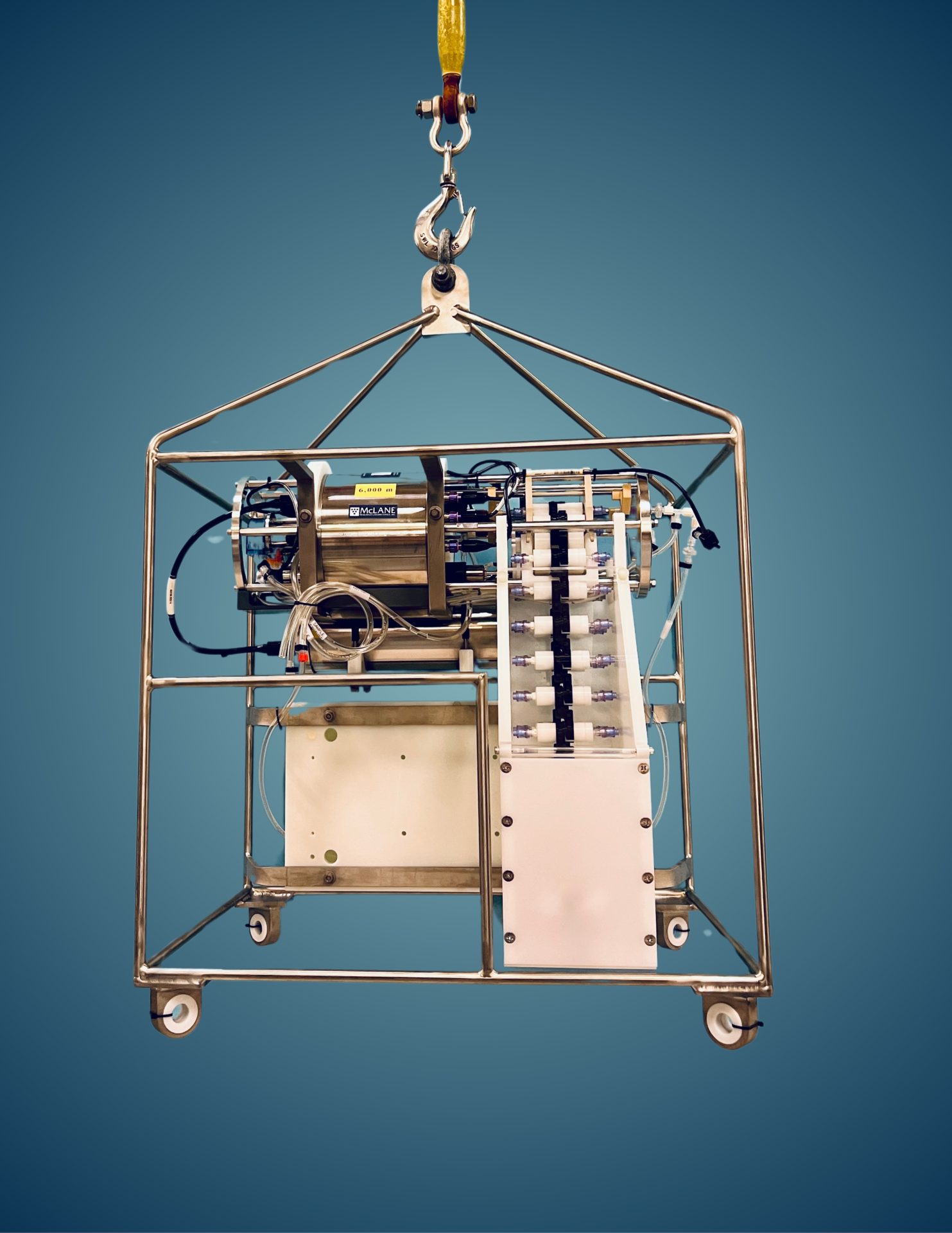
Moored RoCSI

  • Dimensions: 91.44 cm (H) × 49.53 cm (W) × 64.77 cm (L) (36 in × 19.5 in × 25.5 in)
  • Weight: ~45 kg (100 lbs) in air
  • Frame: 316 stainless steel (titanium option available)
  • Battery: Four non-rechargeable lithium batteries in titanium housing
  • Sample Chain Hopper: Secure containment for up to 48 cartridges
  • Reagent Storage: Integrated for sample preservation


Applications

  • Genetic material and eDNA collection
  • Fine particulates and sampling for biosecurity and environmental monitoring
  • Research projects requiring deepwater or long-duration deployments


Contact BlueZone Group for more information on McLane Robotic Cartridge Sampling Instruments  


Read More 

McLane-RoCSI-Datasheet

McLane.Datasheet-Moored.RoCSI_

Key Features

Up to 25-hour mission duration

Speeds up to 4.2 knots

Increased module payload capacity

Search and recovery

Hydrography

Deep sea mineral exploration

Marine & Fisheries research

Product Enquiry

    Product Enquiry


    Related Articles

    EOFY Highlights: Recognising the Achievements of the BlueZone Commercial Team

    As we close out another financial year, it’s the perfect moment to reflect on the dedication, passion, and hard work that has defined the BlueZone Group Commercial Team over the...

    Read More

    Greensea IQ assert control beneath the waves

    $18m contract award will hand divers control of seabed survey and EOD.   Since 2023, Greensea IQ has been helping armed forces take control of one of the most difficult...

    Read More

    Beyond Line-of-Sight: Enabling Over-the-Horizon Autonomy with USV Relay Architectures

    As maritime operations push further into contested and communications-limited environments, the question, “can the Royal Australian Navy project autonomous capability beyond the horizon?”, is looming large. BlueZone Group and SeeByte...

    Read More