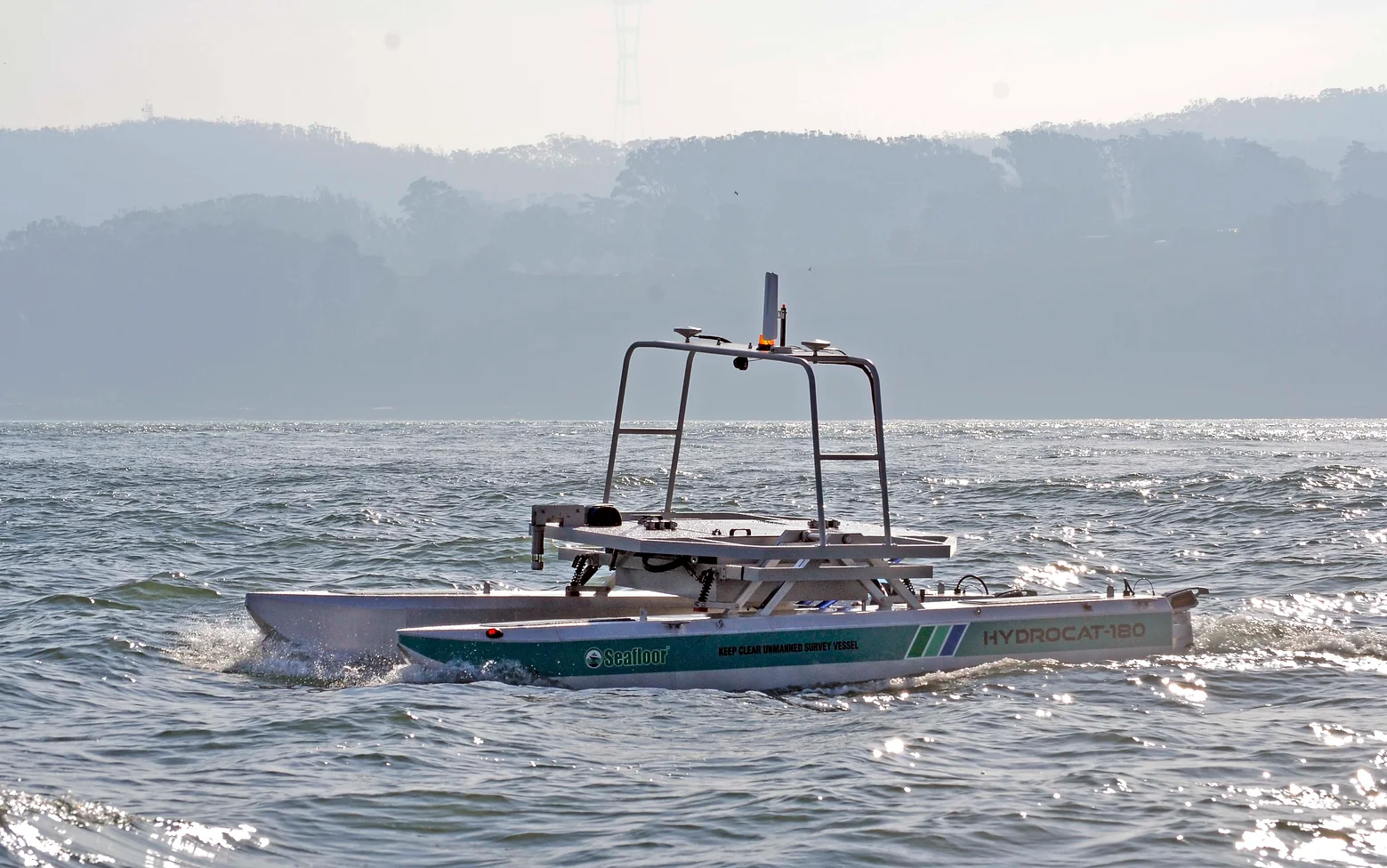
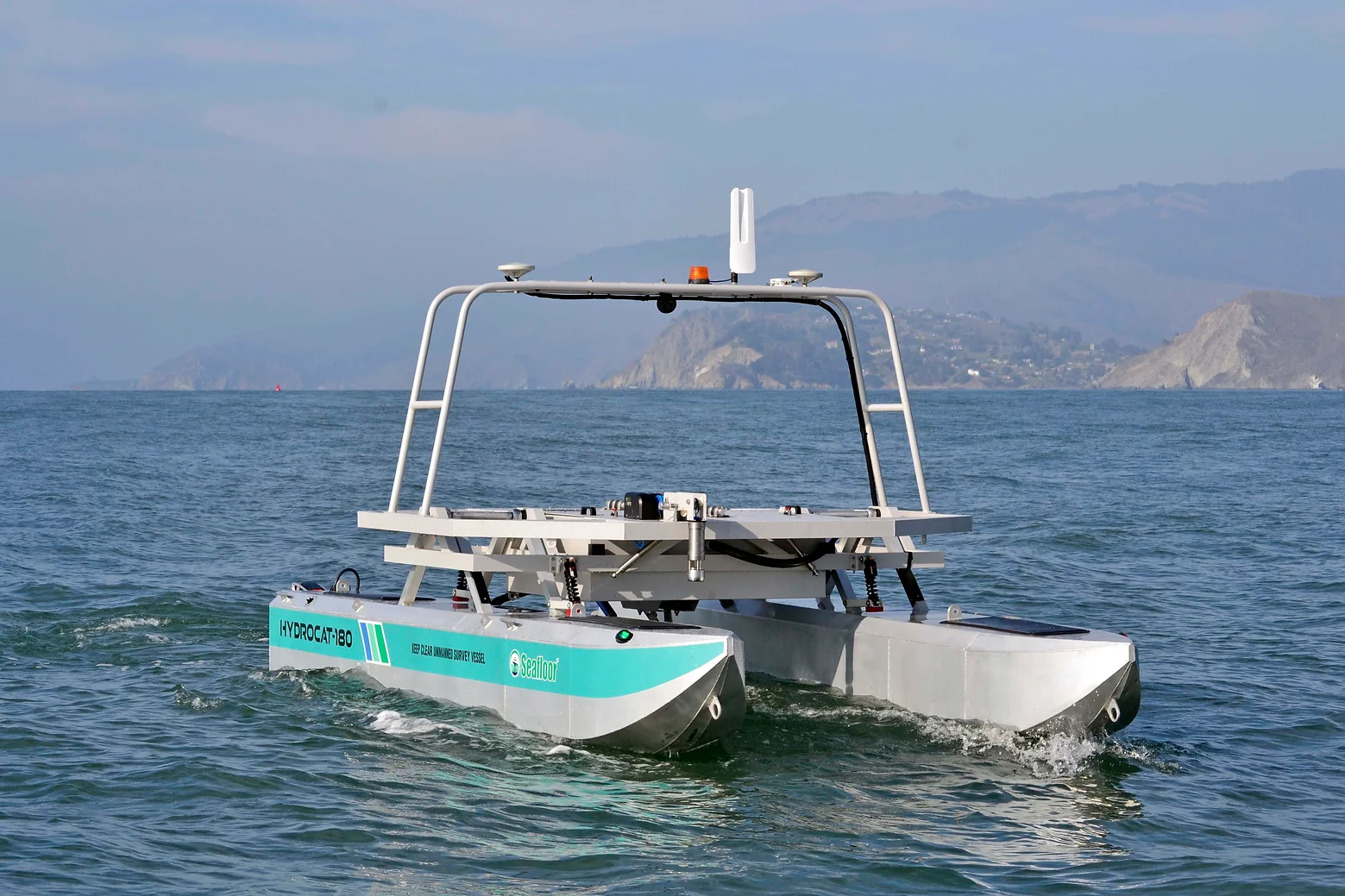
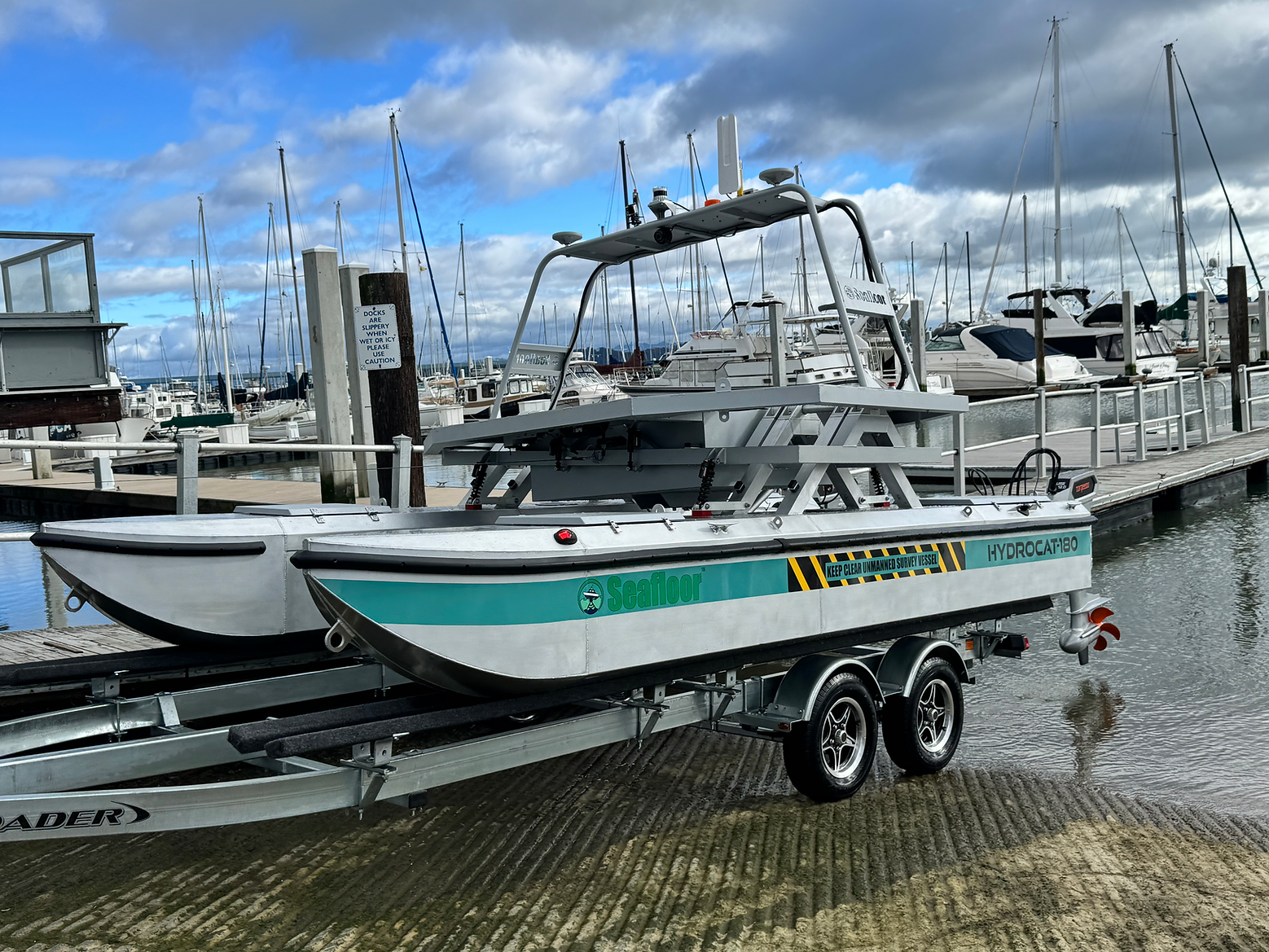
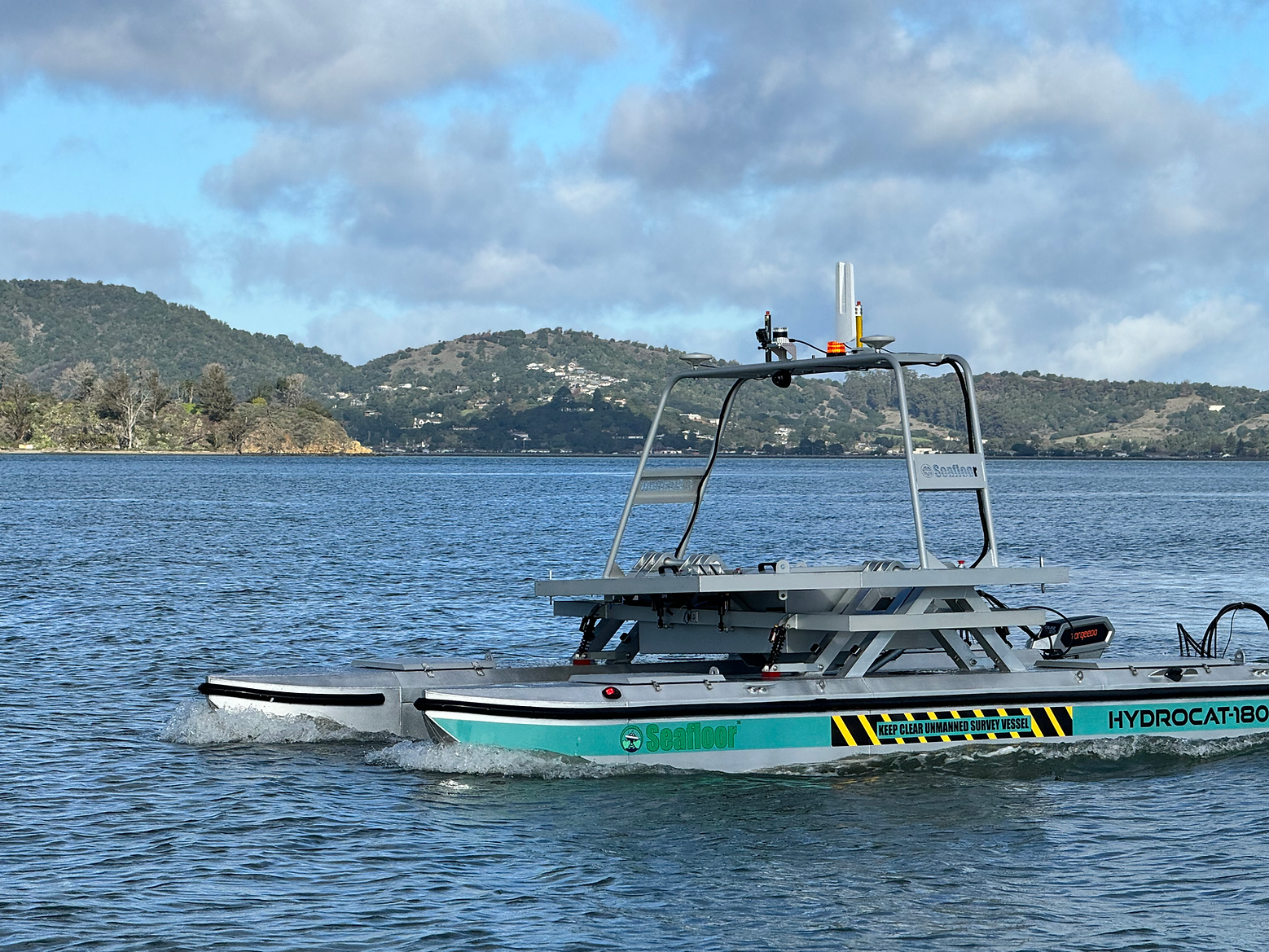
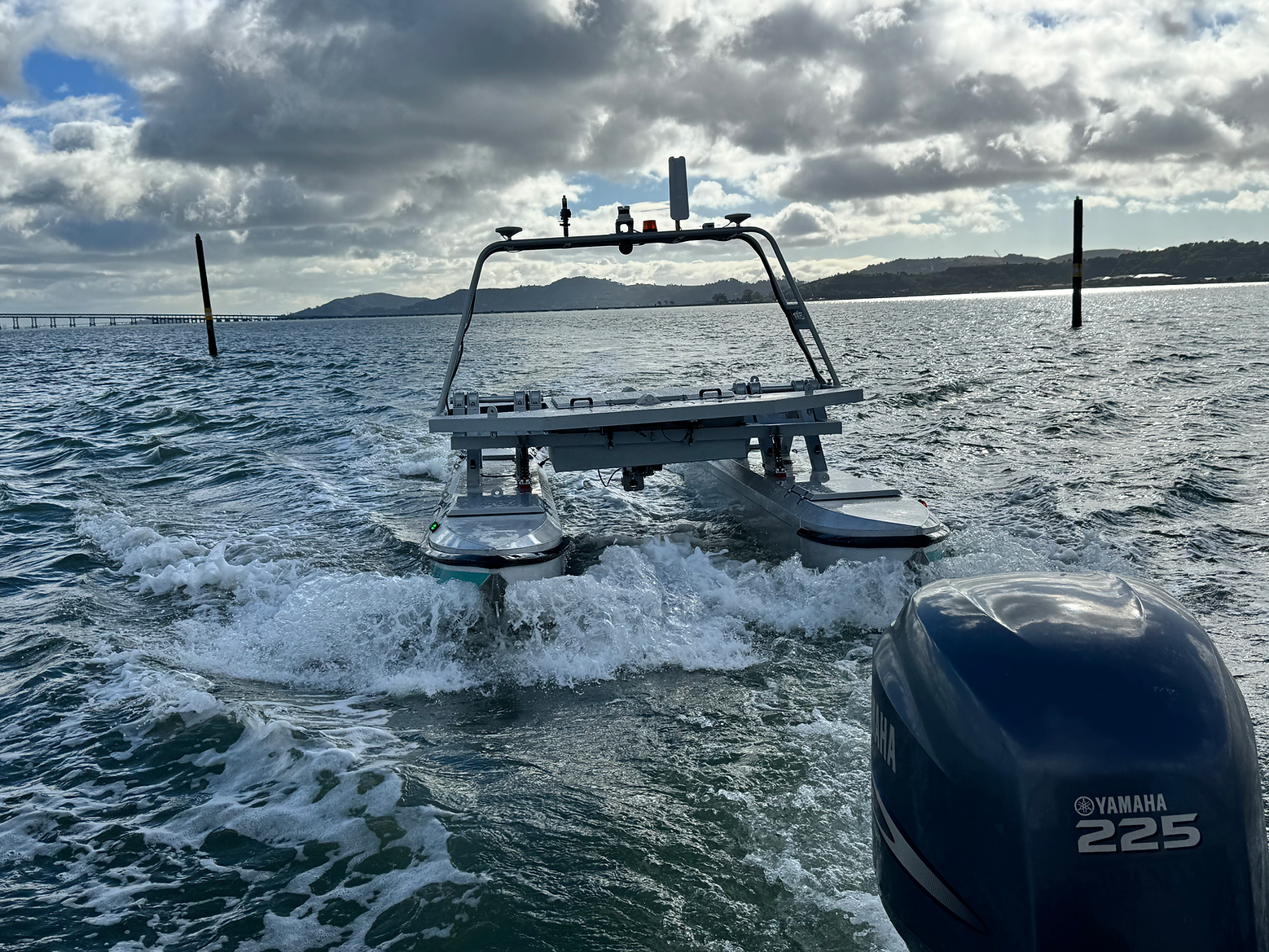
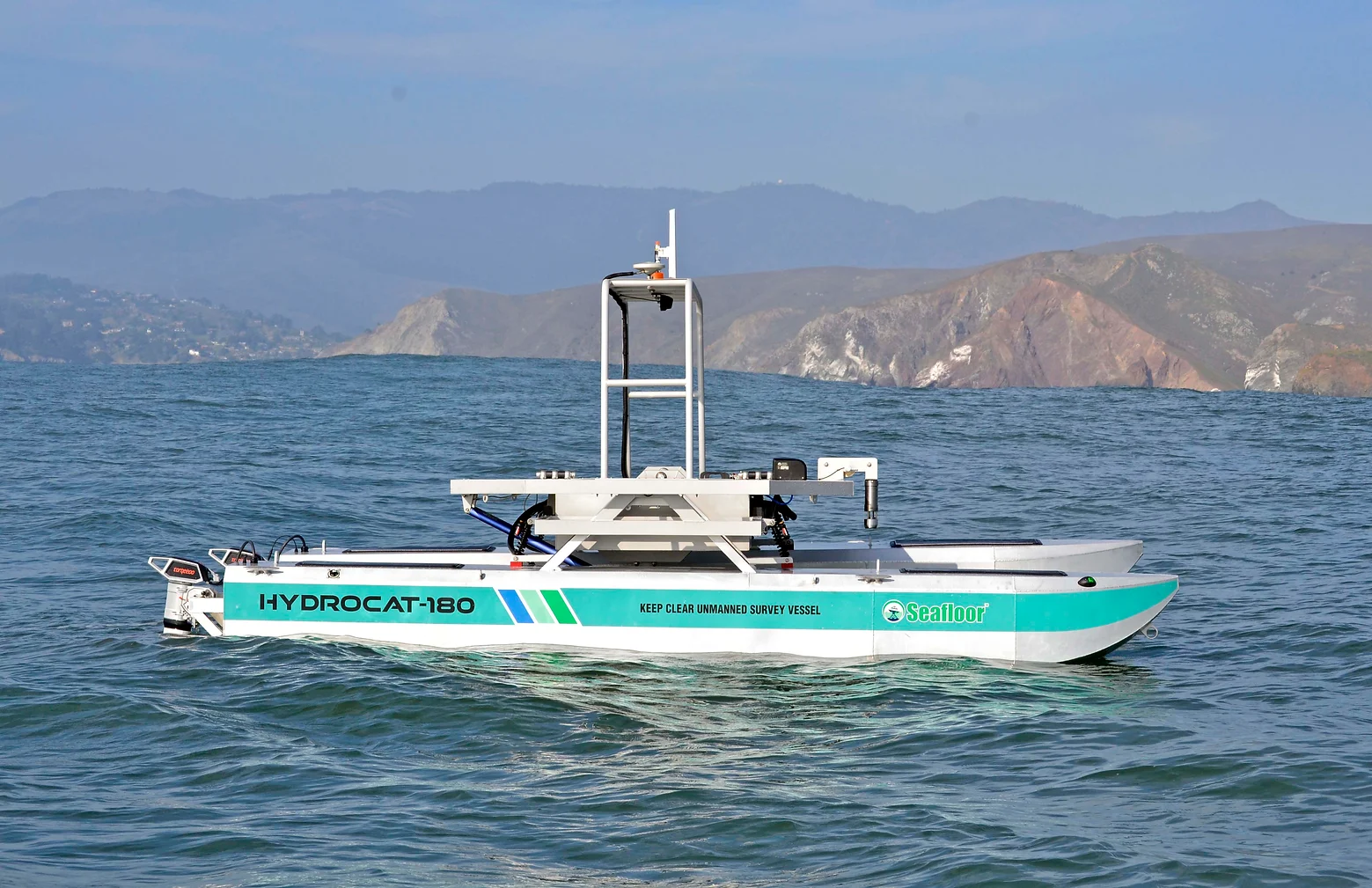
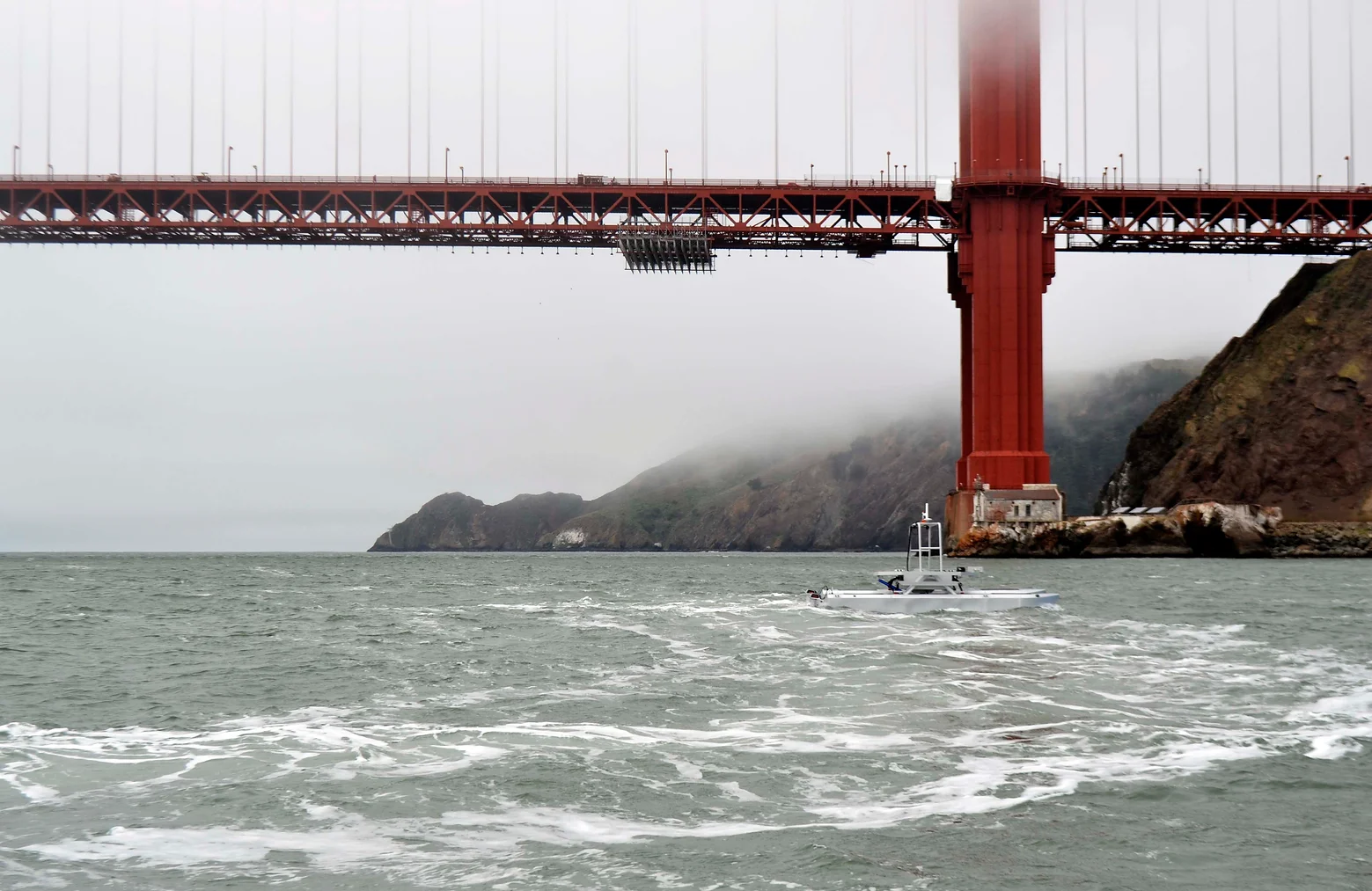
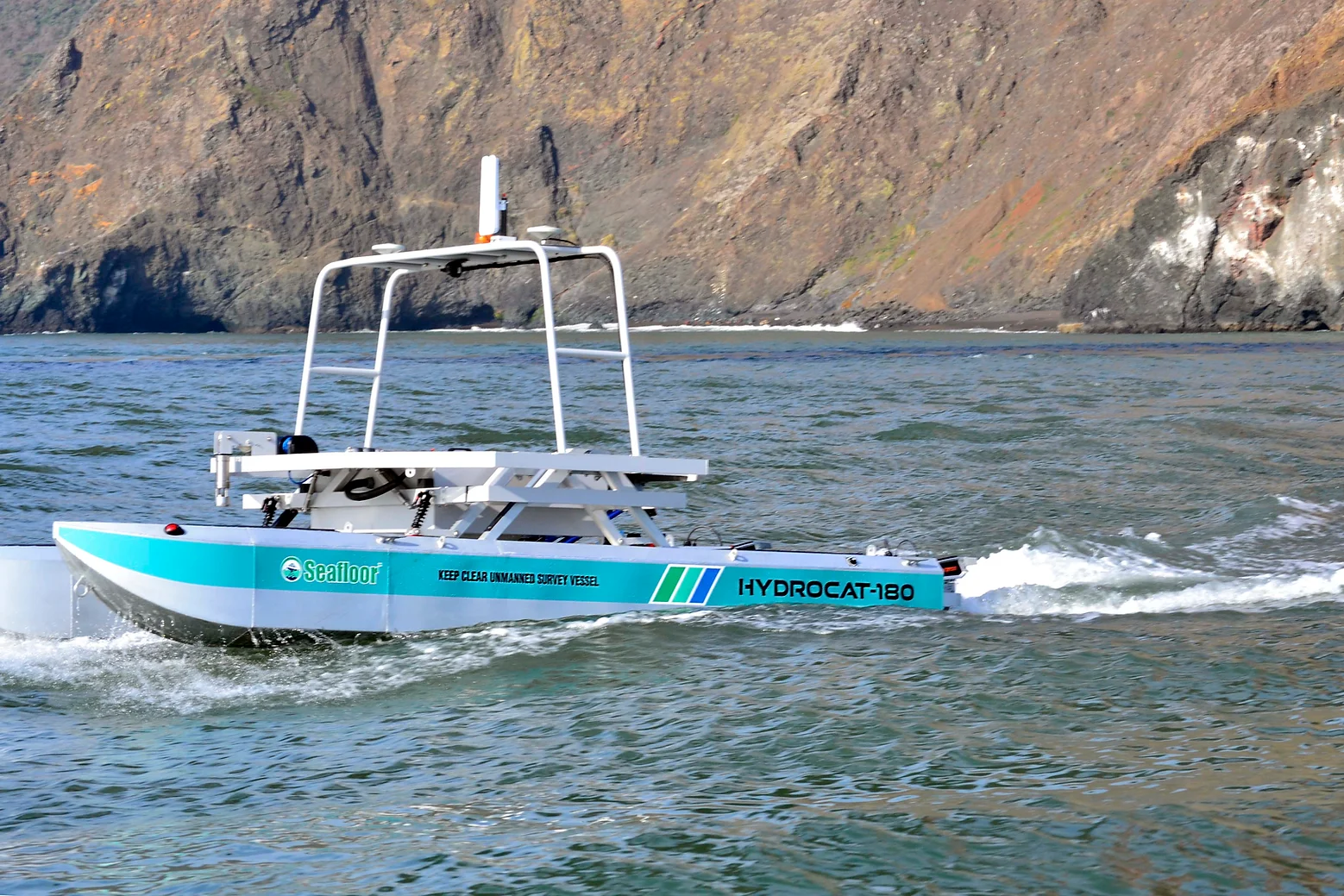
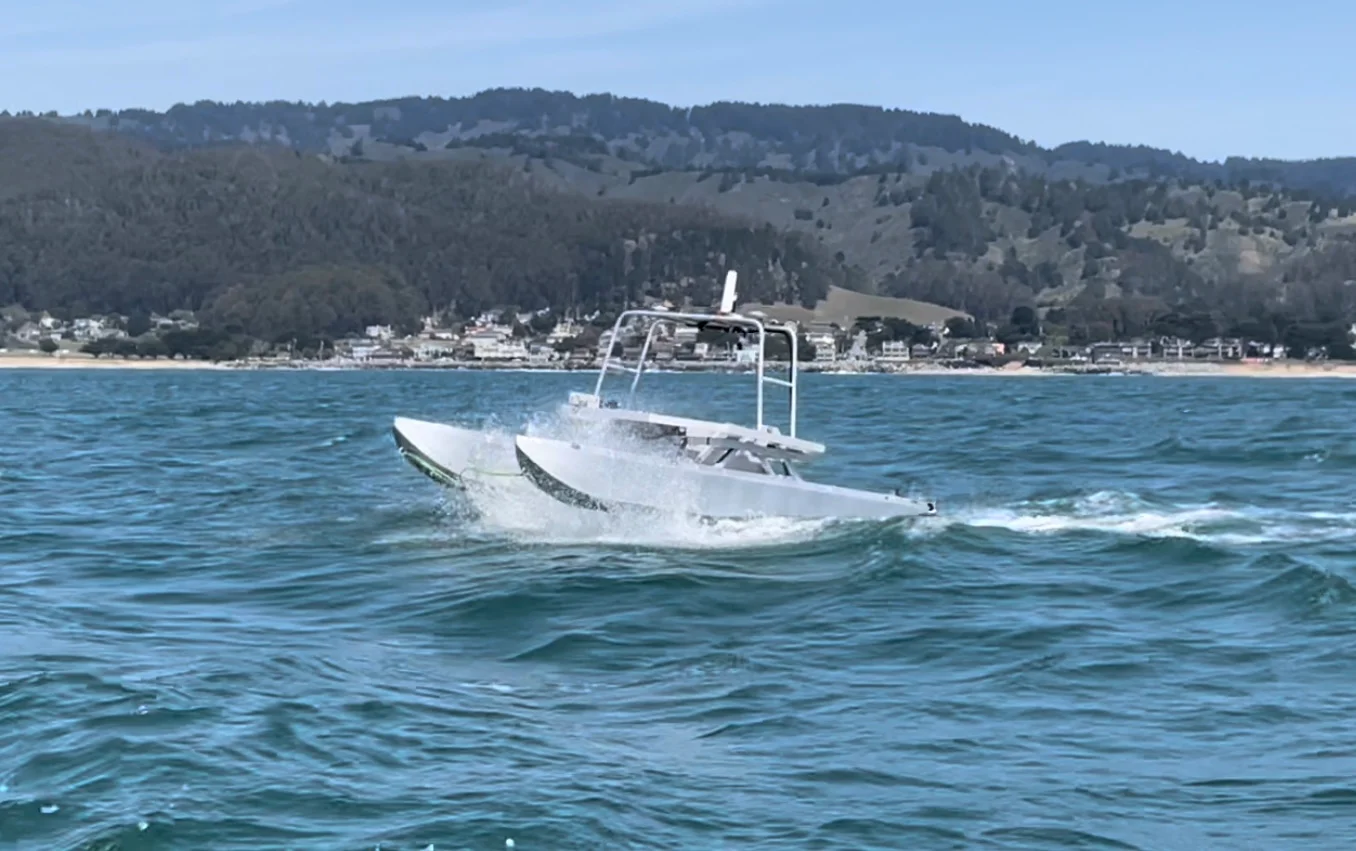
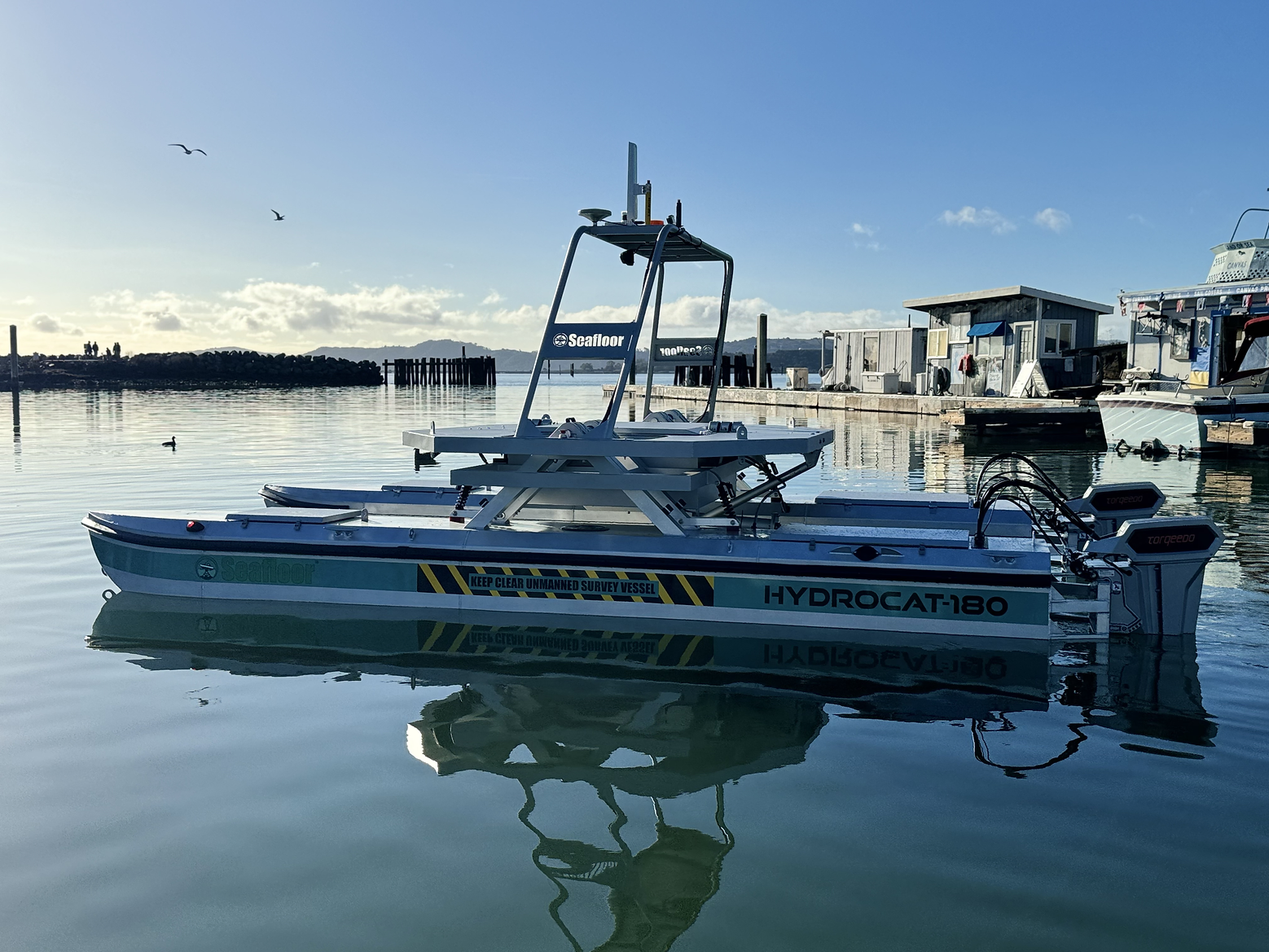
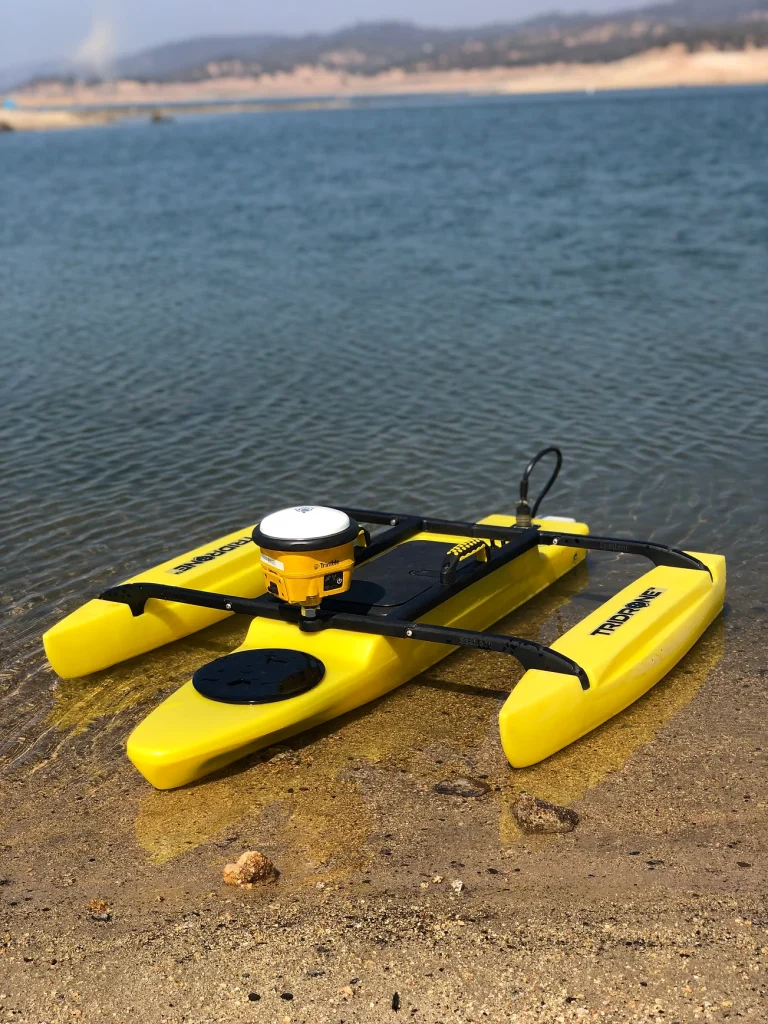
The HydroCat-550™ USV is capable of transiting from inshore to nearshore environments with high-resolution equipment payloads to conduct preplanned autonomous hydrographic surveys. The 5.5m (18ft) catamaran features individually-articulating pontoons, a gimballed deck, retractable sonar pole mount, and independently-actuated electric motors. The vessel can be transported via trailer, programmed to execute missions, and navigate up to sea state 5 conditions with its aluminum hull construction.
Key Features:
*Speed in ideal conditions. 4 to 18 hours operational endurance at survey speed or 1.5 hours operational endurance at max speed with default battery configuration.
Read More:
For more information on the HydroCat-550™ USV, contact the team at BlueZone.
Up to 25-hour mission duration
Speeds up to 4.2 knots
Increased module payload capacity
Search and recovery
Hydrography
Deep sea mineral exploration
Marine & Fisheries research
The SmartCast™ was designed to automatically deploy a sound velocity profiler to user-selected depths. The winch can be mounted onto the front of the USV and uses an IP69k encoder...
Read moreThe AutoNav Plus™ combines the AutoNav™ control system, which enables USVs to navigate pre-programmed survey routes, with a long range communication control system and built-in computer for data logging and...
Read moreAutonomous Advantage: Bayonet 250 in the Littoral Battlespace
The surf zone remains one of the most dangerous and least understood environments in military operations, concealing mines, unexploded ordnance, and obstacles that threaten both personnel and mission success. Traditionally,...
Read MoreFrom Contact Detection to Diver Deployment: Enhancing Police Search Operations with SeeByte
Survey smarter. Investigate faster. Recover with confidence. When police dive teams are called to investigate a submerged vehicle, recover critical evidence, or conduct a search and recovery operation, every...
Read MoreAQUAscat® 1000R: Advancing Sediment Research with High-Resolution Acoustic Profiling
What if a single instrument could reveal both sediment concentration and particle size throughout the water column in real time? Understanding how sediment moves through rivers, estuaries, coastal environments,...
Read More