
Non-Toxic, Non-Contact Antifouling Solution
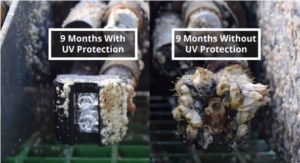
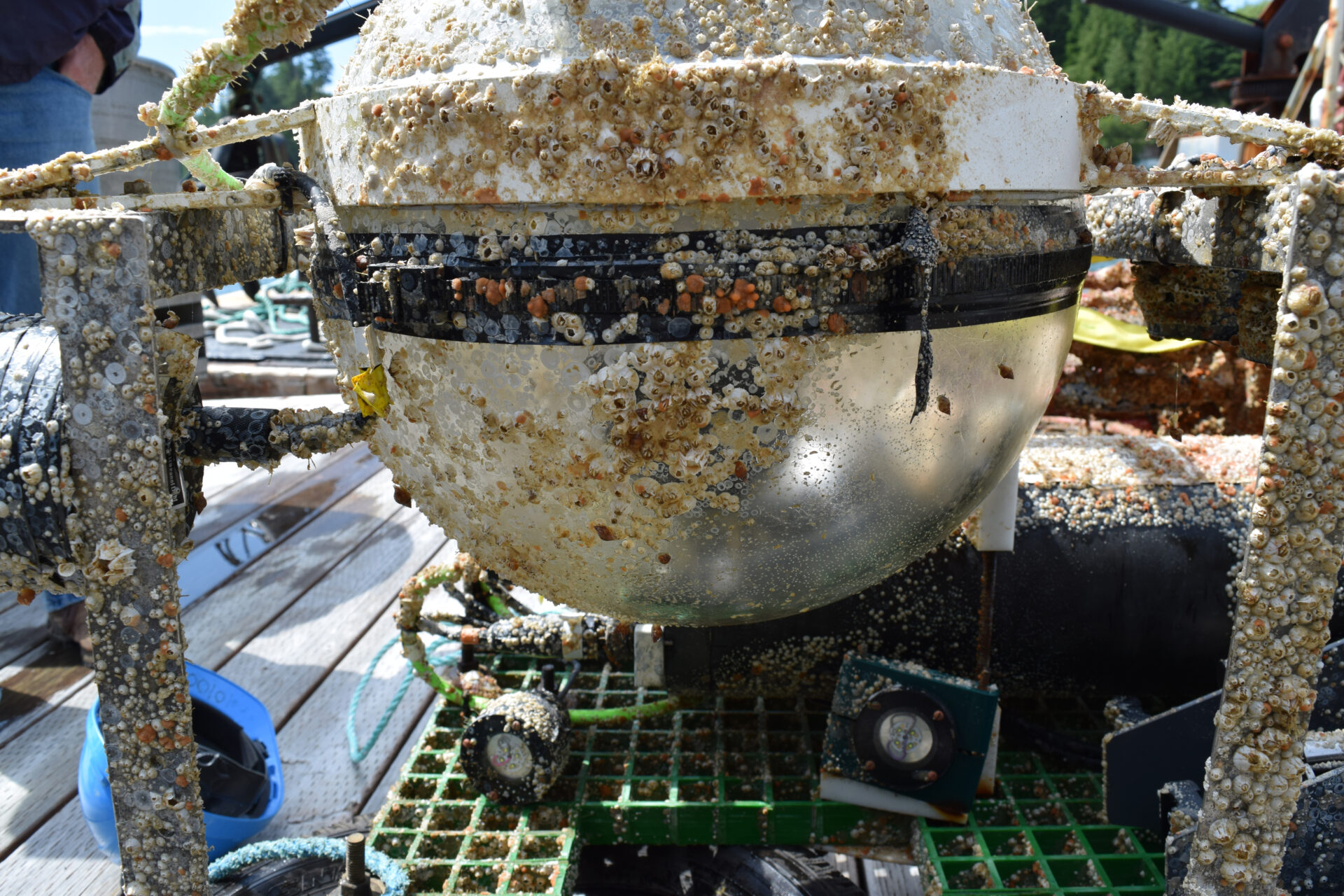
When instrumentation is deployed underwater in a stationary position for long periods of time, biofouling will occur. This unwanted marine growth causes sensor drift, requiring preventative measures to ensure accurate data. Previously, the two most common methods to manage biofouling were mechanical wipers and chemical dosing. Neither is ideal, with the first being unsuitable for sensitive lenses and complex geometries, and the second being harmful to the environment.
AML’s biofouling control technology uses ultraviolet light to provide a non-toxic, non-contact solution to prevent marine growth. A biofouling solution unlike any other method currently on the market, Streetlamp UV and Cabled UV prevent biofouling during long-term, in-situ deployments. The LED modules bathe critical surfaces in ultraviolet (UV) light, killing early growth to prevent biofouling, and thus eliminating environmental drift in CTDs and multi-parameter instruments, and keeping critical surfaces of subsea devices clean.
Suitable for any situation:
- Sensors
- Lights
- ADCPs
- Camera lenses
- Hydrophones
- Sonar Heads
Key Benefits:
- Environmentally Friendly: No chemicals involved
- Long Lasting: Swappable UV lens has a lifespan of 2+ years
- Contactless: Protects surfaces with no direct contact
- Hydrophone Compatible: Operates silently
- Adaptable: Suitable for fragile and/or complex surfaces
Read More:
UV Biofouling Control Datasheet
Related products
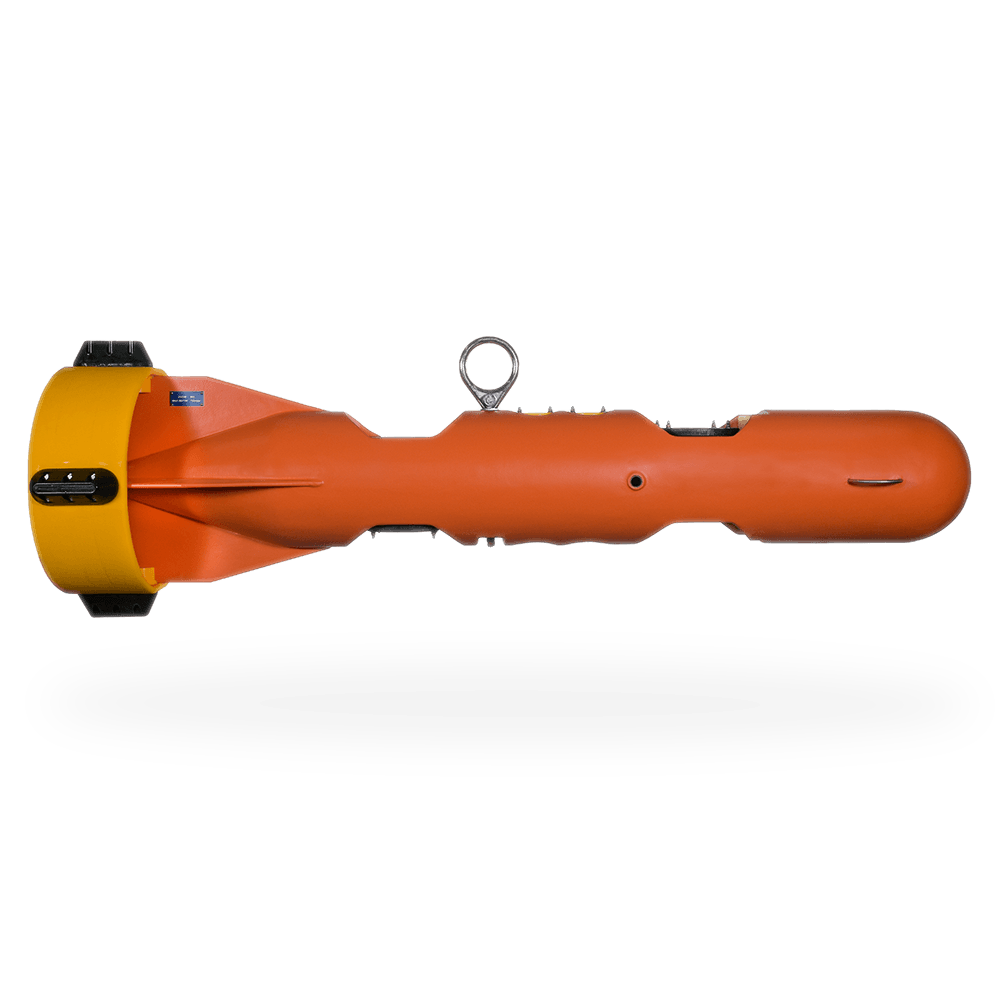
Deepwater Buoyancy StableMoor® Mooring Buoys
Specifically engineered for high current applications, the StableMoor® is designed to reduce drag and increase mooring stability in extreme flow regimes. By decreasing frontal area (compared to our standard spherical...
Read more
Our super-bright LED provides unparalleled visibility in even the worst conditions and our solid state surface sensor's reliability is a significant improvement over mechanical methods.
Read more
BlueZone has worked with many customers to specify and supply Teledyne Benthos components for projects Australia-wide. Teledyne Benthos acoustic modems, acoustic releases and pop-up buoys have been supplied for projects...
Read more