Xeos Ares Turbidity Sensor

Optical Turbidity Sensor

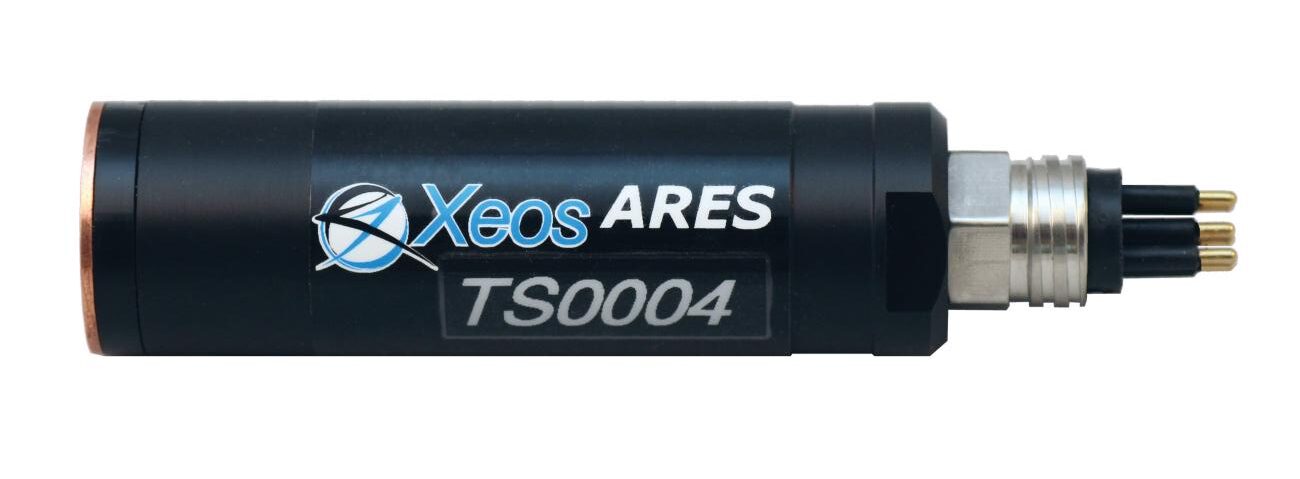
The Ares Turbidity Sensor features state-of-the-art technology for measuring water clarity for environmental water quality monitoring, oceanographic research, marine operations, and aquaculture monitoring. The Ares is based on the optical measurement principle, using ultra-bright, energy-efficient infrared LEDs as an excitation source and detectors to measure infrared light reflected by suspended particulate material in a water volume. These digital optical sensors are programmed with a calibrated response to reflected light that can be converted to quantitative measurements of turbidity (measured in Nephelometric Turbidity Units or NTUs).


Key Features:

  • Ultra bright energy efficient infrared LEDs
  • Fiber optics to improve efficiency and size
  • Individually calibrated with laboratory standards
  • Gain switching to maximize resolution
  • Digital and analog outputs
  • Anti-biofouling face place


Read More:

Ares Turbidity Sensor Datasheet


Key Features

Up to 25-hour mission duration

Speeds up to 4.2 knots

Increased module payload capacity

Search and recovery

Hydrography

Deep sea mineral exploration

Marine & Fisheries research

Product Enquiry

    Product Enquiry


    Related Articles

    Ahead of the Tide: A Year of Milestones and Momentum- A Letter from the Director

    By Neil Hodges, Managing Director, BlueZone Group   As 2025 draws to a close, it’s a moment to reflect on a year that has been nothing short of transformative for...

    Read More

    BlueZone Group Year in Review

    Global Journeys, Fresh Faces and Capability Growth That Sets the Stage for the Future   For BlueZone Group, 2025 has been nothing short of transformative — a year defined by...

    Read More

    Safer Summers: Innovation Beneath the Waves with ArtemisSAR and StarFish

    The Advanced Sonar Systems Giving Surf Life Savers the Tools to Protect Lives with Greater Speed, Safety, and Confidence   As we turn the page into Aussie summer, the rhythm...

    Read More