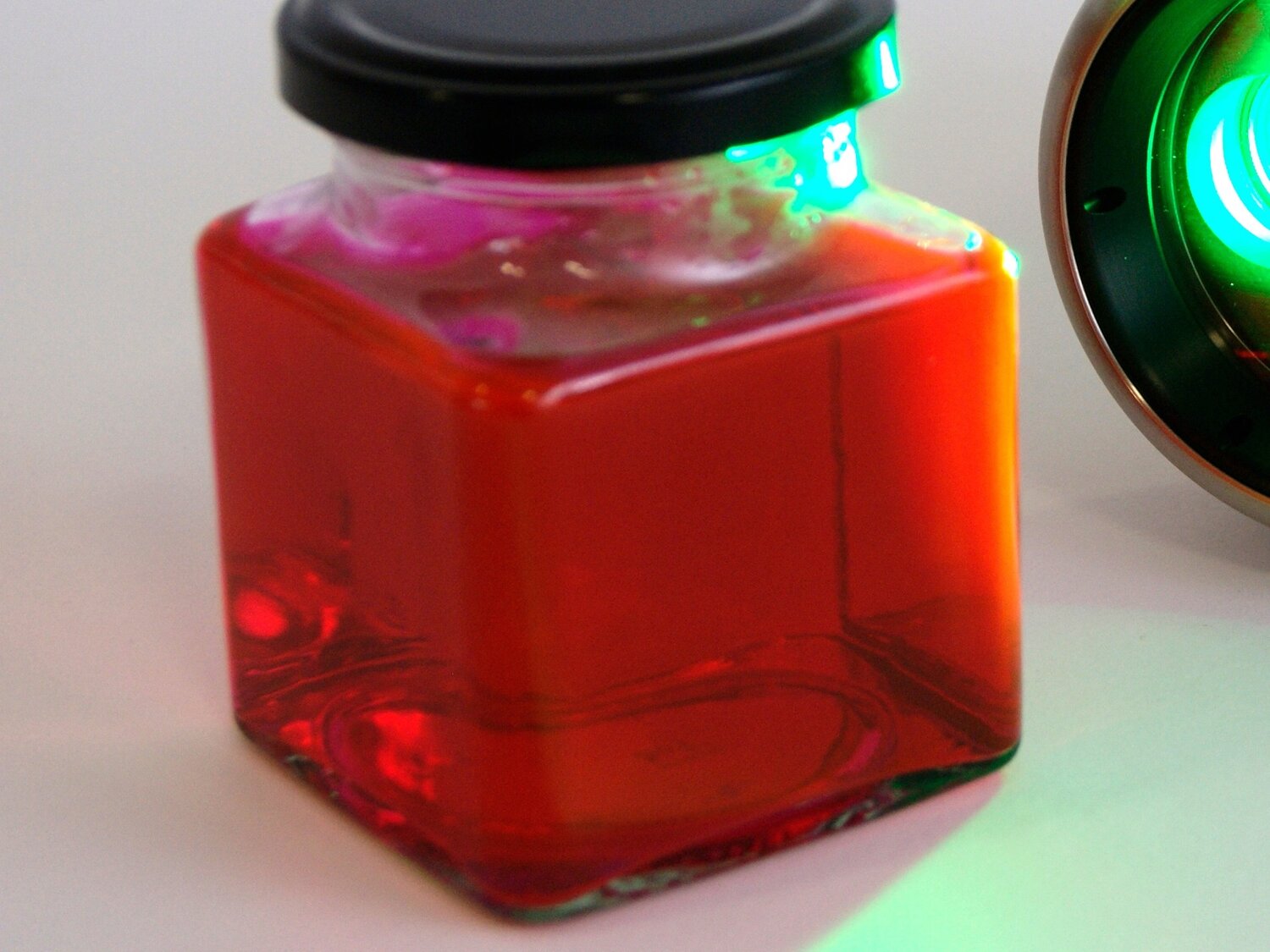
OceanTools C-Dye 530 has been specially formulated to give outstanding results when detecting leaks in a variety of subsea environments including pipelines, risers and subsea control systems.
C-Dye 530 may be added to water at a suggested dosage of 200ppm or 0.02%
C-Dye 530 may be added to control fluids at a suggested dosage of 250ppm or 0.025%
C-Dye 530 may be added to cement at a suggested dosage of 0.33gal/bbl or 1.25l/bbl or around 0.8%
The dye may be added directly to the cement or seawater spacer during cementing operations, or even a barite spacer if the dye concentration is increased. It should not be added to spacers containing bentonitic materials, as they cloak the dye.
C-Dye 530 is registered with CEFAS in the UK (OCNS Class E) and the Netherlands (HMCS Pre-screening Category R) with no substitution warning. It holds Yellow classification in Norway, is registered for use in Denmark, and has also been successfully EPA/OSHA tested for use in the US. Few other dyes meet this very high level of environmental acceptance.
Key Features:
Formulated for subsea leak detection
Use in cement, seawater or fresh water
Excellent environmental credentials
OceanTools C-Dye 530 Safety Data Sheet
For more information about OceanTools C-Dye 530, Contact the team at BlueZone.
Up to 25-hour mission duration
Speeds up to 4.2 knots
Increased module payload capacity
Search and recovery
Hydrography
Deep sea mineral exploration
Marine & Fisheries research
DeepSea's Optim SeaCam provides a unique tool for scientists, subsea explorers, and film makers combining superb 4K imaging capability with familiar controls, flexible integration options, and an extremely rugged design.
Read moreSIDUS Solutions’ Mini Inspector unites an image rich, high clarity inspection camera with integrated, variable intensity, sealed high-bright LEDs.
Read moreREMUS on 7 News! RANs Autonomous Survey of the River Derwent
(Video Credit: 7 News Tasmania) The River Derwent is a vital waterway for Tasmania, supporting commercial, recreational, and defence maritime activity. The Royal Australian Navy’s Geospatial teams recently conducted...
Read MoreAutonomous Advantage: Bayonet 250 in the Littoral Battlespace
The surf zone remains one of the most dangerous and least understood environments in military operations, concealing mines, unexploded ordnance, and obstacles that threaten both personnel and mission success. Traditionally,...
Read MoreFrom Contact Detection to Diver Deployment: Enhancing Police Search Operations with SeeByte
Survey smarter. Investigate faster. Recover with confidence. When police dive teams are called to investigate a submerged vehicle, recover critical evidence, or conduct a search and recovery operation, every...
Read More