ADCP Bottom Mounts for Aquaculture
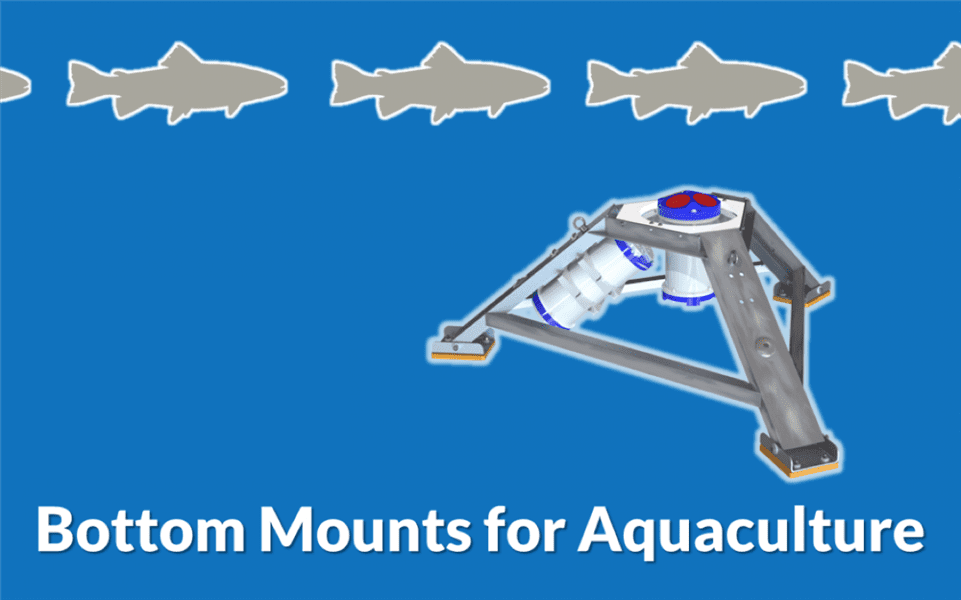
BlueZone Group supplier, DeepWater Buoyancy, Inc., has announced the delivery of a significant follow-on order of diver-serviceable bottom mounts for one of the world’s largest fish farming companies. The bottom mounts are set on the seafloor at a depth of 50 to 100 meters and allow for the proper deployment of ADCPs to monitor the environment around the fish farm cages.
Teledyne RDI ADCPs are used in aquaculture applications in order to monitor currents and waves for the following main purposes:
– Investigate new fish farming areas
– Monitor currents when feeding in order to minimise feed loss
– Monitor fish waste for pollution plumes
DeepWater Buoyancy, Inc.’s recently retooled BTM-AL50 diver-serviceable bottom mount line is equipped with a two-axis gimbal to mount an ADCP, clamps for a remote battery housing, and zinc anodes for corrosion resistance. The three articulating footpads are provided with standard urethane-coated ballast, with additional ballasting provided for this application.
BlueZone Group offers a range of products for Aquaculture and fish farming applications. For more information contact BlueZone or go to the Aquaculture webpage.
 |