
Teledyne Bowtech
Contact BlueZone for further information.
Bowtech Burns Bright for Sydney-Kormoran Project
During World War II, the Australian warship HMAS Sydney (II) encountered the German raider HSK Kormoran and after a short but fierce battle, both ships sank, taking with them all 645 crew from the Sydney and almost 100 crew from the Kormoran. In 2015, researchers from Curtin University, Dr Andrew Woods, Dr Andrew Hutchison, and Mr Joshua Hollick worked with the WA Museum to use two ROVs from offshore services company DOF Subsea to conduct a detailed 3D imaging survey of the two wreck sites. The ROVs were fitted with new-to-market Teledyne Bowtech lights and cameras capable of operating successfully at 2500m underwater. The team collected half a million photographs and 300 hours of high definition video footage – in total some 50 terabytes worth of data.
The equipment used to survey the site included twenty Bowtech LED-V-Series lights which provided 400,000 lumens of light (equivalent of 500 home light globes) into what is normally a totally dark abyss. A Bowtech Surveyor 3DHD camera and Surveyor (2D) HD camera captured the haunting scene of the two wrecks. The ROVs were also fitted with fourteen digital still cameras enabling multiple images of the shipwrecks to be captured with fewer passes of the ROVs. Dr Woods said that, to his knowledge, this was the most complex lighting and camera system ever launched for a deep-water photographic expedition, “The Bowtech lights and cameras served us very well,” said Dr Woods, “The unique lighting and camera system that we developed enabled us to capture more images with fewer operating hours of the ROVs.” Importantly, real-time interface of digital still images captured subsea to the surface was enabled so that the expedition could be sure that the data captured was of high quality and suitable for the project needs.
 |
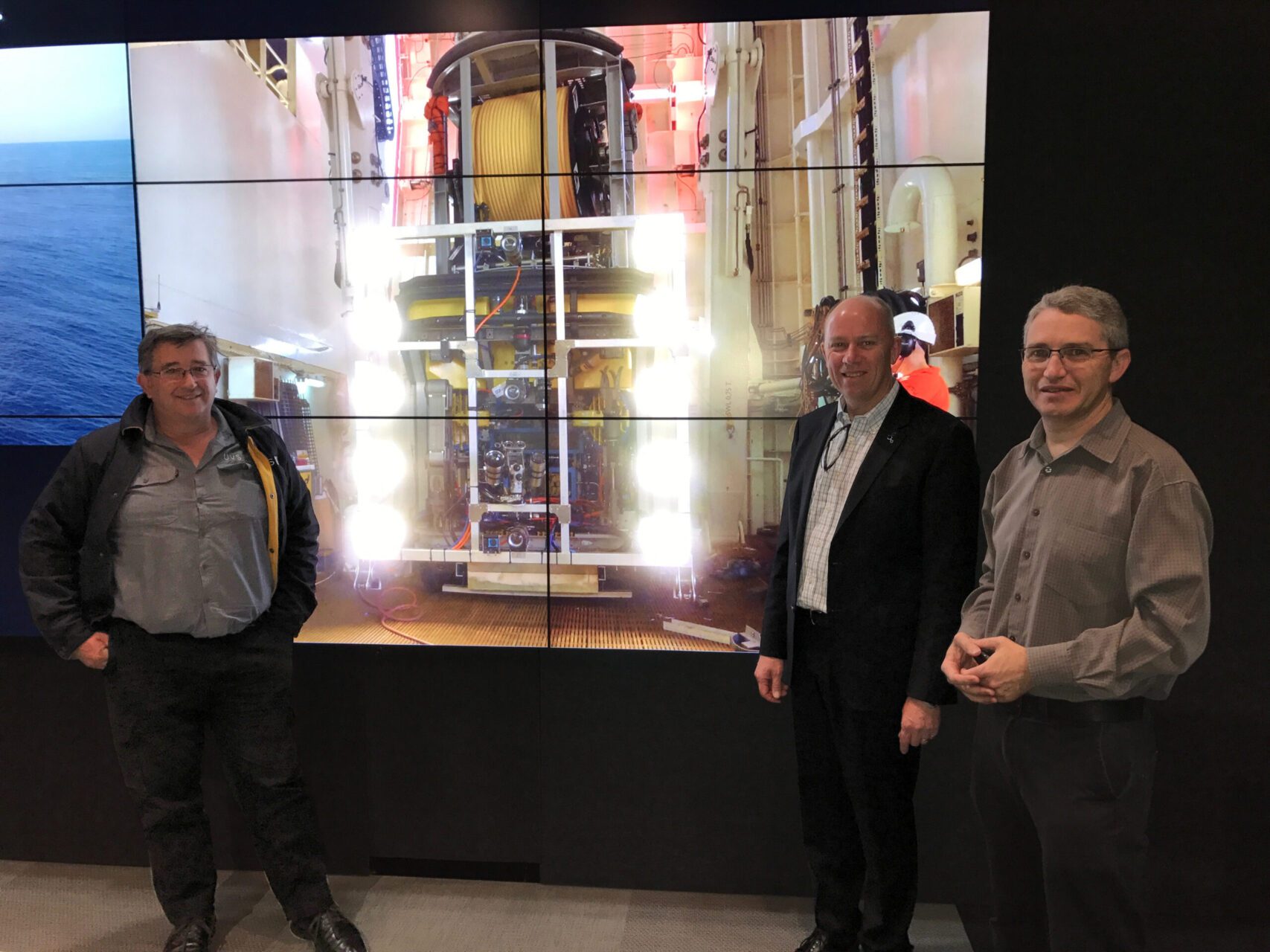
| BlueZone Group GM Perth, Mark Musarra with CTO Darren Burrowes and Dr Andrew Woods at the Curtin HIVE facility with an image of the ROV equipped with the custom light/camera array. |

Related products
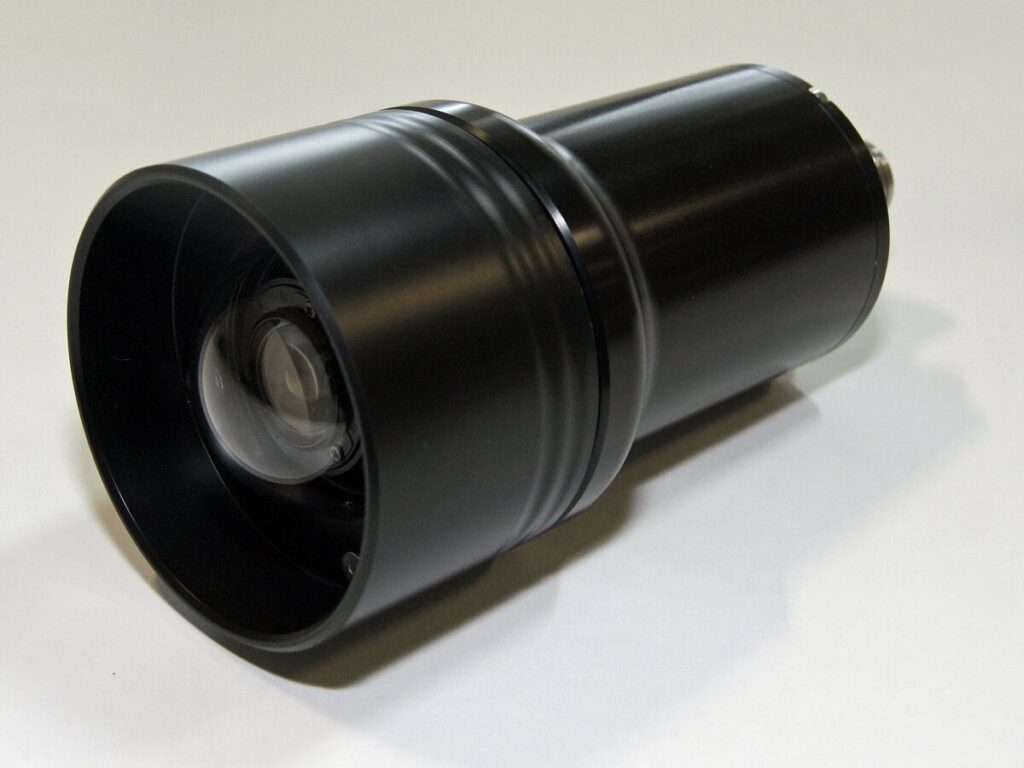
OceanTools C9 range of compact monochrome and colour underwater cameras utilise industry leading Sony CMOS sensors with a GigE Vision compliant Gigabit Ethernet interface and global electronic shutter with exposure control.
Read more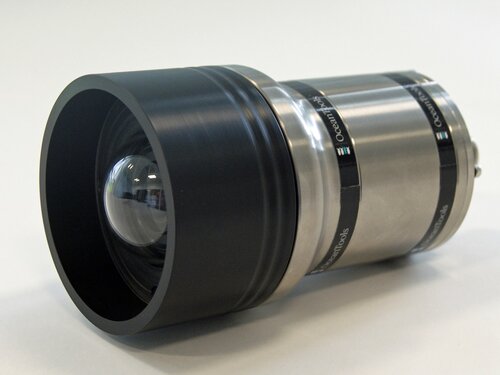
The C5 camera has been designed to provide high resolution and high contrast monochrome video whilst operating in extremely low light level underwater conditions. The cost-effective camera is equipped with...
Read more
DeepSea's HD Zoom SeaCam has a 30x optical zoom capability, faceplate illumination of 0.024 Lux, and high-quality HD-SDI 1080p/30 video output. Options include a titanium or an aluminum housing.
Read more