Autonomous Advantage: Bayonet 250 in the Littoral Battlespace
The surf zone remains one of the most dangerous and least understood environments in military operations, concealing mines, unexploded ordnance, and obstacles that threaten both personnel and mission success. Traditionally, clearing this route would require military divers, reconnaissance teams, or specialised vessels to move into harm’s way. Every metre of progress would carry risk. Every wave, current, and submerged object could become a threat.
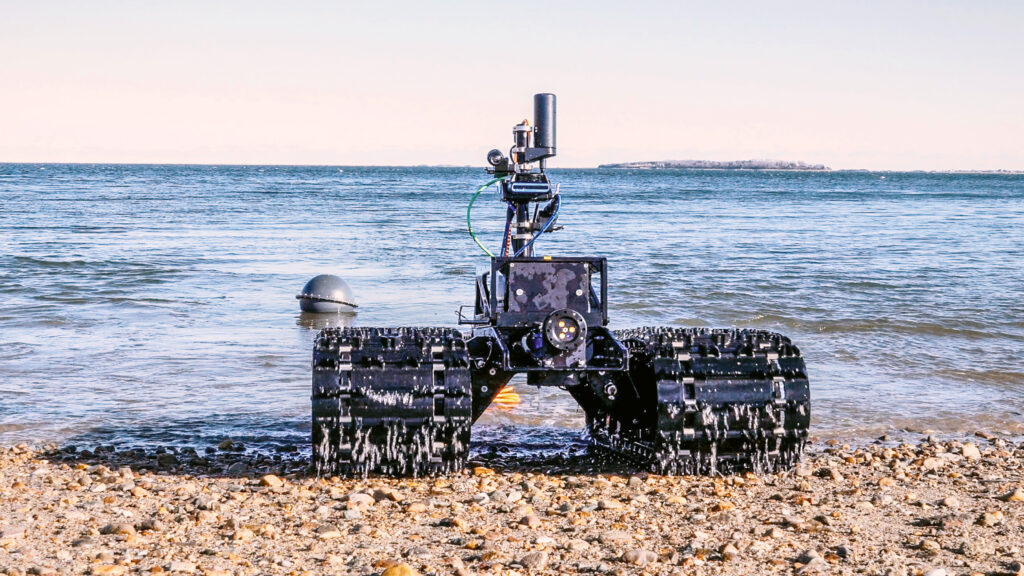
Enter Greensea IQ Bayonet 250 Autonomous Underwater Ground Vehicle (AUGV). Designed specifically for harsh surf zone operations, the Bayonet 250 is transforming how defence forces survey, classify, and secure beach approaches before personnel ever step ashore.
The Littoral Challenge
The surf zone has long been a blind spot in military operations. It is an environment too shallow for many traditional underwater vehicles and too dangerous for personnel to operate freely. Breaking waves, shifting sands, poor visibility, strong currents, and buried hazards create conditions that make reconnaissance difficult and time-consuming. Yet this zone is often the decisive gateway for amphibious and expeditionary operations.
The Bayonet 250 was developed specifically to operate where most autonomous systems struggle. Capable of traversing from the seabed through the surf zone and onto the beach, it bridges the gap between maritime and land domains. Its unique amphibious design enables persistent operations in terrain that has traditionally demanded direct human involvement.
Littoral Autonomy That Works
Using forward-looking sonar, cameras, advanced navigation systems, and mission autonomy software, the Bayonet 250 surveys the landing corridor for hazards, obstacles, and mine-like objects. Rather than relying on personnel to manually investigate suspicious contacts, the system performs autonomous reconnaissance while maintaining continuous awareness of its surroundings.
This is the essence of littoral autonomy.
The Bayonet 250 allows military planners to gather critical intelligence before committing personnel or high-value assets. Potential threats can be detected, classified, and investigated while operators remain at a safe distance. The result is a faster, safer, and more informed decision-making process. For commanders preparing a landing operation, this information can mean the difference between a secure beachhead and a mission compromised by unseen dangers.
Classifying Mine-Like Objects Before Troops Arrive
Historically, contact detections required military divers or explosive ordnance disposal personnel to investigate directly. Now the Bayonet 250 can perform the initial detection and classification task autonomously, significantly reducing the need to place personnel in contested or hazardous areas.
The platform has already demonstrated its ability to locate and classify buried munitions within demanding surf zone environments. Through the integration of mission-specific sensors and the flexibility of the OPENSEA autonomy architecture, the Bayonet can rapidly adapt to emerging operational requirements. This capability is particularly valuable in modern mine countermeasure and expeditionary warfare missions, where speed and safety are equally important.
Keeping Soldiers and Divers Out of Harm’s Way
The true value of the Bayonet 250 is not just what it can do. It is what it prevents military personnel from having to do.
Every kilometre surveyed by an autonomous system is a kilometre that does not require divers, engineers, or reconnaissance teams to enter potentially dangerous waters. This shift represents a fundamental evolution in amphibious operations.
For military divers, the Bayonet 250 acts as a force multiplier, conducting the repetitive, time-consuming, and high-risk reconnaissance tasks that traditionally consume manpower. Diver teams can then focus their skills where human judgement is truly required. The result is improved operational efficiency, reduced fatigue and cognitive load, and a significantly lower risk profile for personnel.
The Future of Littoral Operations
As defence forces around the world place increasing emphasis on distributed operations, autonomy, and human-machine teaming, systems like the Bayonet 250 are becoming essential capabilities. By extending situational awareness into the most challenging coastal environments, they enable forces to move faster, operate more effectively, and reduce risk to personnel.
In the future battlespace, success will depend not only on who reaches the shoreline first, but who understands it first.
With the Bayonet 250, that advantage starts well before the first boots hit the beach.
See Bayonet at Land Forces 2026
Discover how Greensea IQ’s Bayonet 250 is redefining littoral autonomy and helping keep military personnel safer in some of the world’s most demanding operational environments.
Visit the BlueZone Group team at Land Forces 2026 this October to learn how Bayonet is delivering smarter, safer, and more effective littoral reconnaissance and mine countermeasure capabilities for modern defence forces.
For more information on the Greensea IQ’s Bayonet 250, please Contact the BlueZone Group sales team.
Read More:
Greensea IQ assert control beneath the waves
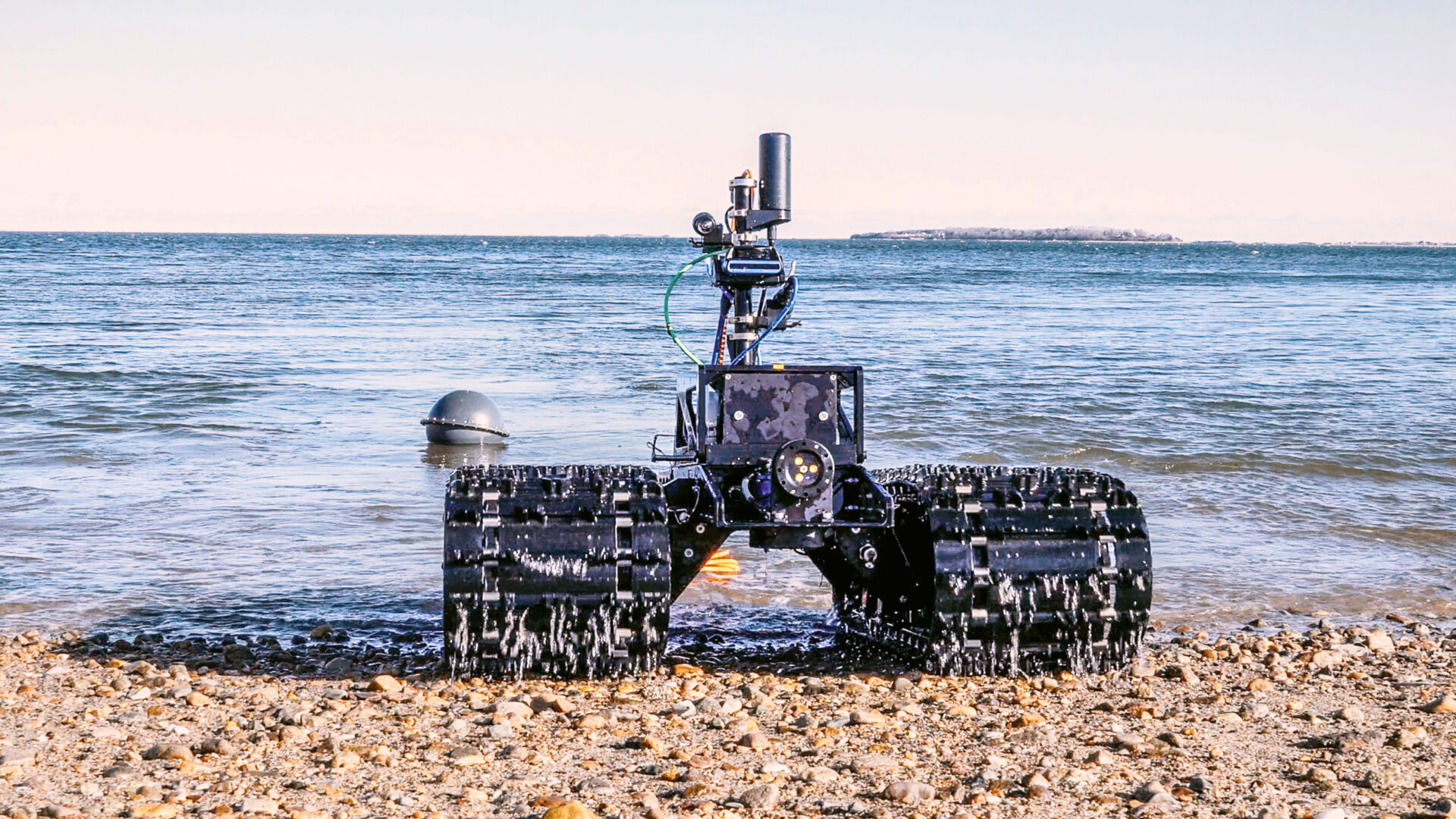
Bayonet 250 AUGV (Photo credit: Greensea IQ)