REMUS 620 and the Power of Modular Underwater Autonomy
One Platform, Many Missions.
Maritime mine warfare continues to evolve, driving defence forces toward uncrewed, modular, and networked underwater systems that reduce risk to personnel while sustaining operational tempo in complex littoral environments. HII’s REMUS 620, a second-generation, medium-class Unmanned Underwater Vehicle (UUV), is purpose-built for this shift: it combines multi-day endurance, open-architecture payload integration, and mission-level software options that support single-vehicle tasking as well as collaborative, multi-vehicle operations.
A Medium-Class UUV Designed for Mine Warfare Outcomes
For mine countermeasures (MCM) and explosive ordnance disposal (EOD) support, the operational value of a UUV is measured by three things: how long it can stay on task, how effectively it can find and classify mine-like objects, and how seamlessly it integrates into the broader MCM kill chain (detect → classify → identify → re-acquire → neutralise). REMUS 620 is designed around these outcomes, offering up to 110 hours of endurance and a maximum range of 275 nautical miles, providing the persistence needed to search large areas, sustain re-acquisition patterns, or conduct repeated sorties without exposing crewed platforms to mine risk. This endurance is enabled by modular, swappable rechargeable Li-Ion battery options with recharge in-vehicle listed at 12 hours, supporting operational flexibility and rapid turnaround during sustained task groups or deployed operations.
High-Accuracy Navigation: The Foundation of Reliable Re-Acquisition
In mine warfare, navigation accuracy directly impacts probability of re-acquisition, especially when coordinating multiple vehicles and correlating contacts across sorties. REMUS 620’s standard navigation suite includes an iXblue Phins C7 INS (accuracy 0.01% of distance travelled), paired with a Teledyne RDI 300 kHz phased-array DVL with 500 m bottom lock, plus GPS and support for LBL and DVL-aided dead reckoning. The result is a platform designed to deliver the consistent georeferencing needed for mine-like object contact reports, repeatable track lines, and accurate cueing of follow-on assets; key to shortening the “sensor-to-effect” timeline in MCM operations.
Payload Flexibility and Open Architecture for Mission Modularity
REMUS 620 is built around a modular, open architecture that supports rapid reconfiguration between mission sets, incorporating customisable dry or wet primary payload modules, externally accessible secondary payload interfaces, and open standards to minimise integration effort and lifecycle cost. For defence operators, this matters because mine warfare rarely exists in isolation: hydrographic survey, ISR, and route survey tasks frequently occur adjacent to MCM operations. REMUS 620 is explicitly positioned to shift between missions including mine countermeasures, hydrographic surveys, intelligence collection, surveillance, and electronic warfare, supporting multi-mission force packages without needing separate bespoke vehicles for every task.
Mine Warfare Sensors: Synthetic Aperture Sonar (SAS) at the Core
A standout capability for MCM is REMUS 620’s integration options for Kraken Synthetic Aperture Sonar (SAS). Kraken SAS offers constant resolution of 3 cm × 3 cm (post-sortie processing, with an option for real-time), and swath widths up to 236 m with MINSAS‑60, and up to 440 m with MINSAS‑120; a powerful combination for wide-area search and high-confidence classification.
Importantly, REMUS 620 performance is shown with these payloads installed, indicating realistic endurance/range trade-offs under operational payload loads:
- With MINSAS‑60 (Dry Payload): endurance up to 78 hours and range up to 205 nm (with 3× battery option).
- With MINSAS‑120 (Wet Payload): endurance up to 50 hours and range up to 132 nm (with 2× battery option).
This is highly relevant for MCM planners, as it supports mission design decisions including number of vehicles required, sortie durations, and coverage rates while maintaining data quality for contact detection and classification.
Data Handling and Onboard Processing to Support Modern Workflows
REMUS 620 includes 4-16 TB solid-state storage, with an externally removable option, and an NVIDIA Jetson AGX Xavier payload processor; a configuration aligned with the growing need to handle large high-resolution sonar datasets and enable advanced onboard processing. This architecture supports operational pathways such as faster post-mission exploitation and, where implemented, edge processing approaches that can reduce the time from collection to actionable outputs.
REMUS 620’s payload ecosystem includes technologies that align strongly with the Australian market, including Kraken SAS payload options; capabilities that can be further strengthened when paired with mission management and autonomy frameworks such as the HII Odyssey™ suite and SeeByte SeeTrack/Neptune. This combination positions REMUS 620 as a highly relevant capability for Australia’s ongoing investment in uncrewed maritime systems, force protection, and MCM mission readiness.
For more information on HII’s REMUS 620, please Contact the BlueZone Group sales team.
Read More:
HII REMUS 620 UUV – BlueZone Group
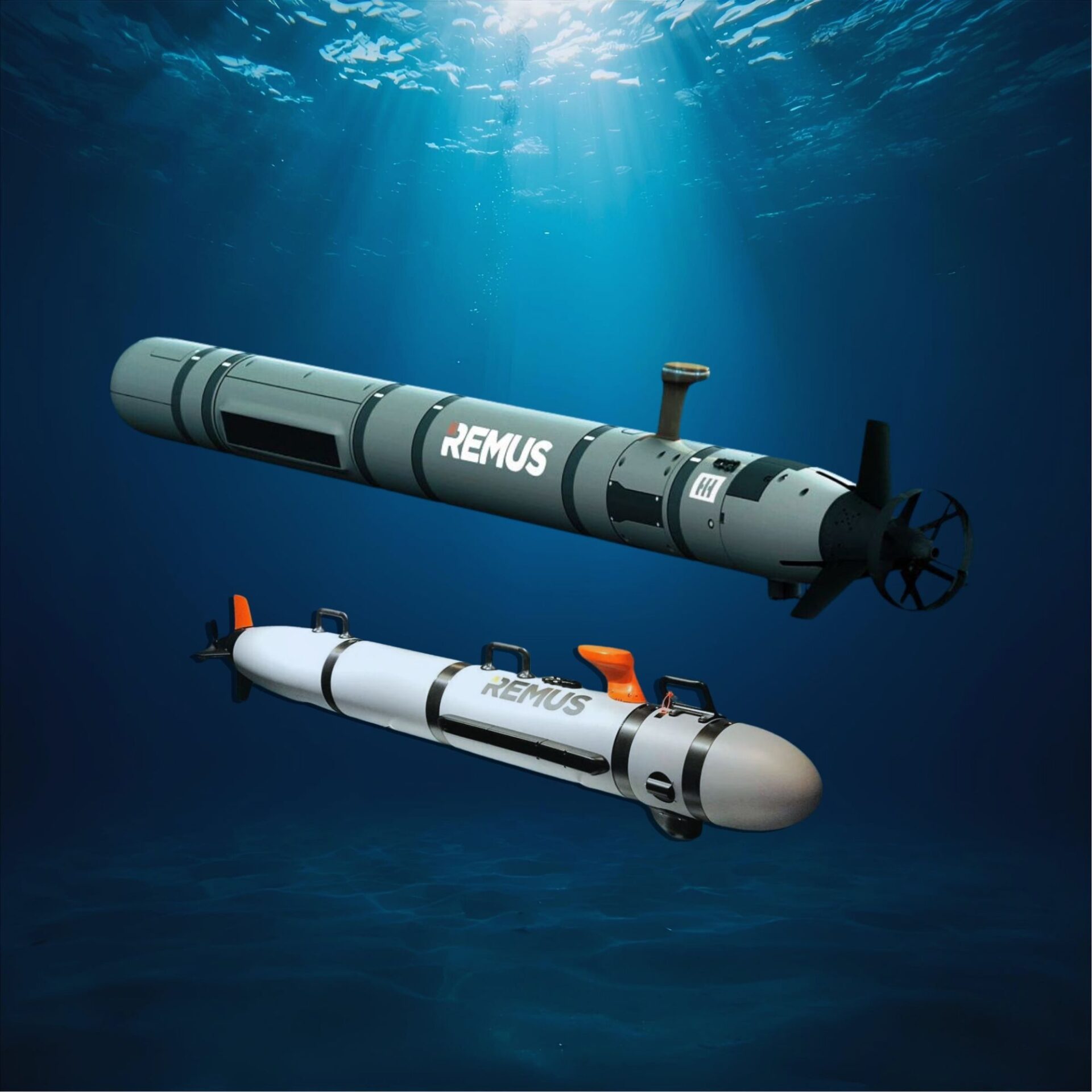
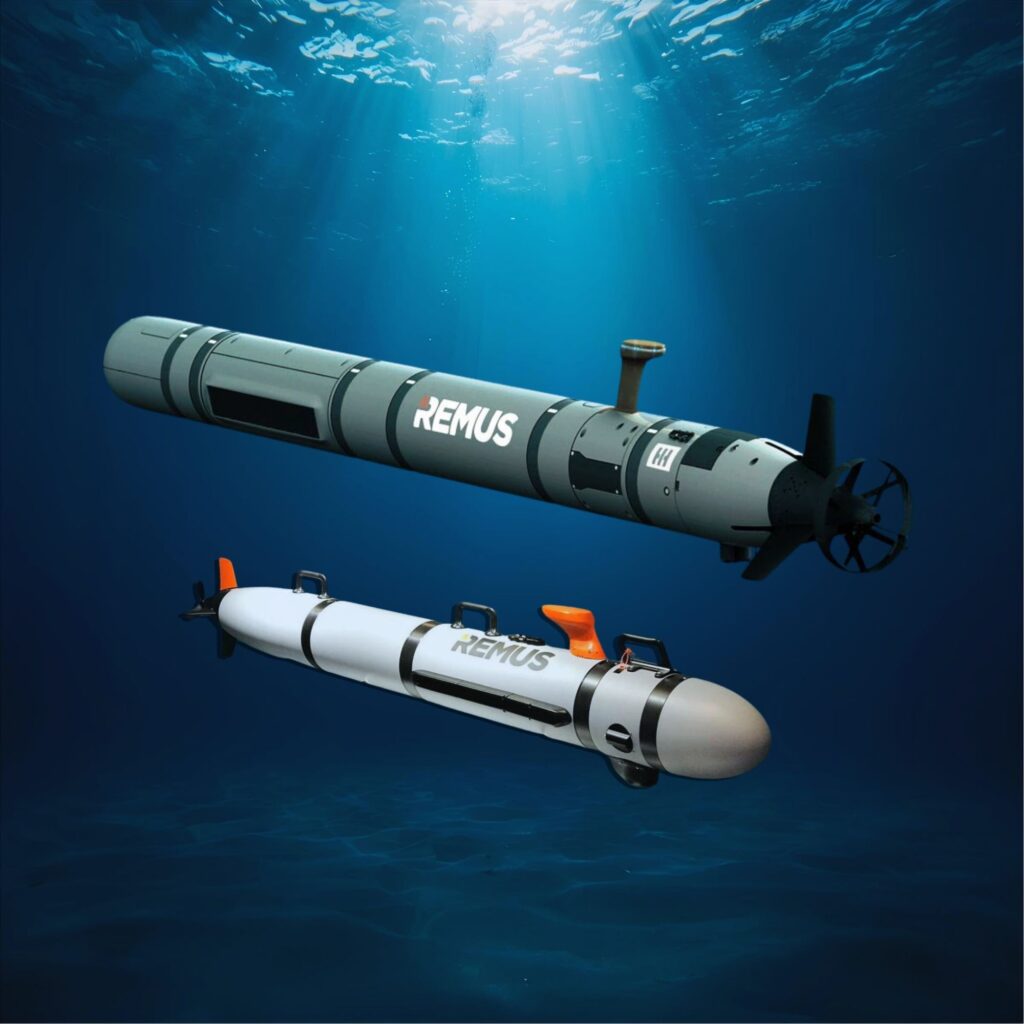
REMUS 620 REMUS 300 (Photo credit: BlueZone Group).