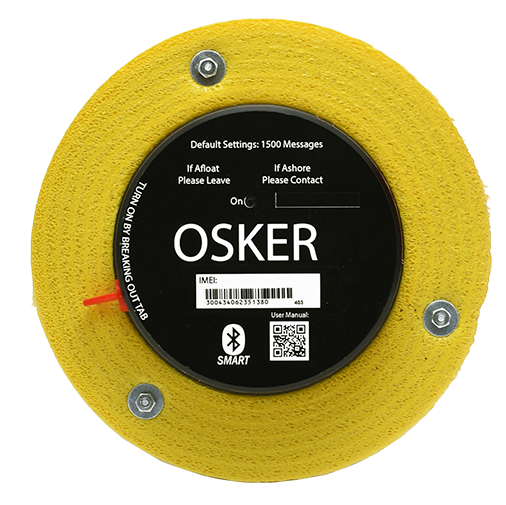
The OSKER is an Iridium GPS ocean surface current tracker designed to track ocean surface currents and oil spills. The urethane foam allows the OSKER to float on the surface while being directed by the surface currents. OSKER offers global communications via the Iridium satellite system in a small, rugged package with sophisticated onboard programming. Manage 2-way communication between the tracking unit and XeosOnline™ monitoring system for full remote configurability. The OSKER is a single-use air-deployed surface tracker, with antennas and power integrated. Deployed in a group, the OSKERs provide accurate real-time tracking over an area of the surface, mapping currents, oil spills, or other phenomenon. The OSKER has a pull tab to power on for quick and easy deployments.
Key Features:
Read More:
For more information, contact the team at BlueZone.
Up to 25-hour mission duration
Speeds up to 4.2 knots
Increased module payload capacity
Search and recovery
Hydrography
Deep sea mineral exploration
Marine & Fisheries research
Mooring Systems Subsurface Floats
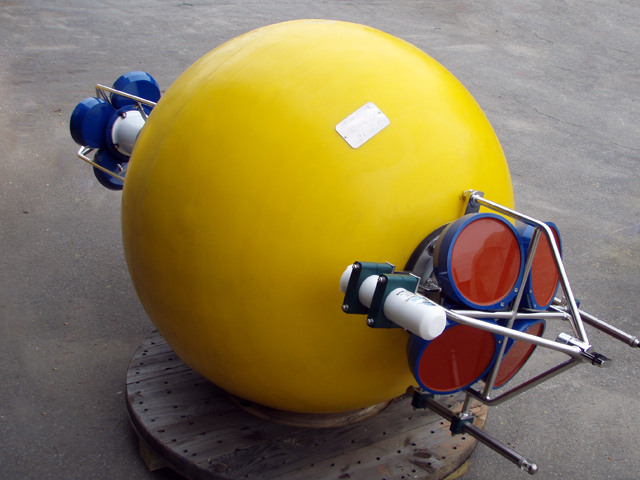
Mooring Systems, Inc. utilises plastic commercial fishing floats and steel floatation spheres for use in a variety of instrument mooring applications.
Read moreXeos Ares Chlorophyll-A Sensor
The Ares Chlorophyll-A Sensor features state-of-the art technology for measuring chlorophyll concentrations for environmental water quality monitoring, oceanographic research, marine operations and aquaculture monitoring.
Read moreObscape’s Time-Lapse Camera is a robust, fully wireless solution that delivers time-lapse images to your desktop in real-time. It allows you to have a look at your area of interest...
Read moreREMUS on 7 News! RANs Autonomous Survey of the River Derwent
(Video Credit: 7 News Tasmania) The River Derwent is a vital waterway for Tasmania, supporting commercial, recreational, and defence maritime activity. The Royal Australian Navy’s Geospatial teams recently conducted...
Read MoreAutonomous Advantage: Bayonet 250 in the Littoral Battlespace
The surf zone remains one of the most dangerous and least understood environments in military operations, concealing mines, unexploded ordnance, and obstacles that threaten both personnel and mission success. Traditionally,...
Read MoreFrom Contact Detection to Diver Deployment: Enhancing Police Search Operations with SeeByte
Survey smarter. Investigate faster. Recover with confidence. When police dive teams are called to investigate a submerged vehicle, recover critical evidence, or conduct a search and recovery operation, every...
Read More