Littoral Clearance Zone Operations: Enhancing the Battlespace with Autonomous and Diving Systems
Survey. Clear. Advance.
Littoral Clearance Zone (LCZ) operations are a critical component of amphibious, maritime security, and expeditionary warfare missions. Conducted in the challenging transition area between land and sea, LCZ operations are designed to identify, classify, and mitigate hazards that could threaten vessels, amphibious forces, port infrastructure, or personnel. Traditionally, these missions relied heavily on divers operating in hazardous and often time-constrained environments. Today, however, advancements in autonomous systems are transforming the way clearance operations are conducted, improving safety, operational tempo, and mission effectiveness.
Building Underwater Situational Awareness with REMUS UUVs
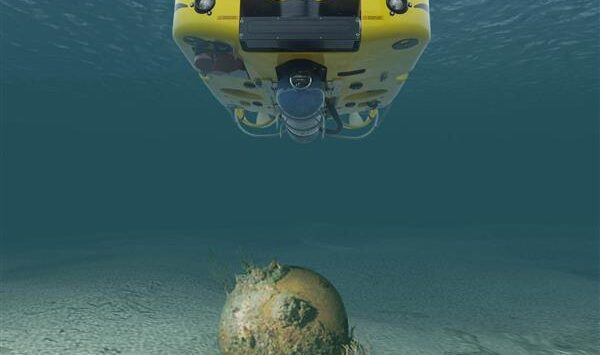
A modern LCZ operation typically begins with a comprehensive survey of the operating area. Uncrewed Underwater Vehicles (UUVs) such as the REMUS300 have become a key force multiplier in this phase. Designed for high-resolution hydrographic and mine countermeasure missions, the REMUS300 can rapidly survey large areas while carrying advanced sonar payloads capable of detecting and classifying objects of interest on the seabed. By operating autonomously and independently of surface support assets, REMUS vehicles can gather detailed environmental and threat data without exposing personnel to risk. This allows commanders to establish an accurate understanding of the underwater battlespace before committing clearance assets.
Extending Reconnaissance Ashore with Autonomous Ground Vehicles
While underwater hazards are a primary concern, the littoral environment also includes beaches, port facilities, intertidal zones, and man-made structures that require investigation. This is where Autonomous Underwater Ground Vehicles (AUGVs) such as the Greensea IQ Bayonet 250 provide significant value. Designed to operate in challenging terrain, the Bayonet 250 can conduct reconnaissance, sensor deployment, and inspection tasks across areas that may be difficult or dangerous for personnel to access. The vehicle can be deployed ahead of forces to gather intelligence, identify potential obstacles, and support route and beach clearance activities. By extending the reach of operators, AUGVs reduce the need for personnel to enter potentially hazardous areas during the early stages of an operation.
Coordinated Multi-Domain Autonomy with SeeByte
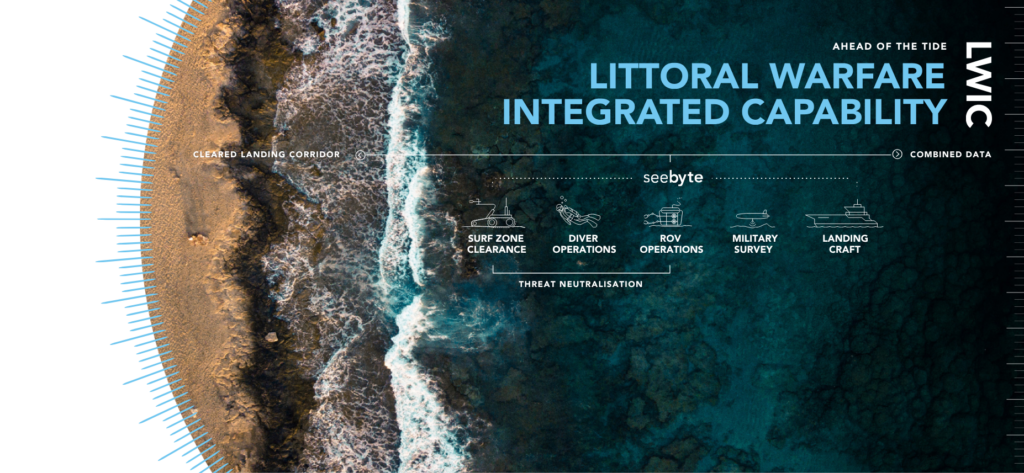
The true operational advantage emerges when these autonomous systems are networked and managed through a common control framework. SeeByte’s mission management software enables operators to coordinate multiple autonomous platforms simultaneously, creating a collaborative and efficient approach to littoral operations. Rather than operating individual vehicles in isolation, commanders can assign survey sectors, manage mission progress, and monitor vehicle status from a unified interface. This approach enhances situational awareness while reducing operator workload, particularly when multiple UUVs and AUGVs are deployed across a broad area of operations.
SeeByte’s software also plays a vital role in mission analysis and data exploitation. Post-mission review allows operators to rapidly process and assess information collected by autonomous systems, generating a detailed picture of the environment and highlighting contacts that warrant further investigation. High-quality post-mission analysis enables more informed decision-making, reducing the likelihood of false alarms while ensuring genuine threats are prioritised for action. Historical mission data can also be compared against new surveys to identify changes in seabed conditions, infrastructure status, or emerging hazards. This capability allows clearance teams to focus their efforts where they are most needed and significantly reduces the time required to transition from survey to clearance operations.
The Human Element: Clearance Divers and EOD Personnel
Despite the increasing sophistication of autonomous systems, divers remain an indispensable capability within littoral clearance operations. Autonomous vehicles excel at detecting, mapping, and classifying objects, but human intervention is often required to positively identify contacts, conduct detailed inspections, and perform neutralisation activities. Clearance divers and Explosive Ordnance Disposal (EOD) personnel provide the expertise needed to investigate suspicious objects, recover critical items, dispose of explosive hazards, and conduct underwater reconnaissance in complex environments. Their ability to adapt to changing conditions and make informed decisions in real time remains unmatched.
Autonomy and Divers: A Complementary Force
The integration of autonomous systems and diving personnel creates a layered approach to operational effectiveness. AUVs and AUGVs perform the broad-area search and reconnaissance tasks, creating a comprehensive operational picture while keeping personnel outside the threat area. Divers are then deployed only when and where their specialist skills are required, significantly reducing exposure to risk while maximising the impact of valuable human resources. The result is a faster, safer, and more efficient clearance process capable of supporting modern amphibious and maritime operations.
See These Capabilities at Land Forces 2026
Visitors to the BlueZone Group stand at Land Forces 2026 will have the opportunity to learn more about how these technologies are shaping the future of littoral operations. Featuring capabilities including the REMUS300 AUV, Greensea IQ Bayonet 250 AGV, and SeeByte autonomy software, BlueZone Group is demonstrating how integrated autonomous and human systems can work together to deliver enhanced reconnaissance, survey, clearance, and EOD outcomes across the modern maritime battlespace.
For more information on REMUS UUVs, Bayonet 250 and SeeByte Software capabilities, please Contact the BlueZone Group sales team.
Read More:
Autonomous Advantage: Bayonet 250 in the Littoral Battlespace
From Contact Detection to Diver Deployment: Enhancing Police Search Operations with SeeByte
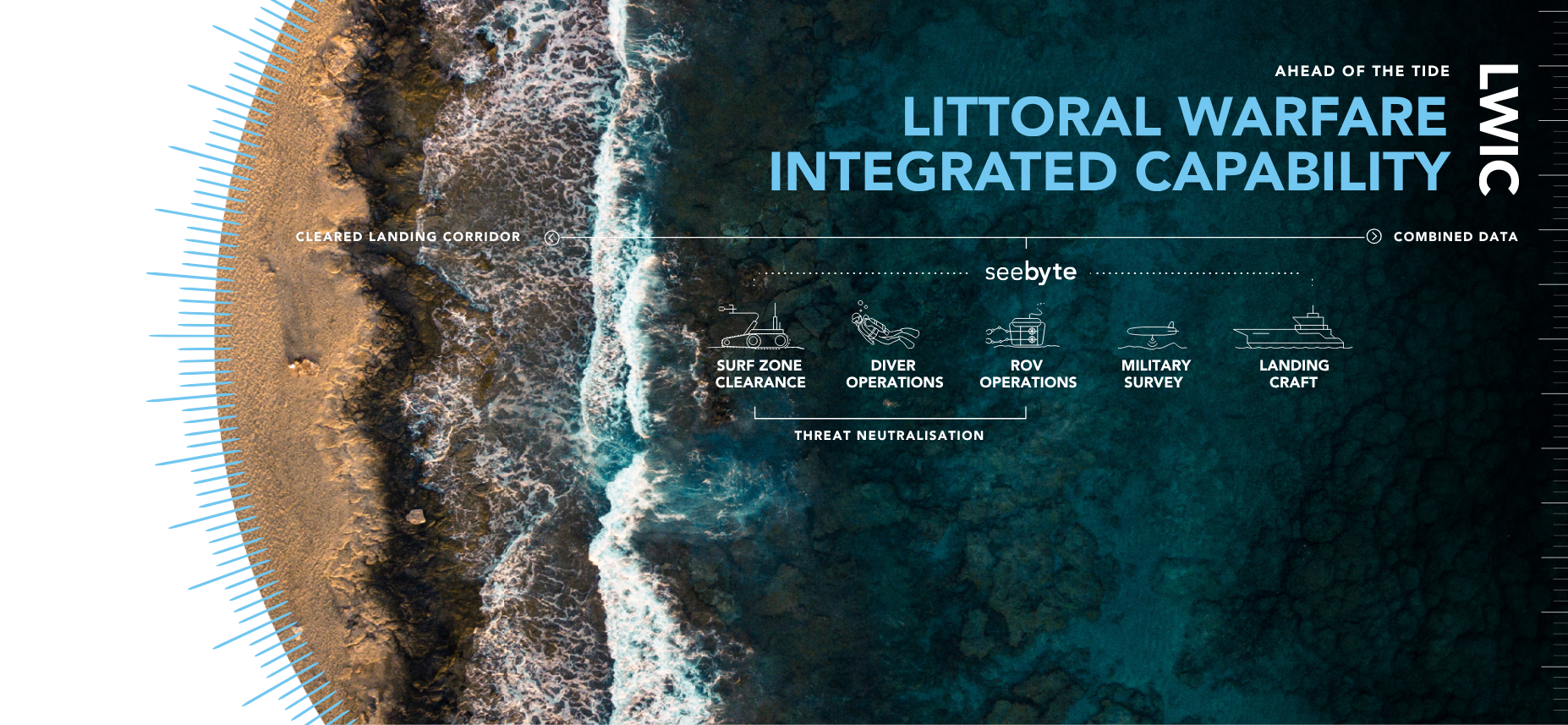
Littoral Warfare Integrated Capability (Design credit: Julianne Brandt)