The Future of Mine Warfare: Faster Detection, Safer Operations, Greater Coverage with Kraken SAS
Faster Mine Detection. Safer Naval Operations.
For decades, naval mines have remained one of the most effective and affordable maritime threats. Capable of disrupting sea lines of communication, delaying military operations, and threatening critical infrastructure, mines present a challenge far disproportionate to their cost. While naval platforms continue to evolve, the task of detecting and classifying mines has traditionally remained a slow, labour-intensive process requiring specialised vessels and significant risk exposure. Today, however, advances in autonomous systems and synthetic aperture sonar are fundamentally changing the way mine countermeasure (MCM) operations are conducted.
Traditional mine hunting has been constrained by a difficult balance between resolution and coverage. Legacy sidescan sonar systems can search large areas, but image quality often degrades with range, requiring operators to conduct multiple passes to investigate potential contacts. Every additional survey pass consumes valuable mission time and increases the burden on operators tasked with classifying hundreds of potential targets. In a real-world operational environment, these delays can significantly impact naval freedom of movement and operational tempo.
The Technology Reshaping MCM
At the forefront of this transformation is Kraken Robotics’ Synthetic Aperture Sonar (SAS), a technology that is helping navies shift from platform-centric mine hunting toward faster, safer, and more distributed approaches to maritime security. Kraken SAS delivers ultra-high-resolution seabed imagery while simultaneously achieving one of the industry’s highest area coverage rates, allowing operators to search larger areas in less time without compromising detection performance.
Rather than accepting a trade-off between coverage and image quality, Kraken SAS maintains constant high resolution across the entire swath, enabling operators to detect and classify mine-like objects with far greater confidence. The system provides real-time imagery with resolutions as fine as 3 cm × 3 cm and post-processed data down to 2 cm × 2 cm, delivering the level of detail required to distinguish genuine threats from harmless seabed clutter. Higher-quality imagery reduces false positives, improves operator decision-making, and ultimately shortens the overall mine-hunting cycle.
Expanding Operational Capability, Minimising Human Exposure
The operational impact is significant. Kraken reports that SAS can reduce mission durations by two to three times compared with traditional sidescan sonar systems, while simultaneously increasing area coverage. In mine warfare, where speed is directly linked to mission success and force protection, this represents a substantial capability advantage. Faster detection means commanders can gain greater confidence in cleared routes, allowing naval and commercial traffic to resume operations sooner and with reduced risk.
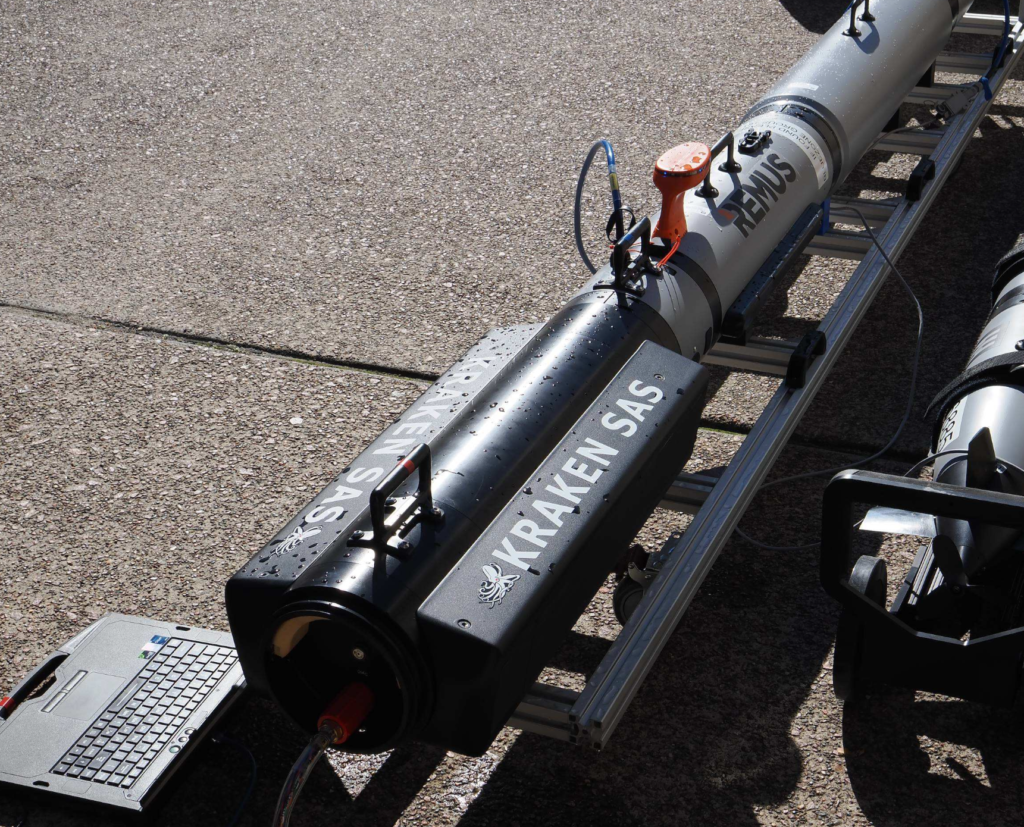
Equally important is the technology’s alignment with modern stand-off mine warfare concepts. Rather than placing crewed vessels into potentially hazardous areas, Kraken SAS is designed for integration with autonomous and uncrewed underwater vehicles (UUVs). From compact, man-portable systems to larger autonomous platforms such as the REMUS family of vehicles, SAS enables mine-search operations to be conducted at a safe distance from personnel and high-value assets. This approach dramatically reduces operational risk while expanding the ability of navies to survey and clear contested maritime environments.
This evolution mirrors a broader shift occurring across naval forces worldwide. Mine countermeasures are increasingly moving toward distributed, autonomous operations where multiple uncrewed systems work collaboratively to detect, classify, and localise threats. High-quality sensor data is the foundation of this vision. Autonomous platforms can only be as effective as the information they collect, and Kraken SAS provides the detailed seabed intelligence required to support advanced autonomy, embedded automatic target recognition, and mission-level coordination systems.
NATO-Tested. Mission-Proven
Importantly, Kraken SAS is no longer an emerging technology waiting to prove itself. It is an operationally deployed capability already trusted by defence organisations around the world. During NATO’s REPMUS exercises, Kraken’s MINSAS systems were integrated onto multiple uncrewed underwater vehicle platforms operated by allied navies. The systems successfully located more than 50 mine-like targets while demonstrating rapid integration across a range of autonomous vehicles. The exercise reinforced the maturity, flexibility, and operational relevance of synthetic aperture sonar for modern MCM missions.
The technology has also been adopted across multiple generations of HII REMUS vehicles and has increasingly become the sonar solution of choice for advanced mine-hunting applications. Its ability to improve detection confidence, reduce false contacts, and support accelerated mission timelines continues to drive adoption among NATO and allied operators seeking to modernise their mine warfare capabilities.
Turning Proven Capability into Australian Advantage
For Australia, the opportunity is clear. As the maritime operational environment becomes increasingly complex, the ability to rapidly understand, map, and secure the undersea domain will remain critical. Through its partnership with Kraken Robotics, BlueZone Group is bringing this proven capability directly to Australian defence, government, and commercial operators. As an established in-country support partner for advanced maritime technologies, BlueZone provides local expertise, integration support, maintenance, training, and through-life sustainment, ensuring Australian users can confidently employ world-leading SAS technology when and where it matters most.
The future of mine warfare will be defined by speed, autonomy, and information advantage. By combining exceptional image quality with unprecedented area coverage, Kraken SAS is helping navies detect threats faster, operate more safely, and maintain freedom of manoeuvre in contested maritime environments.
For more information on Kraken Robotics’ SAS, please Contact the BlueZone Group sales team.
Read More:
Kraken MP‑SAS: Portable Synthetic Aperture Sonar for Modern Maritime Missions – BlueZone Group
SeaPower. Powered by Kraken, supported by BlueZone Group – BlueZone Group
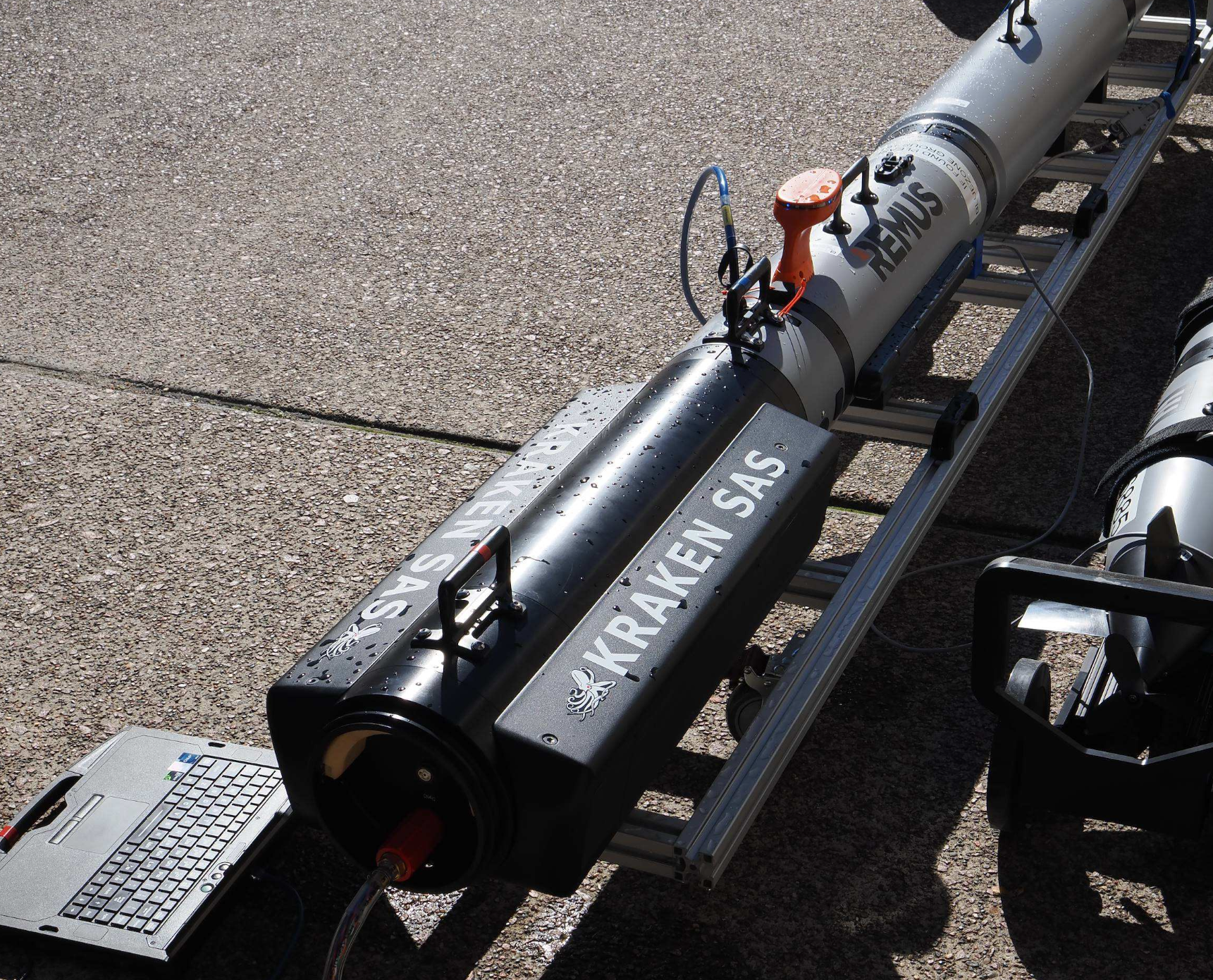
Kraken SAS integrated into REMUS UUV (Photo credit: BlueZone Group).